
@MidnightNetwork #night $NIGHT
In the world of blockchain, there is something we see again and again. Many projects try to present themselves as the future almost immediately. Big promises are made, bold language is used, and everything sounds revolutionary at first. But after a while, people start asking a simple question: what is actually being built here? Is it just a beautiful idea, or is there a real foundation forming beneath it?
When I look at Midnight Network, the thing that feels different is that it does not seem obsessed with impressing people. Instead, it appears focused on building something that can actually function in the real world.
Privacy is often treated like a marketing term in crypto, but in reality it is much more serious than that. When a network is designed to handle sensitive data, financial activity, or applications that operate in regulated environments, privacy cannot simply be a feature on a slide. It has to be something people can genuinely trust. The real question becomes: can this privacy hold up when the system is actually used? Can businesses rely on it? Can everyday applications operate on it safely?
Midnight seems to take those questions seriously.
This is why its approach to launching the mainnet is particularly interesting. Many blockchain projects push immediately for complete decentralization, presenting it as the ultimate goal from day one. It sounds appealing, but in practice every system needs more than openness at the beginning. It needs stability. It needs responsible operators. It needs an environment where real applications can safely run.
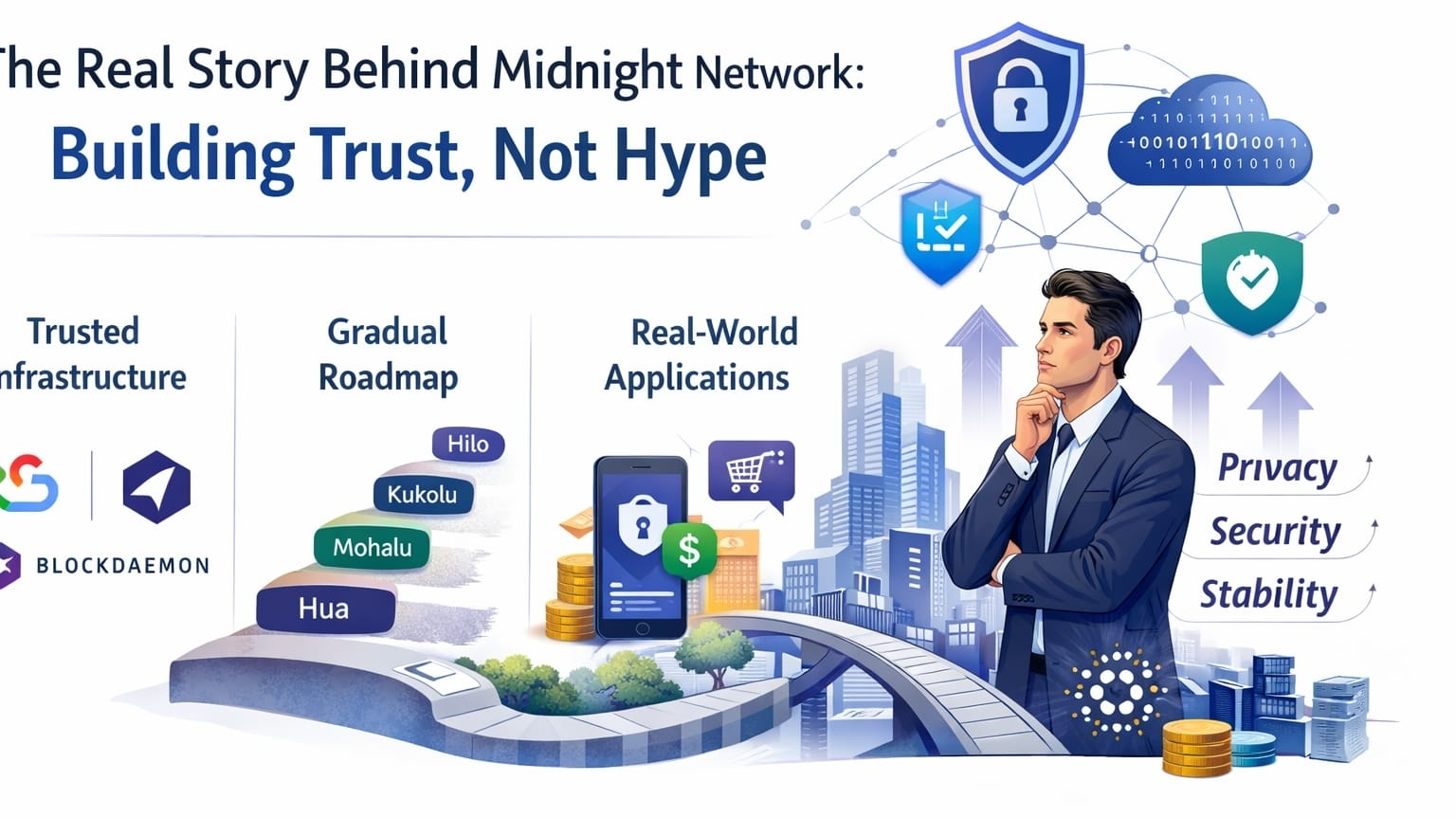
Midnight’s federated model reflects that understanding. Instead of launching into a completely open validator network immediately, the project begins with a smaller group of trusted infrastructure partners. At first glance, some might see this as less decentralized. But from another perspective, it can also be seen as a more practical way to build something reliable. Sometimes a controlled beginning creates a stronger long-term system than an uncontrolled launch.
The nature of Midnight’s partners also tells an important story. The involvement of Google Cloud signals that the project is thinking about real infrastructure, not just crypto-native experimentation. With Mandiant providing advanced threat monitoring, the network is not only being designed for performance but also for security in the face of real-world risks.
Blockdaemon’s role further reinforces this idea. As a trusted institutional node operator, it helps ensure the network remains reliable and continuously available. These kinds of decisions suggest that Midnight is aiming to build a system that institutions, developers, and serious applications can eventually depend on.
Another element that makes the vision more tangible is the integration with AlphaTON and Telegram’s Cocoon AI. This part moves the conversation beyond blockchain architecture and into real human experiences. Imagine users interacting with AI about financial decisions or purchases while knowing that their personal information is not unnecessarily exposed. In that context, privacy stops being a technical feature and becomes a form of digital confidence.
Midnight’s roadmap also reflects a gradual and thoughtful approach to growth. The Hilo phase introduced liquidity and established the NIGHT token. Kukolu will bring the federated mainnet online in a controlled environment. Mohalu will allow additional validators to join and introduce the DUST marketplace. Finally, Hua aims to integrate Midnight with other blockchains and web services, expanding the ecosystem further.
What stands out here is not speed, but progression. Each stage builds on the previous one, strengthening the system before expanding it.
And perhaps this is exactly what the blockchain space needs more of.
For years, the industry has been filled with dramatic language — every project claims to be revolutionary, every launch promises to change the world overnight. But the technologies that truly matter usually grow differently. They build infrastructure quietly. They earn trust over time. They expand only when their foundations are strong enough to support it.
This is why Midnight’s approach feels meaningful. Privacy is not only a technical challenge; it is also a matter of confidence. Decentralization is not just about structure; it is about responsible stewardship of a network that people rely on.
Seen from this perspective, the federated mainnet is not necessarily a weakness. It may actually be the practical step that allows Midnight to move from theory into real-world usage. If the goal is to bring privacy into everyday applications, regulated industries, and large-scale digital systems, then a gradual and stable approach may be far more sensible than rushing into full decentralization before the network is ready.
In the end, the true strength of Midnight may not lie only in the NIGHT token, its partnerships, or its technical design. It may lie in its mindset. A mindset that says strong foundations come first. Trust is built step by step. Real infrastructure takes time.
And sometimes, the most important innovations are not the ones that shout the loudest — but the ones that quietly build something that lasts.