
Yesterday, I came across a post where someone asked, 'What is the biggest disadvantage of blockchain?' The highly upvoted answer was just one sentence: 'It's transparent to the point that even oneself is afraid.'
The comments section below is full of resonance. Some people said that when transferring funds on Ethereum, their addresses were completely exposed, even the details of what they bought on which day were screenshotted and ridiculed in group chats. Others mentioned that their company wanted to use blockchain for supply chain traceability, only to find out that competitors could see their transaction frequency and partners.
This reminds me of a conversation I had recently with a friend who is in cross-border e-commerce. She said the company has been considering using blockchain to improve logistics tracking, but every time they get to the step of 'putting data on the chain' in meetings, they get stuck. 'Our suppliers, prices, shipment volumes, these are all trade secrets. If everything is made public on the chain, it's like showing our underwear to the whole industry.'@MidnightNetwork
What she refers to as "bottom pants" is the biggest embarrassment of public chains right now. The design philosophy of Bitcoin is "transparency equals trust," which works fine in a peer-to-peer cash system. But when you try to move real enterprises, identities, and sensitive data onto the chain, things get complicated. Companies can't show their internal financial statuses to competitors, and ordinary people don't want their transaction histories publicly tracked.
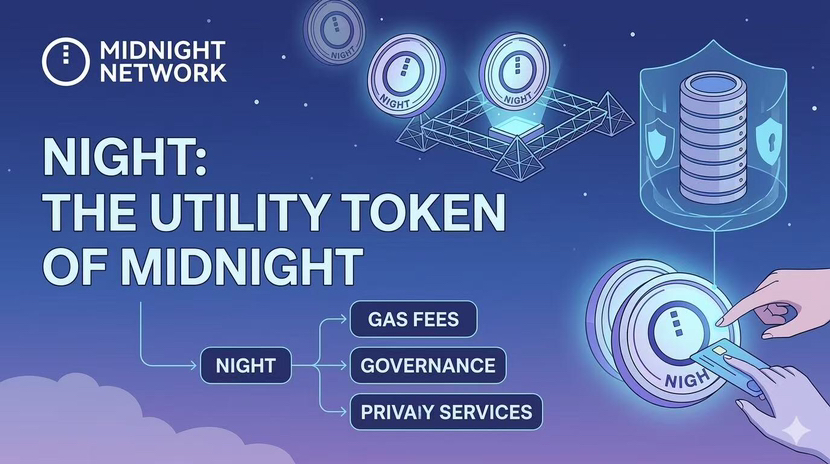
The industry is currently facing a strange paradox: the technology created to build trust cannot be used in the real world because it is too transparent.
What Midnight aims to solve is precisely this.
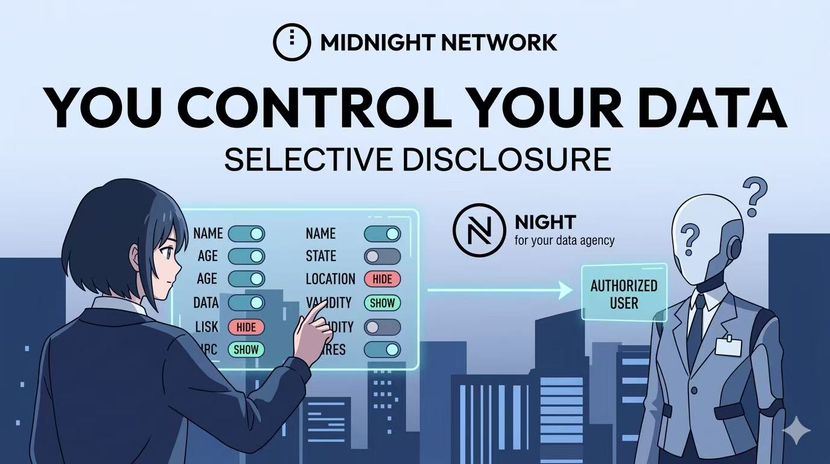
Its core concept is called "rational privacy." It sounds mystical, but simply put, it means: allowing the system to prove something is true without revealing the underlying data. Using zero-knowledge proofs, you can prove to someone, "I am over 18," without having to show your ID with all the details. The tax office can confirm whether a transaction exceeds the reporting threshold without needing to see the entire invoice breakdown.@MidnightNetwork
This logic is particularly useful for institutions. MoneyGram, the second largest remittance service globally, operates in over 200 countries with nearly 400,000 agents. They chose Midnight to run nodes, not because they want to trade crypto, but because they want to use this chain for compliant remittances. The Chief Product Officer's exact words were: "Partnering with Midnight to run nodes ensures privacy, compliance, and reliability are built in from day one." Note this word—"ensures," not "explores."
Vodafone's Pairpoint is doing something similar. They are working on the "Internet of Things economy"—allowing devices to transact autonomously. Your car pays for parking itself, your fridge orders milk on its own; these transactions require privacy protection, so the whole world doesn't see where you parked or what you bought. Midnight's zero-knowledge architecture perfectly provides devices with a trustworthy identity.
eToro has also joined in, a Nasdaq-listed company with 35 million users. Its Chief Blockchain Officer said: "All assets will eventually go on-chain, but the infrastructure needed must support a globally scaled market while integrating robust security and compliance design."
With previously announced partners like Google Cloud, Blockdaemon, Shielded Technologies, and AlphaTON Capital, a total of seven institutions will personally run nodes. Blockdaemon secures over $110 billion in digital assets for more than 400 institutions; these folks are not here just to fill in gaps for a chain that hasn't launched yet.@MidnightNetwork
The mainnet is set to go live at the end of March. Hoskinson mentioned that this launch will allow Cardano ecosystem assets to directly access the core spot liquidity pool of the world's largest exchange, Binance. 80% of altcoin trading volume occurs on Binance, making this a starting point.
From the data perspective, NIGHT's price is around 0.047, with 57,079 holding addresses. After being listed on Binance, the trading volume surged to 126 million, an increase of 383% compared to before. Of course, the price has also dropped, falling 22.5% over the week, with a technical support zone at 0.045-0.047.
But my friend in cross-border e-commerce asked a more straightforward question: "So can this thing keep my supply chain data off-chain but still traceable?"
@MidnightNetwork
I said this is what Midnight is designing. It's not about hiding everything or laying everything bare; it's about revealing only what needs to be revealed. You can prove to clients that "this batch of goods was indeed sourced from compliant suppliers," without having to disclose the supplier list or purchase prices. Using zero-knowledge proofs, you generate a credential that the other party can verify, but they can't see the specific data.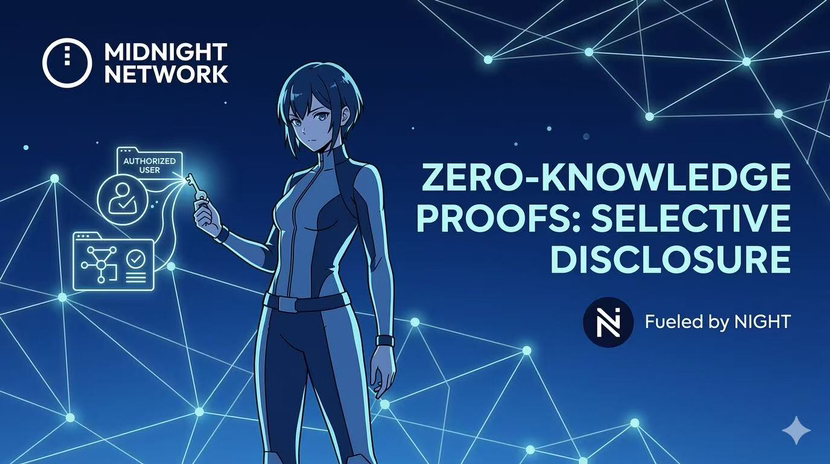
She said after hearing it: "So let me know when the mainnet goes live."
I said okay.
While hanging up the phone, I thought, maybe one day, having a company on-chain won't be a choice of "having to bare it all." At that time, transparency and privacy might truly coexist.
