
If you have been in Web3 long enough, you must have been disgusted by this situation: the project is just starting to gain some traction, the coin price hasn't doubled yet, but the Gas fee has already skyrocketed, making you have to watch the secondary market before you can do anything. I think this vicious cycle of high coin prices and correspondingly high transaction fees is simply the biggest obstacle to the commercial application landing, but @MidnightNetwork the smart part is that it forcibly settled this matter in a physically isolated way.
From many people's perspectives, everyone is focused on $NIGHT these governance tokens, thinking that is the entirety of value. However, in my view, if you haven't understood the design of DUST, you may not have touched the core commercial soul of this privacy network. The on-chain world has always lacked a fuel that allows enterprises to use it like tap water, with stable costs and without worrying about price fluctuations, and DUST plays exactly this role.
I think the most powerful aspect of DUST is that it completely separates asset value from usage cost. It is not a chip for speculation but rather the fuel generated automatically after holding NIGHT. Just think, for institutions that require high-frequency data verification, the worst fear is uncontrollable costs, but now as long as you hold a certain amount of NIGHT, how much DUST you can generate daily and how many ZK verifications you can run are fixed the moment it's written into the code. This self-generating model allows companies to stop competing with speculators in the secondary market for chips, and instead, they can steadily use privacy protection as a normalized infrastructure. I believe this predictability of cost is the confidence that Midnight has in claiming itself as the fourth generation blockchain.
Moreover, DUST has a very interesting feature, which is that it is not transferable and will gradually decay over time if not used. I think this detail is simply brilliant because it prevents anyone from hoarding fuel. In many networks, once resources are hoarded, it implies price fluctuations, but in the logic of #night the only purpose of DUST is to be consumed to support those complex zero-knowledge proof computations. This design actually protects the true builders, ensuring that network resources always flow to those who genuinely need to prove facts, rather than to those who want to profit from reselling resources.
Let me introduce two senior pioneers in the same field and their fees:
XMR: A long-established hard currency, but it has a consumable design
1. The transaction fees for Monero are indeed very low, usually only a few cents per transaction. But the problem is that if you are a high-frequency trader transferring money 10 times a day, that’s 3650 times a year. Although each transaction only costs $0.01, that adds up to $36 over the year, and you are left with only $14 after a year. The cost of privacy can be a bit high.
2. Zcash: The pioneer of ZK, but it has a gasoline vehicle design
Zcash opened the era of ZK-SNARKs, with fixed transaction fees, usually 0.0001 ZEC. However, I think the most awkward point for Zcash in commercial applications is that it still hasn't escaped the fact that the money in your wallet = fuel.
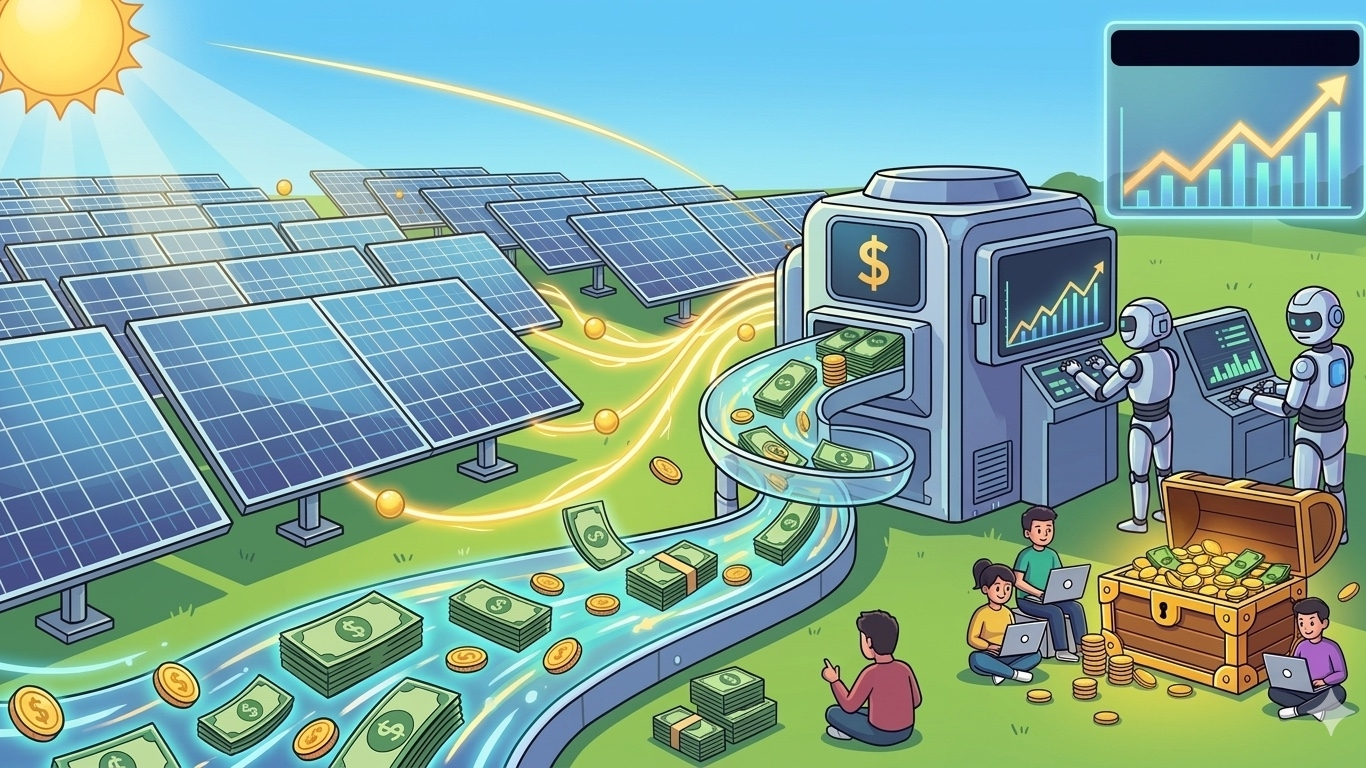
3. Midnight: A dimensionality reduction strike, it is a solar-powered automatic charging design. This is what I think makes Midnight so sharp. When you buy 1000 $NIGHT, these 1000 will not disappear, and you have no loss; it becomes your solar power station.
To be honest, I think if a privacy network spends all its time bragging about how difficult its algorithms are to crack, it may still be in the experimental stage. Real commercialization always competes on whether costs are low enough and efficiency is high enough. Midnight transforms sophisticated cryptographic technology into a resource as cheap, stable, and accessible as water, electricity, and gas through DUST, allowing developers to focus entirely on how to reconstruct business instead of worrying about transaction fees every day. So, don't just look at the price fluctuations of NIGHT; the consumption rate and generation speed of DUST are the true scale to measure how prosperous this privacy empire really is. Do you think this cost advantage solution will become a prerequisite for the large-scale outbreak of Web3 commercial applications in the future? Leave your thoughts below.