
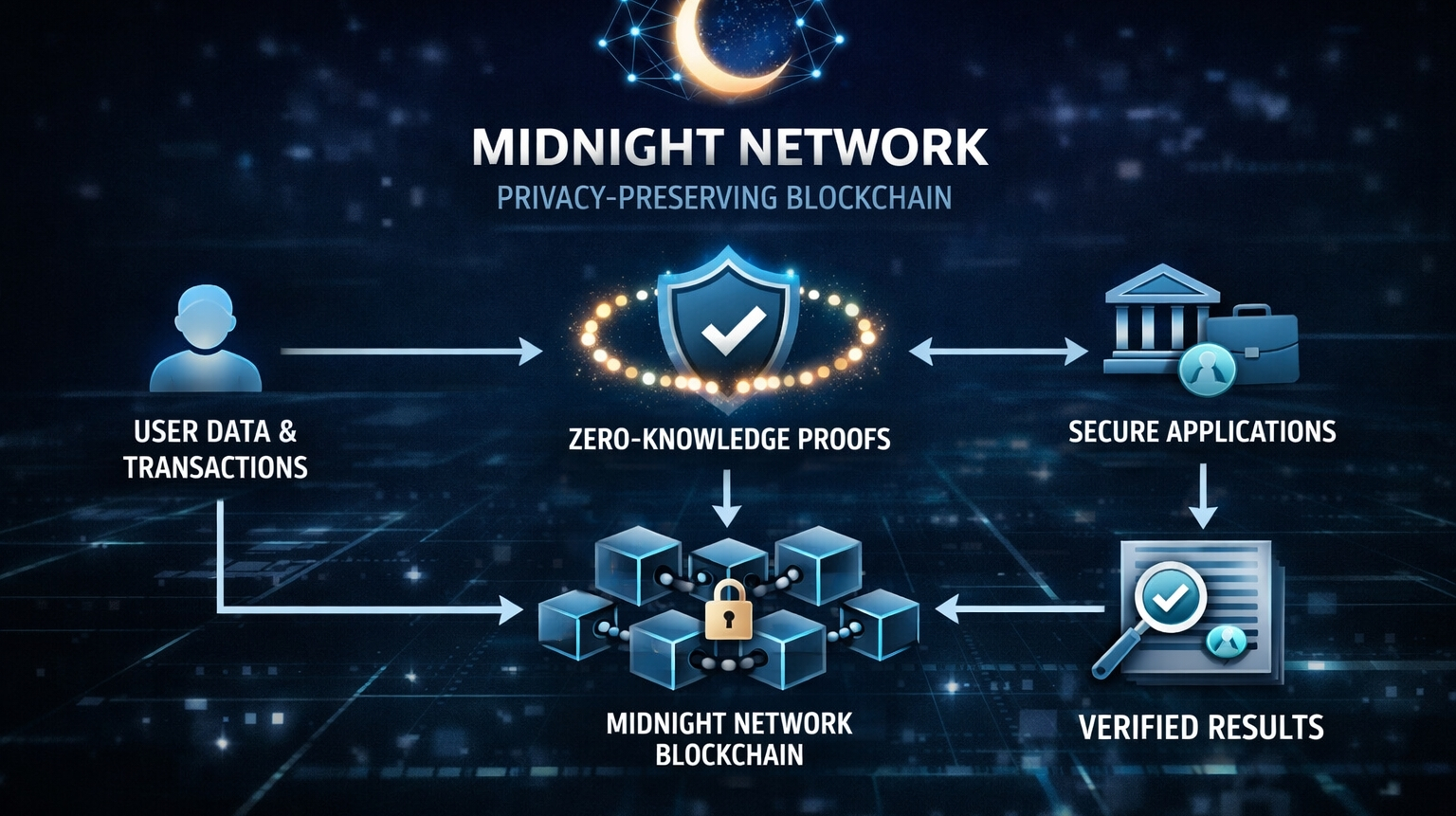
I’ve been thinking about this whole thing way more than I expected to. Like, way more. It started as curiosity, you know, just another “privacy chain” claim, and I rolled my eyes at first because let’s be honest, crypto has been drowning in promises since 2021 and most of them aged badly. Really badly. But this one… it stuck in my head. Not because it’s flashy, but because it’s trying to fix something that’s actually broken at the core.
And the funny part is, blockchain itself caused that problem.
See, when Bitcoin and all that early stuff came out, everyone was obsessed with transparency. Everything on-chain, everything visible, everything verifiable. It felt revolutionary at the time. No middlemen. No trust needed. Just math. Clean. Elegant. Almost too elegant. But then reality hit, and people realized… wait, why is my entire financial activity basically public if someone connects my wallet to my identity? That’s not freedom. That’s surveillance with extra steps.
It’s kind of ironic, honestly.
So now we’ve got this weird situation where blockchains are technically “private” because of pseudonyms, but in practice they’re not. Not even close. Chain analysis tools got so good that it’s almost laughable. You can track flows, link wallets, build profiles. Governments can do it. Companies can do it. Even random analysts on Twitter can do it. So yeah, the idea that crypto equals privacy? That’s been dead for a while.
And this is where Midnight Network comes in, trying to flip the script.
Instead of saying “everything should be visible,” it’s basically saying, “what if we only show what actually matters?” That sounds simple, but it’s not. It’s actually a pretty radical shift. Because it forces you to rethink what trust even means. Like, do you really need to see all the data, or do you just need proof that the data meets certain conditions?
That’s the core idea behind zero-knowledge proofs, and yeah, I know, that phrase sounds intimidating, but it’s not as abstract as people make it out to be. It’s more like… proving you passed an exam without showing your answers. Or proving you have enough money without revealing your balance. It’s weird at first. Your brain kind of resists it. But once it clicks, it clicks hard.
Actually, wait… this is the part most people underestimate.
They think it’s just about hiding data. It’s not. It’s about controlling data. Huge difference. Hiding is passive. Control is active. Midnight Network leans heavily into that second idea, and that’s where it starts getting interesting, because now you’re not just protecting privacy, you’re redefining ownership.
And ownership of data right now? It’s a mess.
You sign up for anything online and boom, your data is everywhere. Stored, copied, sold, analyzed. You don’t even know where half of it goes. And even in crypto, which was supposed to be different, your activity is still exposed in ways people didn’t fully think through at the start. So Midnight’s approach—keeping data off-chain, proving things about it instead of exposing it—feels like a correction. A late one, but still.
But here’s where I get a bit skeptical.
Because the idea is clean. The execution? That’s where things usually fall apart.
Zero-knowledge proofs are powerful, yeah, but they’re also heavy. Generating them isn’t cheap in terms of computation. It’s gotten better over the years, but it’s still not something you casually run on a low-end device without noticing. And if you’re building apps on top of this, you have to think about latency, cost, user experience… all the boring stuff that actually decides whether something survives.
And honestly, most users don’t care about cryptography. They just don’t. They care about whether something is fast, simple, and doesn’t break.
So now you’ve got this tension. On one side, you’ve got a system that’s technically elegant, almost beautiful in how it handles privacy. On the other side, you’ve got real-world usage, which is messy, unpredictable, and often unforgiving. Bridging that gap? That’s the real challenge.
I almost forgot to mention something important here… regulation.
Yeah, the thing nobody in crypto likes to talk about but everyone secretly worries about.
Privacy tech always raises eyebrows. Always. Because from a regulator’s perspective, anything that hides data can potentially hide bad behavior. Money laundering, fraud, all that stuff. And even if Midnight Network is designed with legitimate use cases in mind, it’s still going to get scrutiny. Heavy scrutiny. That’s just reality in 2026. Governments are way more aggressive now than they were a few years ago.
But here’s the twist. And it’s kind of ironic again.
Zero-knowledge proofs can actually help with compliance.
Yeah. Sounds backwards, right?
But think about it. Instead of handing over all your data to prove you’re compliant, you can just provide a proof that says, “I meet the requirements.” No extra exposure. No unnecessary sharing. That’s actually a cleaner model in some cases. Less risk of leaks. Less over-collection of data. It’s… kind of elegant.
Still, convincing regulators of that? That’s a whole different story.
And then there’s the developer side of things. This is where stuff gets clunky real fast. Writing smart contracts is already tricky. Now add zero-knowledge circuits into the mix, and suddenly you’re dealing with a whole new level of complexity. It’s not just coding anymore, it’s like coding plus math plus careful optimization, because one mistake can make your proof inefficient or even invalid.
That’s a big barrier.
If Midnight Network wants real adoption, it needs tools. Good ones. Not just functional, but actually pleasant to use. Because developers won’t stick around if it feels like solving a PhD thesis every time they build something. They’ll just go back to simpler chains, even if those are less private.
Let’s be honest here… most tech that wins isn’t the most advanced. It’s the most usable.
And that’s where I’m still undecided.
Because on paper, Midnight Network is spot-on. It addresses a real flaw in blockchain design. It offers a smarter way to handle data. It aligns with where the world is heading in terms of privacy concerns. All of that checks out.
But in practice? It has to survive the chaos of real usage.
Users forgetting keys. Apps breaking. Proofs taking too long. Fees fluctuating. Regulators pushing back. Competitors popping up with slightly easier solutions. It’s never just about the idea. It’s about how the idea holds up under pressure.
And I guess that’s why I keep thinking about it.
Because if this works, like actually works, it changes a lot. Not in a flashy, overnight way, but in a quiet, foundational way. The kind of change you don’t notice immediately, but later you realize everything is built differently.
And if it doesn’t work… it won’t be because the idea was bad. It’ll be because the execution couldn’t keep up with the reality of how people actually use technology. And yeah, that happens more often than anyone likes to admit.