
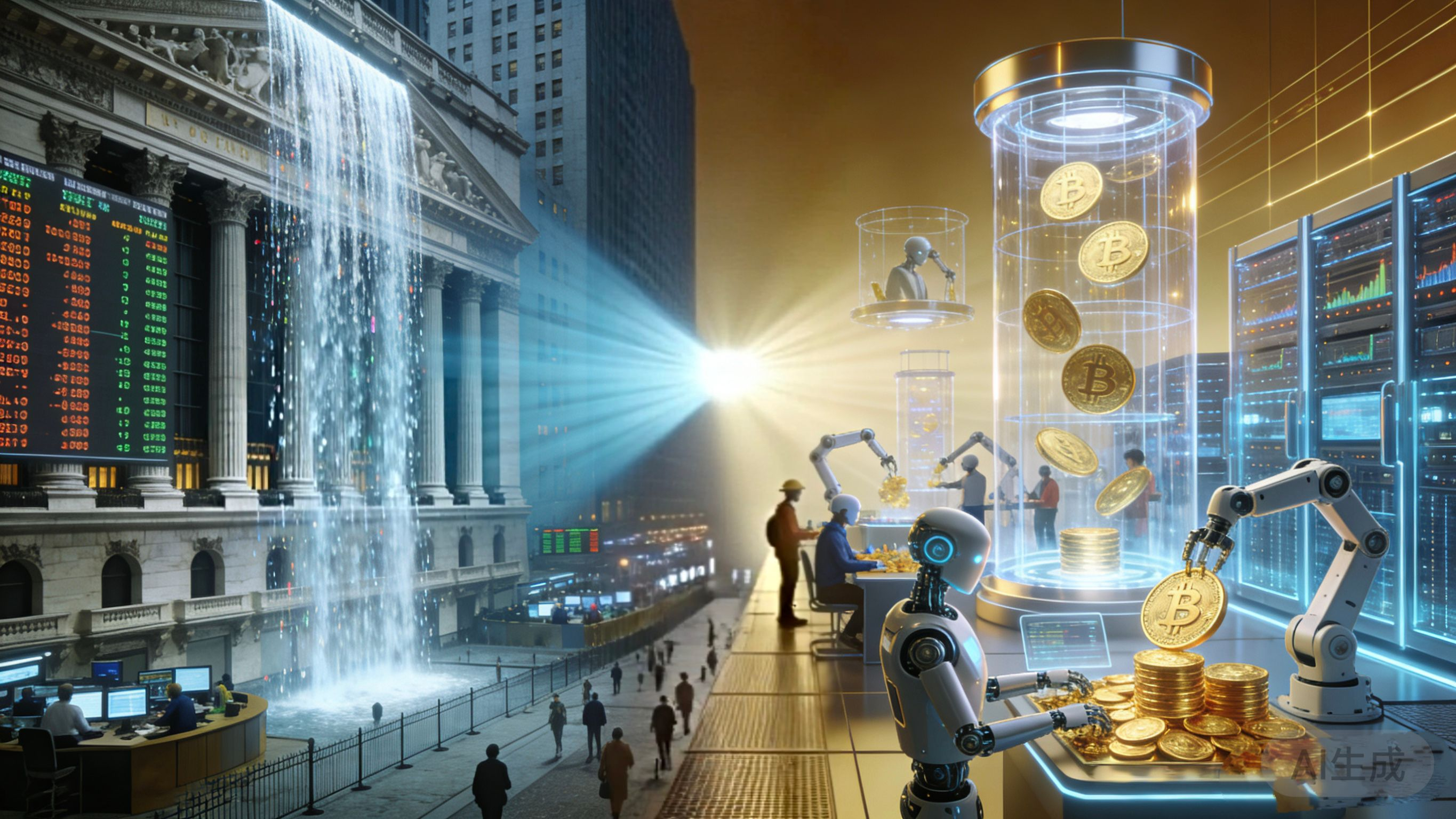
The Evolution of Investment Logic
In the past decade, crypto investment has gone through three stages:
1.0 Store of Value (Bitcoin)
2.0 Financial Legos (DeFi)
3.0 Digital Ownership (NFT, Social)
We are standing at the threshold of 4.0: Ownership of Productivity.
This is not an abstract concept.@Fabric Foundation ROBO has done something revolutionary: tokenizing the oldest form of human value—labor. But not human labor, rather machine labor.
$ROBO's Disruptive Three Laws
Law One: The source of value shifts from 'consensus' to 'output'
The value of Bitcoin comes from global consensus
$ROBO 's value comes from the verified workload of global robots
The latter is measurable, auditable, and generates real cash flow daily
Law Two: Valuation models shift from "discounting the future" to "real-time capture"
Traditional tech stock valuations are based on discounted future profits. ROBO's valuation is based on **productivity output at this moment**. The robot tasks processed by the network every day are instantly converted into ROBO's consumption and staking demand.
Part Three: The innovative "physical liquidity mining" model
The Fabric network operates the most unique incentive mechanism in the history of crypto:
This forms a perfect economic flywheel: more work → more income → more staking → less circulation → higher value support.
Three impending "paradigm awareness moments"
Traditional capital discovers new targets
When pension funds seek "exposure to physical assets", they will find that ROBO is the only target that can be directly invested in "global automated productivity" and can be traded 24/7.
The first robot IPO
Imagine a "robot factory" made up of 1,000 robots going public on the Fabric network. It issues shares, pays dividends, and settles supply chains through $ROBO . This is not science fiction; it's the roadmap for 2025.
National-level adoption
A major manufacturing country announces that 5% of its state-owned robot production capacity will be connected to the Fabric network to improve utilization. ROBO has upgraded from "crypto assets" to "national digital strategy infrastructure."
Risk and innovation coexist
The biggest risk is not technology, but cognition:
Traditional investors find it hard to understand "productivity tokens"
How does regulation define "income generated by robots"
Early-stage internet growth may be slower than expected
But all disruptive innovations begin with this cognitive friction. Internet stocks in 1999 were also deemed to have "no profit model."
Ultimate Thinking:
If a robot creates $100,000 in value each year, what should a token representing 1% ownership of its productivity be worth?
This is not a math problem, but a redefinition of "value" itself. $ROBO is writing the answer.
