
In fact, everyone has a misconception that complete openness and transparency are synonymous with decentralization. Very few people have seriously considered: do we really need to expose transfer records, asset situations, and even all private data to everyone?
Bitcoin and Ethereum make the entire network ledger completely public, allowing anyone to track addresses, assets, and transaction paths. This model has been very effective for early blockchain verification, but in the real business world, it is almost a disaster. Companies cannot expose their supply chains, cash flows, and partner information on a public chain; doing so would only bring endless risks.
Thus, privacy chains have emerged.
Projects like Monero and Zcash have solved privacy issues but have gone to the other extreme—complete anonymity. The result is that regulators do not accept it, and institutions are hesitant to participate. This has also become a long-standing paradox in blockchain:
• Too transparent: verifiable but completely lacks privacy
• Fully anonymous: has privacy but is completely non-compliant
and @MidnightNetwork aims to solve this seemingly unsolvable contradiction.
It is also the first project in the crypto space to clearly propose Rational Privacy.
In simple terms: it only proves that things are true without exposing the specific data itself.
For example:
In traditional DeFi, institutions must publicly disclose all address information of collateral assets to borrow.
But on Midnight, it only needs to prove two things:
• I have enough collateral assets
• The collateral rate meets platform rules
Specific amounts of money and addresses can all be hidden.
The core of this logic is zero-knowledge proof ZK-SNARK: it only verifies facts without disclosing information. Although Aztec and Aleo follow a similar path, Midnight has made further advancements in its overall architecture.
Its real killer feature is the Dual-State Ledger.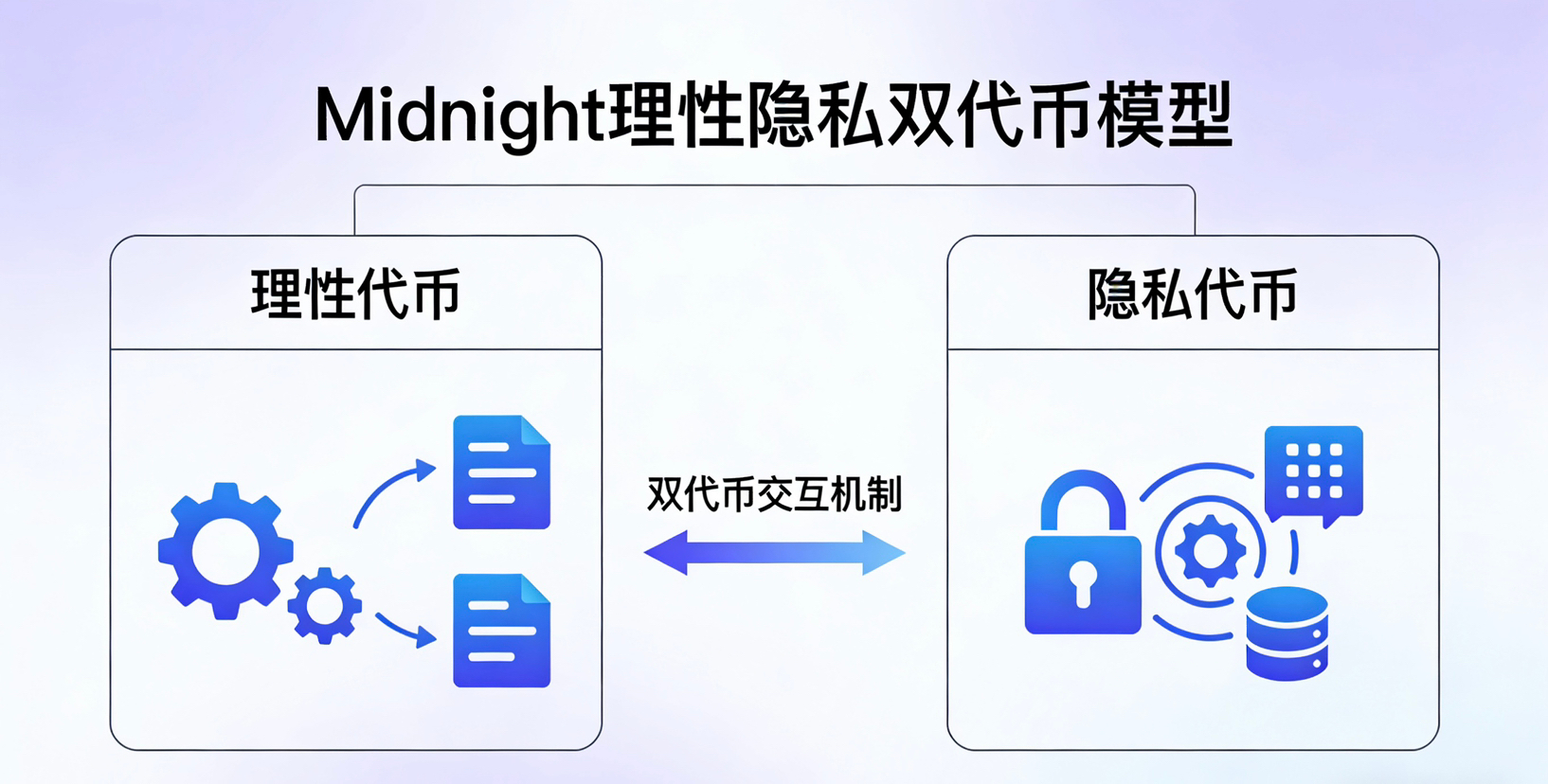
It can be understood as: only the proof is stored on-chain, while the real data stays on the user's local device.
The network is divided into two layers:
• Public layer: only on-chain transaction proofs, contract codes, and state commitments, all of which can be verified by everyone.
• Private layer: identity, balance, and sensitive business data only exist locally
Users complete the computation locally, generate ZK proofs on-chain, and nodes only verify the validity of the proofs. Data does not need to be public, and the rules remain trustworthy.
Coupled with its unique NIGHT + DUST dual-token model, it is more aligned with commercial use than ordinary public chains.
The vast majority of public chains only use one token for Gas, such as ETH and SOL. Midnight directly splits it into two systems:
• NIGHT: capital assets used for governance, staking, and ensuring network security
• DUST: network resources specifically used to pay transaction fees
The key is that DUST is not bought, but is automatically generated 'energy' after holding NIGHT.
Hold NIGHT → Automatically recharge to produce DUST → Used for on-chain transactions.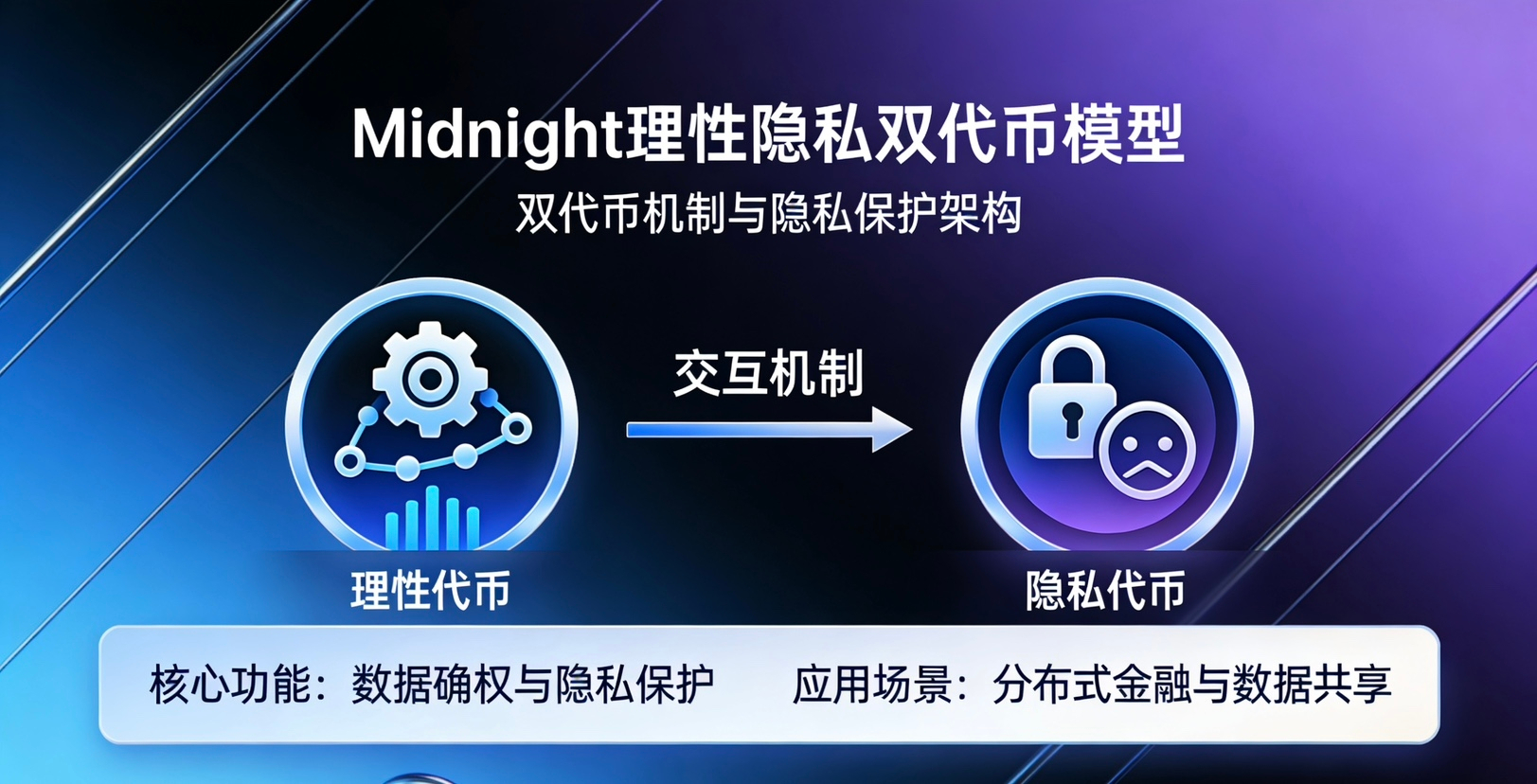
This way, transaction costs are stable and controllable, unlike ETH Gas which can spike dramatically; moreover, DUST is not tradable and will not be used as an anonymous transfer tool.
This allows Midnight to truly find a balance between privacy and regulation.
Compared to other projects in the track, its positioning is also very clear:
Aztec leans more towards Ethereum's privacy layer 2, focusing on DeFi;
Aleo is a fully private computing network, more oriented towards developer experimentation;
Mina pursues extreme lightweight;
Midnight's goal is more pragmatic: to build enterprise-level privacy infrastructure.
It is aimed at traditional real business scenarios such as banks, RWA, supply chains, and identity systems.
In summary:
Aztec wants to innovate DeFi, Aleo wants to innovate computing, and Midnight wants to innovate the entire business application.
The early internet also transmitted in plain text until secure communication layers became widespread, allowing e-commerce to truly explode.
In the blockchain world, what Midnight aims to become is the crucial infrastructure that determines whether business can be scaled.