
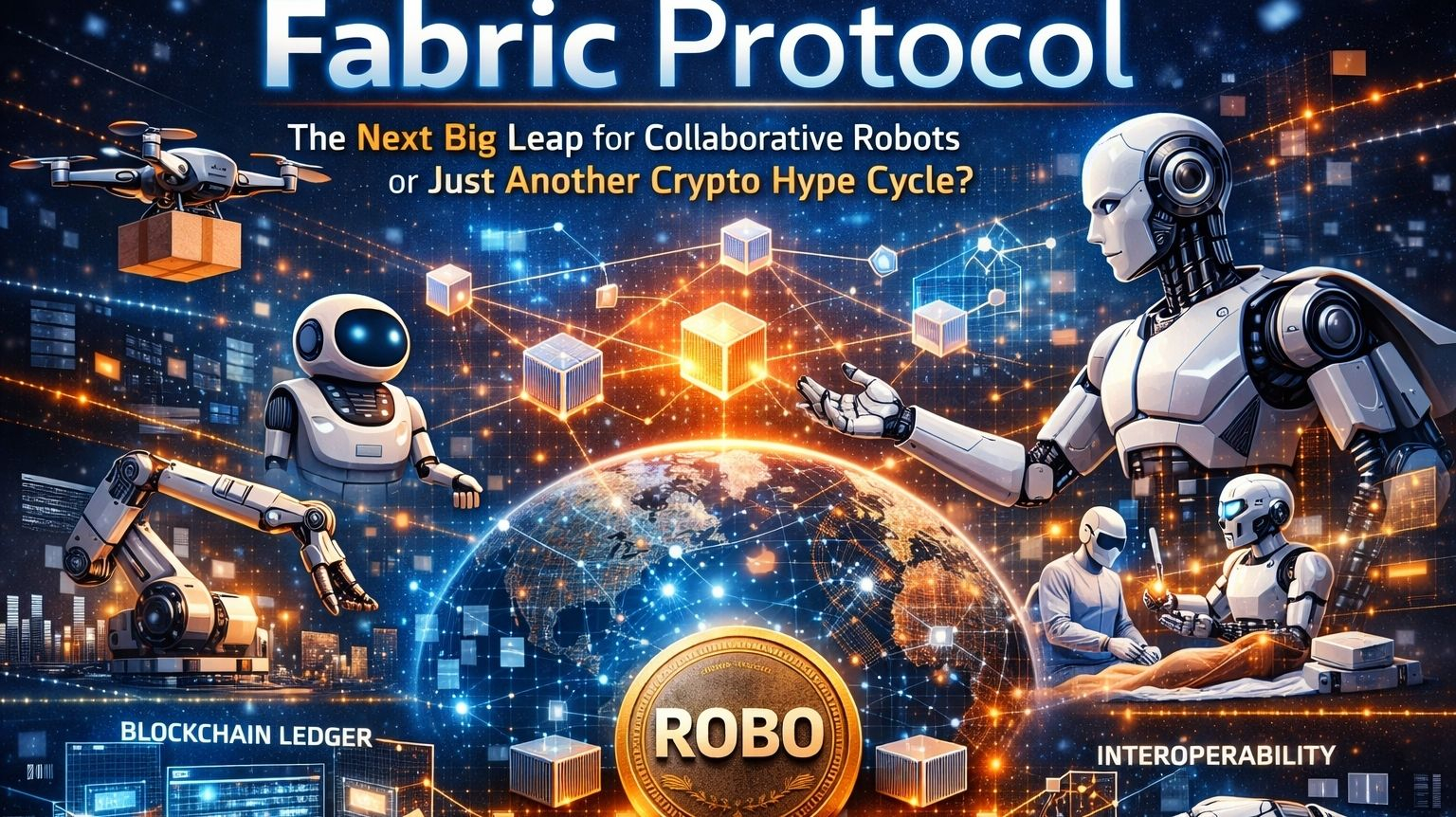

Alright, here we go… another whitepaper, another token, another protocol. This time, it’s Fabric Protocol. I’ve been knee-deep in papers all night, staring at blockchain diagrams and robot specs, trying to figure out if this is the real deal or just another buzzword-filled project destined to fade into the crypto ether.
So, here’s the thing. Fabric Protocol is aiming to be the "internet for robots," or at least, that's what they're calling it. The idea is that robots, AIs, and autonomous systems can all work together, communicate, and even share tasks in a decentralized, open ecosystem. Sounds nice, right? But how many times have I read something that sounds nice, only for it to turn out to be another "next big thing" that’s either poorly executed or overhyped?
Fabric Protocol, at least in theory, promises a network where machines, rather than just being isolated and proprietary, can actually collaborate with each other on a global scale. And yes, they’re using blockchain to track everything, which, in theory, ensures transparency. Every task a robot does is recorded, and you can verify it. Okay, I get it. That’s useful. But are we really going to trust robots verifying each other’s work? Are we sure the blockchain is the answer to making machines cooperate, or is it just another layer of complexity that makes the problem seem solvable while actually introducing more bottlenecks?
What I keep coming back to is the ROBO token — the project’s native currency. Sure, they say it’s supposed to “incentivize” participation. Developers, robots, even contributors, all get a piece of the pie for completing tasks or building out the network. Great. But again, I've seen this playbook before. Tokenize something, create a "self-sustaining ecosystem," and slap some buzzwords about "the future of autonomous economies." It sounds good. But how many times have I seen a similar tokenomics model, only for the token to collapse under its own weight once the hype dies down?
The real kicker for me is that Fabric Protocol is trying to blend blockchain, robotics, and AI into one interconnected network. That’s bold, and if they pull it off, it could be revolutionary. But, come on — we’ve seen this in the past, right? DeFi promised financial revolution. GameFi promised gaming economies that would pay us for playing. Hell, modular chains were going to fix all scalability problems. And now we’re here, still asking the same questions. Is this the thing that finally clicks, or is it just another cycle in the hype train?
The public ledger makes sense, in theory. If robots and AIs are performing tasks, you want a way to verify those actions. Blockchain makes that possible. But then there’s the issue of interoperability — different robots, different AI systems, different protocols. Fabric says its system is modular and can handle all of that. I don’t know… I’ve heard that one before. When it comes to real-world adoption, how are they going to get these heterogeneous systems to talk to each other seamlessly?
And yeah, sure, the agent-native infrastructure is cool. The idea of creating a network that works specifically for robots instead of humans sounds like a solid technical foundation. But again, the skepticism creeps in. Is this a solution to a problem that actually exists, or are they just building a solution in search of a problem?
There are real applications for this, no doubt. Collaborative robots in industries like logistics, healthcare, disaster response… that’s the potential, right? I get it. But, man, I’ve seen this vision before. Robots working together to solve big problems—it’s all over the place in whitepapers, in pitch decks, in forums. But do they actually have the incentive structure to make this work on a global scale? Do we really think robots will play nice, without a centralized authority stepping in to pull the strings?
So, here I am, still processing it. Fabric Protocol is intriguing. It’s bold. It’s definitely ambitious. But I can’t shake the feeling that I’m reading the latest iteration of a promise I’ve seen before, wrapped in a shiny new package with a token attached. Maybe I’m too jaded, but until I see more than just a glossy whitepaper and some tokenomics to back it up, I’m not sure if this will be the breakthrough it claims to be or just another notch in the belt of crypto projects trying to solve problems that don’t need solving yet. We’ll see.
The world of autonomous machines collaborating in a global economy? Maybe. But I’ve been burned by too many shiny whitepapers to believe it until I see more.