
On March 19, at 2 AM, the Federal Reserve announced its interest rate decision.
The market originally thought this would be an uneventful meeting.
The result was—interest rates remained unchanged, but the pricing logic for global assets has changed.
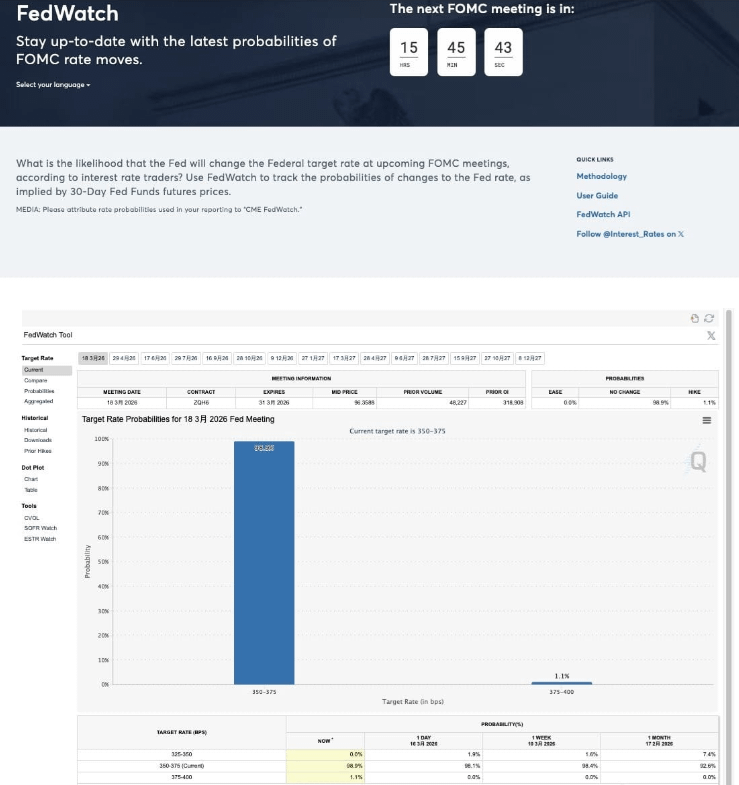
The Federal Reserve announced that it will maintain the federal funds rate at 3.5%—3.75%, while the dot plot indicates that only one rate cut is expected in 2026.
It appears moderate, even somewhat dovish.
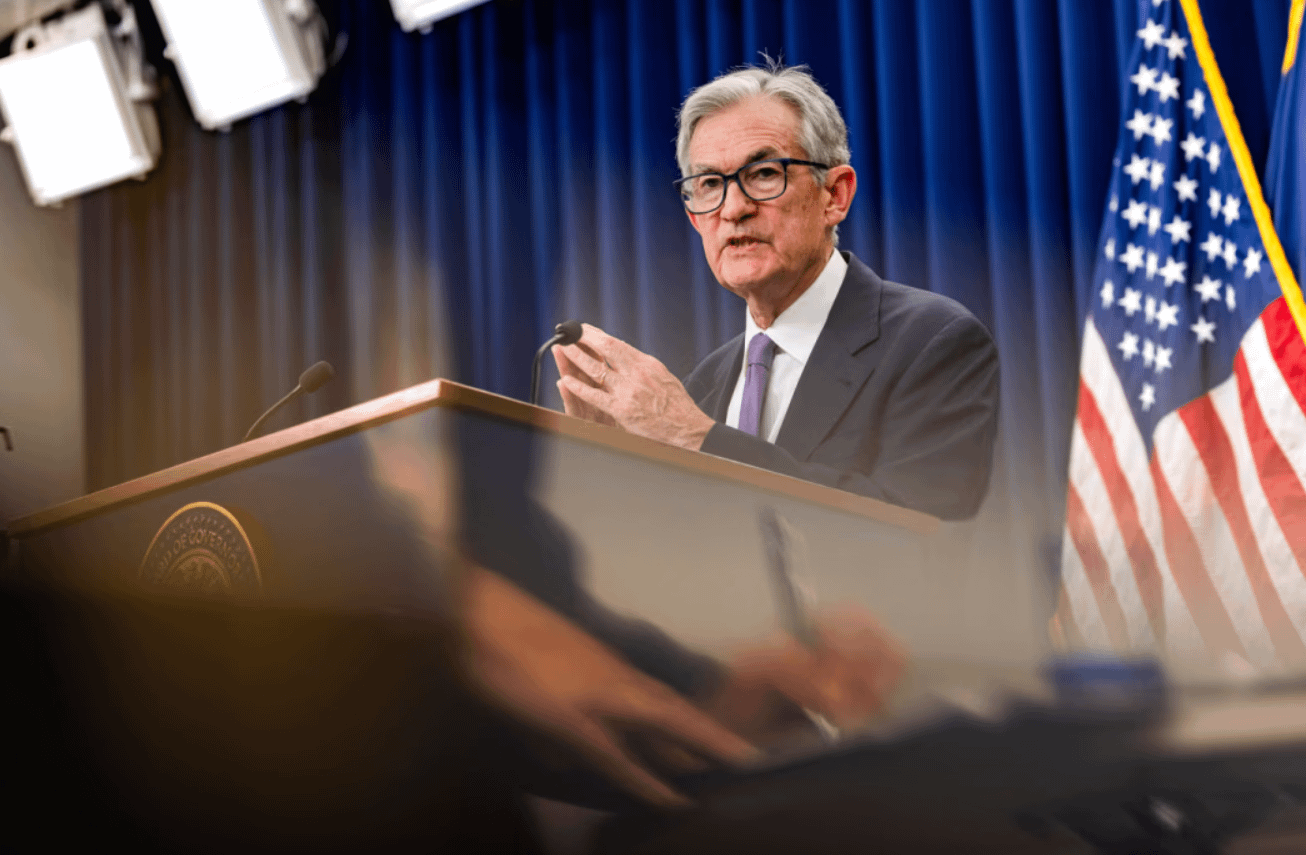
But what truly alerted traders was a statement made by Powell during the press conference:
The committee has already started discussing whether it is possible to raise interest rates again.
At this moment, the market realized: the rate cut cycle may not have been canceled, but—it is being redefined.
1. This is not a 'wait and see' approach, but a 'shift in attitude'.
Over the past year, the market has formed a consensus: inflation decreases → the Federal Reserve will eventually cut rates.
So all assets are trading around one question: when will interest rates be cut? But this time, the Federal Reserve quietly changed the question.
Now the question has turned into:
If inflation rises again, should we continue tightening?
This is a directional change.
Because once 'raising interest rates' becomes an option again, the bottom of interest rates is lifted.
2. Why has the Federal Reserve suddenly become cautious?
The answer is not the economy, but rather— the structure of inflation has changed.
This meeting explicitly stated for the first time: inflation is facing a 'double shock'.
1. Tariffs make it more difficult for inflation to decrease.
Past inflation came from overheating demand, now it comes more from costs.
Import prices are rising, companies are passing costs onto consumers, and core inflation is starting to become sticky.
This means: what monetary policy faces is no longer a cyclical problem, but a structural problem.
Higher interest rates may not necessarily be reduced.
② The situation in the Middle East has made energy a determining variable again.
The policy statement added a key phrase:
The situation in the Middle East's impact on the US economy is still unclear.
Language is usually very restrained; when it actively mentions geopolitics, it indicates that risks have entered the decision-making level.
The rise in oil prices does not bring simple inflation, but a dangerous chain: rising oil prices → transportation and production costs increase → consumption is squeezed → corporate profits decline → employment risks accumulate.
This combination of four steps has a name: stagflation.
3. The true meaning of the dot plot: consensus is breaking down.
The media headline is: 'Still expect one rate cut within the year.' But the structure is completely different:
7 officials expect no cuts in interest rates for the entire year.
12 expect at least one cut.
Some expect consecutive rate cuts.
Some even expect future rate hikes.
This is not a consensus expectation, but an expansion of divergence. Historically, when the Federal Reserve's internal opinions are divided, policy usually chooses: slower, more cautious, and higher interest rates.
4. An overlooked signal: AI may be pushing up interest rates.
Powell mentioned a rarely discussed point: AI may temporarily raise the neutral interest rate.
The reason is very realistic:
Data centers are being built at a crazy pace.
Electricity demand is surging.
Infrastructure investment is expanding.
Corporate capital expenditure is rising.
AI may lower costs in the long run. But for now, it primarily generates demand. In other words: AI may not be a deflationary force, but a new economic stimulus.
This means an important conclusion:
The future 'normal interest rate' may be higher than in the past decade.
5. The market has truly entered a new stage.
The macro theme of the past two years: waiting for interest cuts.
The new stage we are entering is: confirming how long high interest rates can last.
The difference between the two is: the former rewards risk, while the latter rewards patience.
6. What does it mean for global assets?
US Treasury Bonds
The long-term downward space for interest rates is limited, and 'Higher for Longer' is being repriced.
US Stocks
Entering a tug-of-war period between growth and interest rates—AI supports profits, but valuations are suppressed.
Crude Oil
Has become the core variable of global macro.
Crypto
Liquidity easing is delayed, and the pace of the market may be postponed rather than ended.
The real focus is just one sentence.
At this meeting, the Federal Reserve did not change interest rates. But it changed the market's imagination about future interest rates.
And history has repeatedly proven:
Major market movements never start from policy changes, but from changes in expectations.
New cycles often emerge on such 'seemingly calm' nights.
If inflation rises again in the coming months, people may look back at this meeting—viewing it as a real turning point.
\u003ct-261/\u003e


▌Disclaimer:
The content of this article only represents the author's views and does not promote or endorse any business or investment behavior, nor does it serve as actual investment advice. Readers are encouraged to establish correct investment concepts and enhance risk awareness.