Middle Eastern geopolitical tensions have increasingly resembled a powder keg in recent years, with the Iranian nuclear issue, the Houthis blocking the Red Sea, and the spillover of the Gaza conflict... Each escalation causes global energy, shipping, and finance to tremble. Traditional centralized systems are too fragile; once sanctioned or disconnected from the internet, businesses' cross-border settlements collapse, and personal assets can vanish just like that.
At this point, looking at $SIGN , it is not positioned as a meme for speculative trading, but rather attempts to build an 'infrastructure for value transmission under geopolitical conflict'.
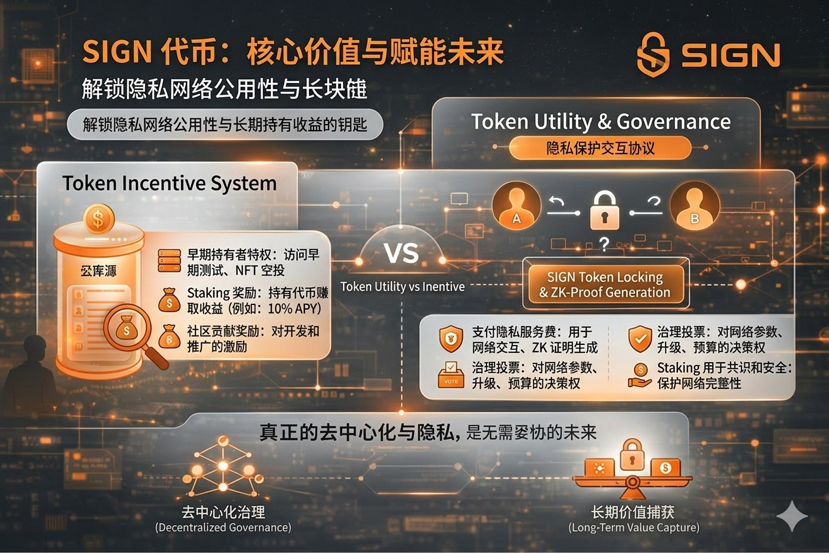
The core is @SignOfficial Sign Protocol——an omni-chain attestation protocol that uses ZK proofs and encryption to allow any information (identity, ownership, KYC results, transaction records) to be verified across chains while also ensuring privacy protection. For an extreme example: if a certain Middle Eastern country suddenly imposes an internet blockade or freezes bank accounts, holders can still prove on-chain through Sign that 'I legally own these assets', and then continue to use, trade, and mortgage on other chains. Isn't this turning blockchain into a super sovereign database?
With the TokenTable product, projects can execute transparent multi-chain airdrops, team token locks, and community rewards. It's way fairer than the old school centralized wallet token distributions and much harder to game the system.
Put simply, the more chaotic the geopolitical landscape, the greater the demand for decentralized trust layers. #sign The current market cap isn't too high, but if it can actually establish use cases in high-uncertainty regions like the Middle East, Africa, and Latin America, the upside potential is significant.
Of course, there are risks, like slow adoption, heavy competition, and regulatory uncertainties... but from an infrastructure standpoint, the direction is spot on.