
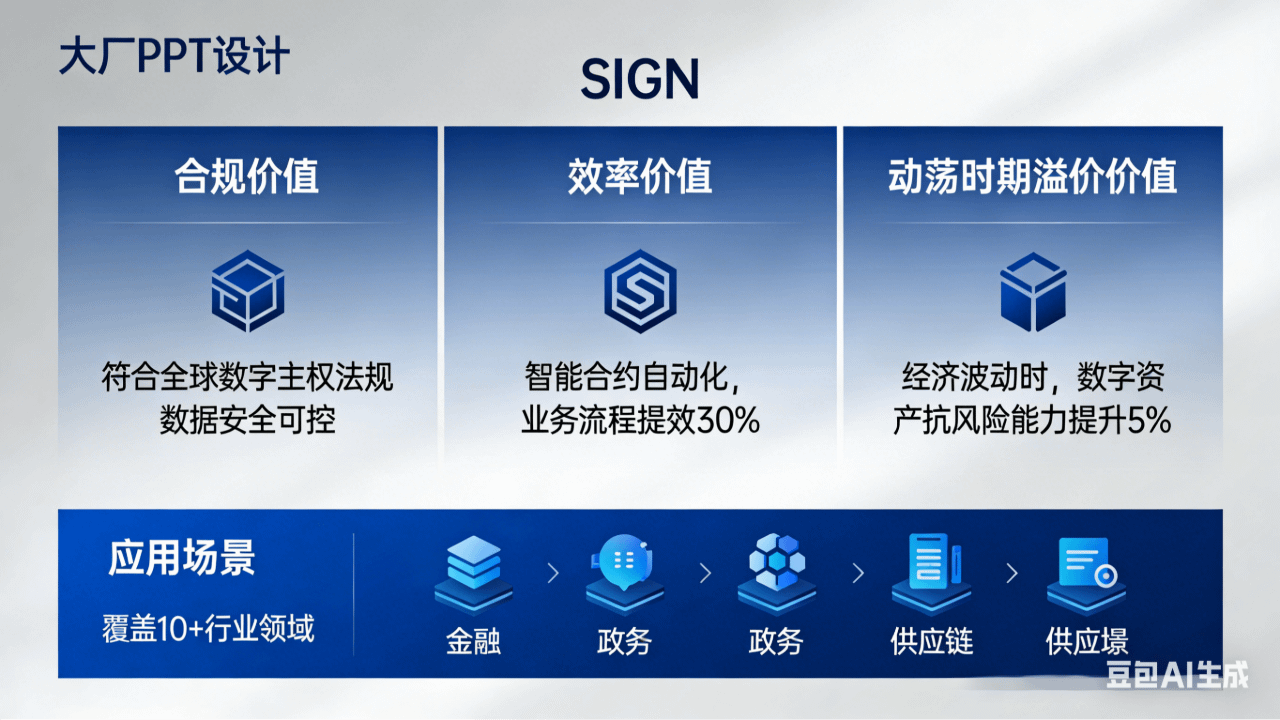
Recently, the market's focus has been attracted by the constantly hyped Meme, AI, and even some new public chains, but the truly concerning changes have actually quietly occurred. As global geopolitical tensions rise, capital's gaze begins to refocus on those underlying systems capable of supporting sovereignty, clearing, identity, and asset registration. It is against this backdrop that SIGN has been rapidly re-recognized by the market.
SIGN is not an ordinary on-chain application; it is aimed at national-level currency systems and sovereign-level digital infrastructure. Its goal is not which chain is faster, but how to preserve payment capabilities, identity trust, and capital flow capabilities for nations in a turbulent world. This is the true value that the market cares about.
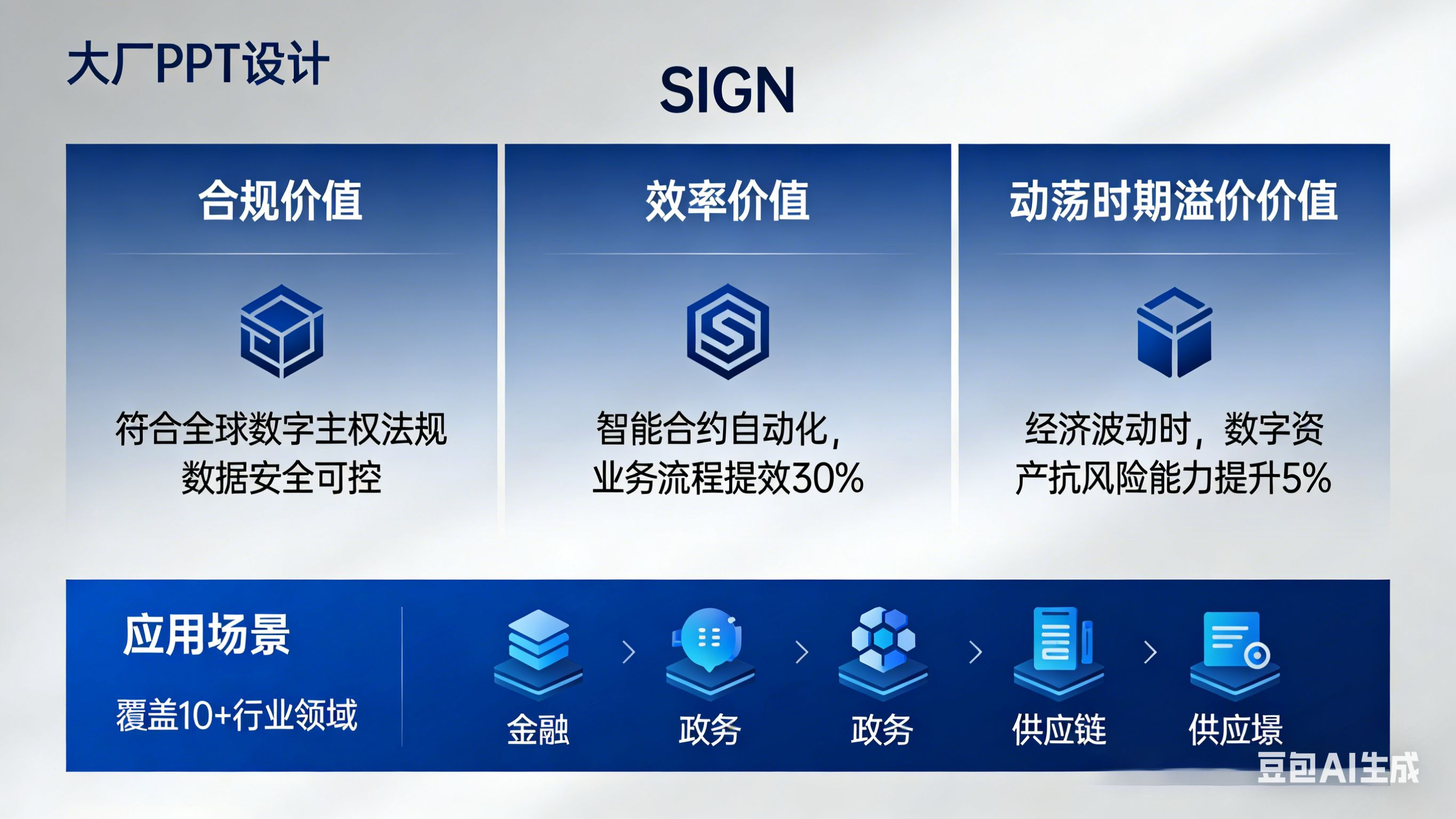
From Compliance to Premium: The Core Value of SIGN
SIGN attempts to transform complex real-world rules (such as compliance audits, payment statuses, and citizenship qualifications) into immutable, auditable on-chain proofs through a cryptographic evidence system. In other words, the problem SIGN addresses is: how to integrate various types of data scattered across different systems into a unified trust foundation.
This type of capability is called 'compliance' and 'efficiency' in times of peace, but in turbulent times, it will directly turn into a premium. For example, the following scenarios:
Governments need to distribute subsidies and welfare more transparently;
Cross-border payments need to circulate on regulated tracks;
Various identity credentials (such as visas, KYC, degrees, licenses) need to achieve selective disclosure and offline verification;
There is a need to convert real-world assets like energy, land, and fund shares into regulated on-chain capital.
In the past, these operations were scattered across multiple systems. SIGN's goal is to integrate them into a sovereign digital infrastructure.
SIGN's market response: Middle Eastern variables become key
SIGN did not become famous overnight. It has already landed in the UAE, Thailand, Sierra Leone, and expanded its business in over 20 countries. With the tension in the Middle East, SIGN was revalued by the market, and after founder Xin Yan mentioned the issue of capital outflow in the Middle East during an interview on Saudi television, SIGN surged 131.5% within two weeks. Today, SIGN's market price is about $0.04, with a circulating market value of $77.76 million.
The new judgment given by the market is: SIGN is no longer just a short-term hype hotspot; it stands at the intersection of global capital and sovereign digitization.
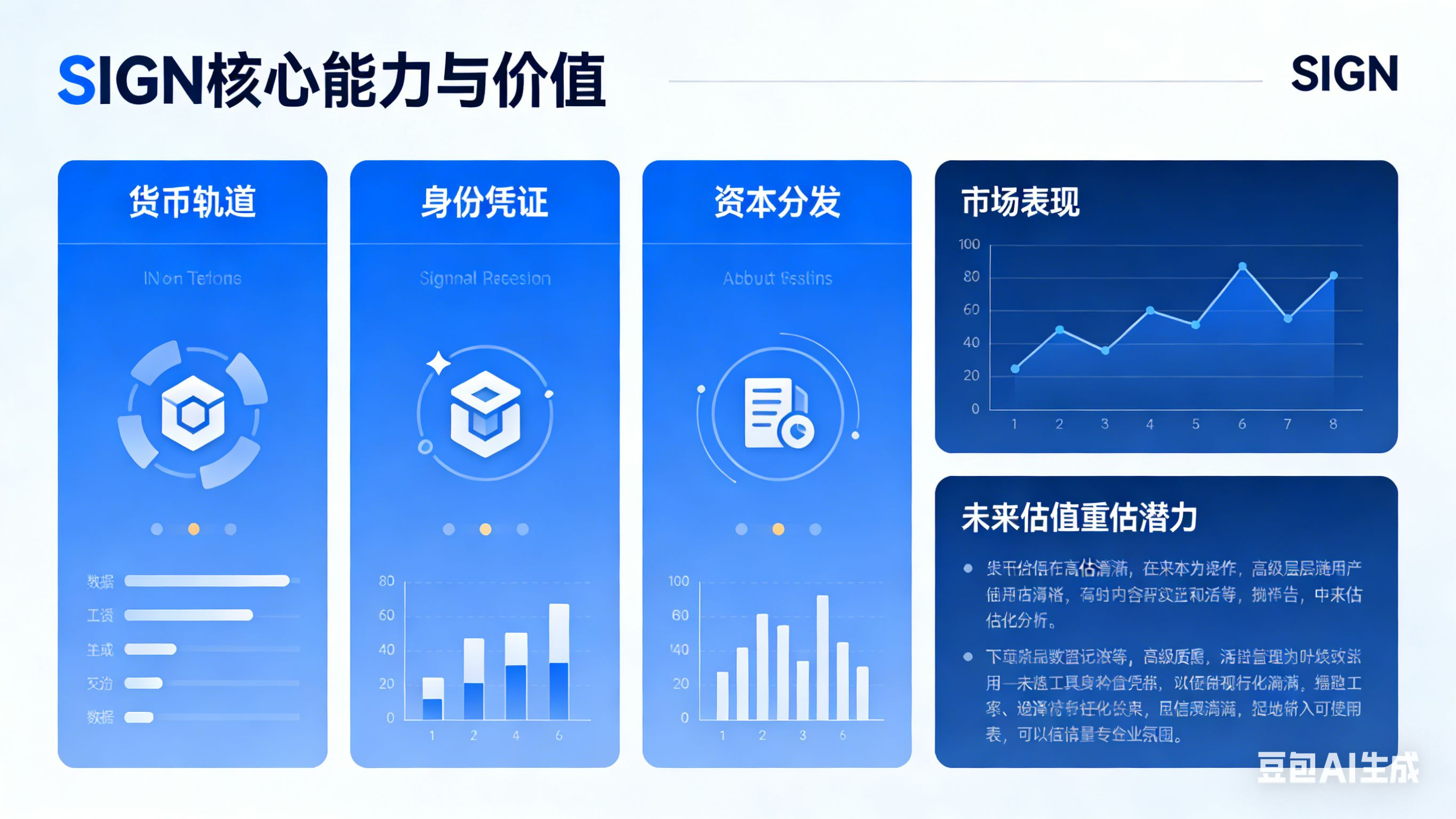
What makes SIGN unique: Control over three core areas
What SIGN does is not just technological innovation, but a redefinition of global sovereign infrastructure. It simultaneously controls three crucial functions:
Monetary Track: The Core of the Digital Currency System.
Identity Credentials: Can be selectively disclosed and verified offline.
Capital Distribution: Allow various assets to enter regulated capital markets.
These features will position SIGN in a key place in the future global economic landscape. Whoever controls these will be able to take the initiative in times of conflict, turmoil, and market restructuring.
The Future of Sovereign Infrastructure: Revaluation of SIGN
If in the coming year, SIGN can continue to dig deep in regions like the UAE, Southeast Asia, and Africa, and turn sovereign cooperation from news into verifiable, sustainable data, then its valuation will gradually detach from 'event-driven' fluctuations and enter a phase of infrastructure revaluation.
By then, SIGN's label will no longer be a short-term hype, but a 'ticket' to enter the sovereign digital world. The potential of this sovereign-level infrastructure can only truly showcase its value when global capital is restructured.
Conclusion: New Opportunities in the Market
SIGN is not an emotional asset that follows trends; it represents the future of sovereign-level digital infrastructure. When the global political landscape and economic environment undergo drastic changes, projects like SIGN become the true 'value carriers' of the market. What it is building is not just a simple on-chain application, but a complete system that can provide underlying trust for nations, governments, and institutions.
When capital begins to revalue infrastructure-like assets, SIGN is undoubtedly one of the important winners of the future.