
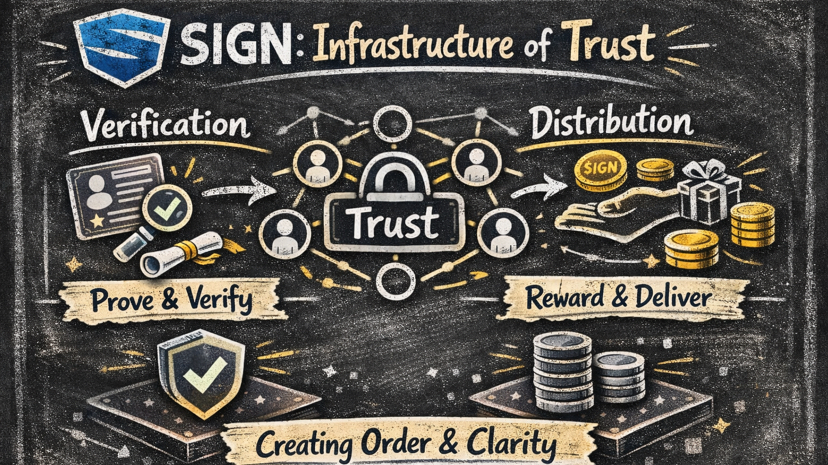

usually notice it when it becomes useful in a deeper way.That is what makes @SignOfficial interesting to me.A lot of digital systems look strong from the outside, but when you look closer, many of them still struggle with something basic. They do not always handle trust well. They can grow fast, attract attention, and build communities, but when it comes to verifying who qualifies, who participated, or who should receive value, the process often feels scattered.
That is why the idea behind SIGN feels important.
Credential verification and token distribution may not sound like the most exciting topics at first, but they sit right at the center of how digital systems actually function. If credentials are hard to verify, confusion starts building. If value is hard to distribute, frustration follows. A network may look active, but underneath, it starts losing clarity.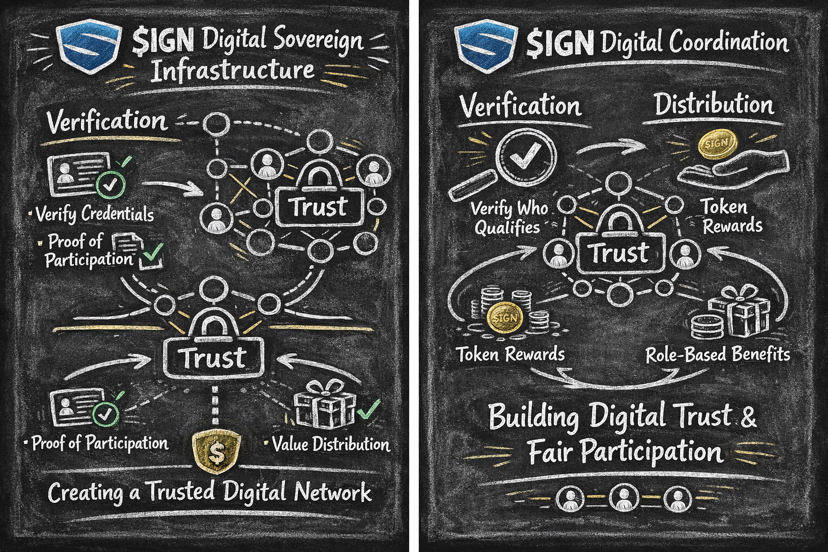
To me, this is where @SignOfficial stands out. It focuses on something that many people overlook until it becomes a problem. The internet does not only need more activity. It needs better structure. It needs systems that can verify participation and distribute value in a way that feels clean, dependable, and easy to trust.
That kind of infrastructure matters more than people think.
When digital ecosystems grow, simple things become harder. More users join. More communities form. More rewards, permissions, and qualifications need to be handled properly. Without a strong system behind that, even good platforms can become messy. Delays happen. Doubt grows. People stop feeling sure about what is fair and what is real.
This is why I think SIGN connects to something much bigger than a passing trend. It speaks to a long term need. Verification is not a small detail. Distribution is not just an extra feature. Both are part of the foundation. They shape how trust moves through a digital environment.
What I like here is that the value feels structural. It is not based only on attention. It is based on usefulness. One side helps prove who should be recognized. The other helps make sure value reaches the right place. That combination creates order, and order becomes more important as systems get larger.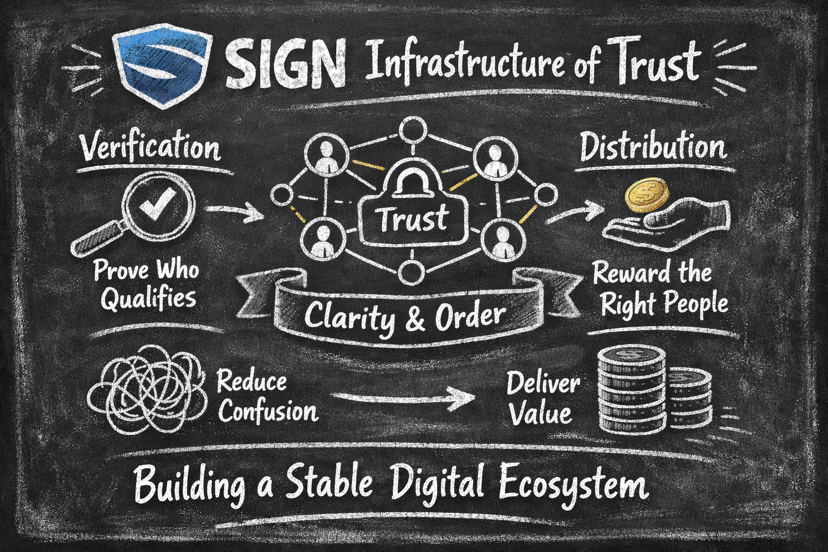
think that is why $SIGN feels meaningful beyond the usual market conversation. It points toward a future where digital coordination becomes clearer, smoother, and more credible. Not louder, just stronger where it counts.
For me, that is the real value of SIGN. It supports a part of the internet that people may not always see first, but sooner or later, everyone depends on it.