
I've been keeping a close eye on the situation in the Middle East for the past week.
The security issue of the Strait of Hormuz has once again been brought to the forefront, with multiple countries jointly stating their commitment to "ensuring the safety of shipping lanes." Many people's first reaction is oil prices and the risk of war, but if you broaden your perspective, you'll discover something even more important:
The world is redefining "infrastructure".
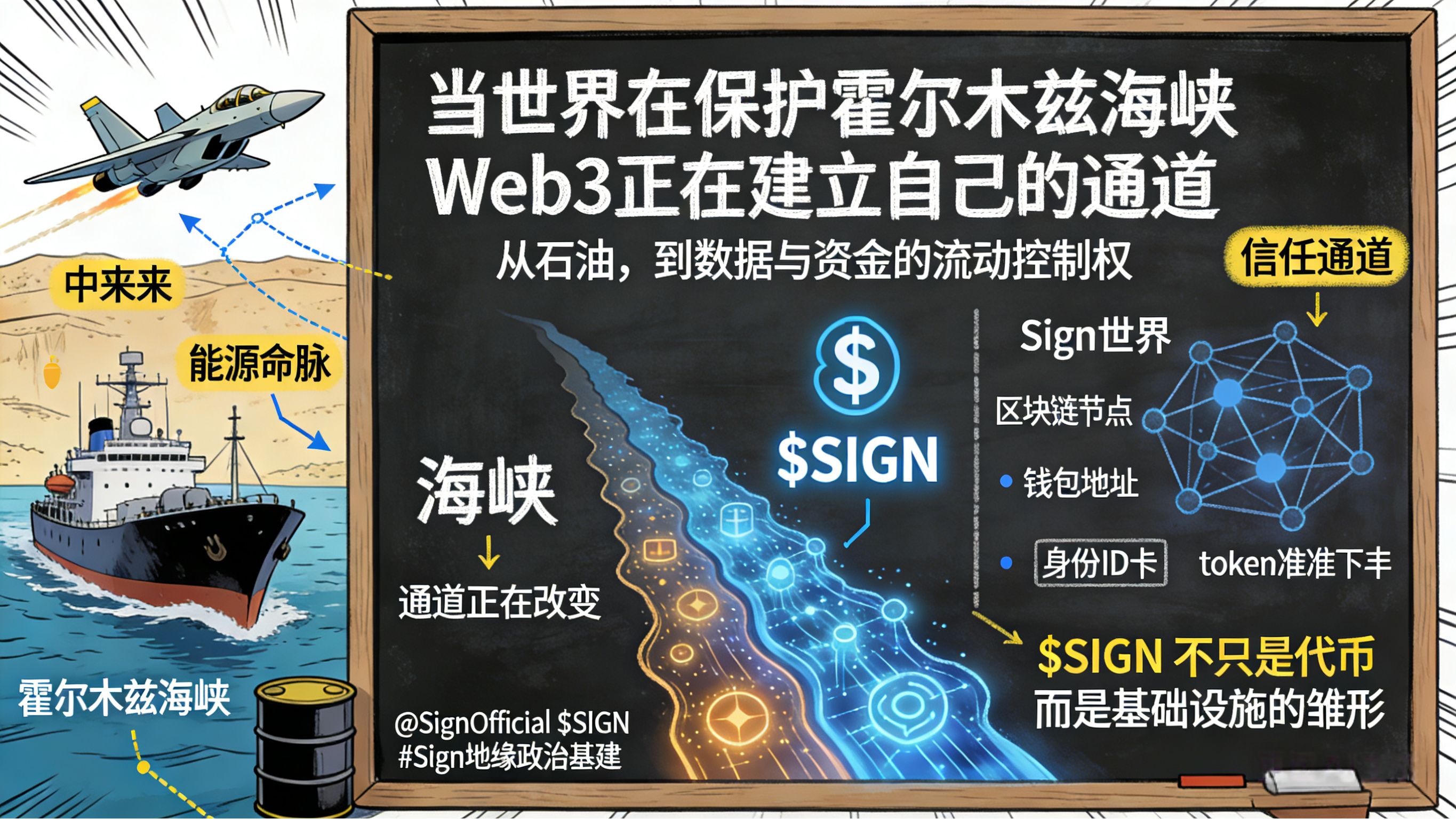
In the past, infrastructure consisted of:
oil channel
shipping routes
Military defense line
But now, a new dimension is emerging:
Digital World Infrastructure
And that's why I'm re-examining @SignOfficial and $Sign.
I. The Shift from "Energy Channel" to "Trust Channel"
Why should the Strait of Hormuz be protected in the real world?
Because it determined:
Can energy flow?
Can the economy function?
In other words, it is a "channel for the flow of value".
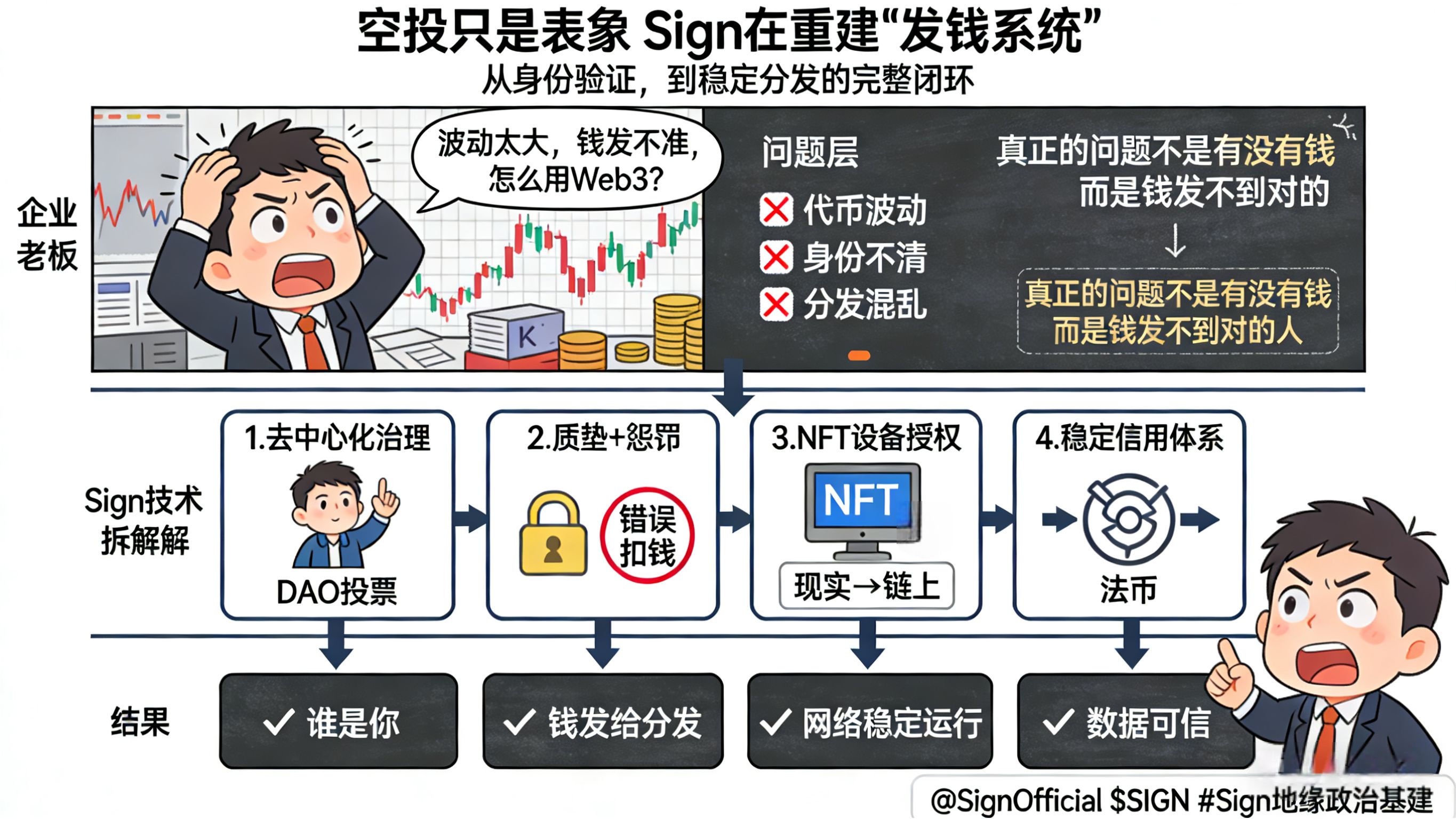
But in the on-chain world, the real problem is never "whether or not there is money," but rather:
Who can prove who you are?
Who should receive the money?
Is the data reliable?
If these three issues are not resolved, all DeFi, airdrops, and incentives will become "ineffective liquidity."
The essence of Sign's positioning is:
Build a "verifiable + distributable" trusted channel
II. Technical Structure Breakdown: What problem does Sign actually solve?
Many articles only focus on "distributing airdrop tools," but if you look at it from the perspective of DePIN and infrastructure, it becomes much clearer.
We break it down into four core modules:
Decentralized governance: Rules are not set by people, but executed by the system.
Sign's governance structure is essentially solving an old problem:
Who decides the rules?
In traditional systems:
The platform has the final say
But in Sign:
Execution on the rule chain
Parameters can be adjusted
This is crucial for the future "cross-border data system".
Staking + Penalty Model: Solving the Trust Problem
This is the most important point that many people overlook.
The biggest problem in any distribution system is:
Fake
Witch Attack
fake identity
Sign approved:
Staking
Punishment (Slash)
Build a simple yet effective mechanism:
Doing the right thing makes you money; doing the wrong thing makes you lose money.
This essentially turns "trust" into an economic model.
NFT-licensed devices: Connecting to the real world (key point)
This is the core reason why Sign can enter the DePIN narrative.
What is the purpose of a device NFT?
Mapping real-world devices onto the blockchain
For example:
node
terminal
Device Identity
This step is crucial because it solves:
How does an on-chain system know that "you are real"?
A stable credit system: the real killer feature
This is what I think is the most underrated aspect of Sign.
Why are traditional enterprises unwilling to enter Web3?
The answer is simple:
Too much fluctuation
Earn 10% today, lose 30% tomorrow; no one can predict the future.
What Sign is trying to do is:
Demand is met using a "fiat currency-based credit system".
Similar to the "credit score system" in DePIN:
Users consume with stable value
The protocol then processes the tokens internally.
If this step succeeds, it means:
Web3 is now truly enterprise-grade available.
III. Why does the situation in the Middle East amplify the value of Sign?
Many people might think these are two completely unrelated things, but in fact, they are logically connected.
The situation in the Middle East essentially reflects:
The world is entering an era of "multipolarity + distrust".
It manifests as:
Financial system fragmentation
Frequent sanctions
Data is not shared
In this situation, a requirement will arise:
Independently operating digital infrastructure
In other words:
If traditional systems are unreliable
→ Are there any alternatives?
This is precisely why projects like Sign are being repriced.
IV. Viewing Sign from a DePIN Perspective (Key Cognitive Upgrade)
It will be clearer if you look at it using the DePIN model:
A healthy network requires two things:
1️⃣ Supply side (infrastructure)
node
equipment
data
2️⃣ Demand side (actual usage)
Enterprise use
User consumption
Data flow
What Sign is doing is connecting the two:
Use identity verification to ensure "who is participating".
Use a distribution system to ensure "how value flows".
Then overlay:
Stabilize the credit system → Lower the barriers to use
V. Risks that must be clearly stated
I don't like just telling stories; here are a few key risks:
1) The demand side has not been fully validated.
Many infrastructure projects have the following problems:
They have the technology, but haven't actually used it.
If businesses don't connect, it's all just empty talk.
2) The token economy is still in its early stages.
emission
Unlock
Market sentiment
All of these will affect price performance.
3) The narrative is too grandiose.
When we talk about "national-level infrastructure," it means:
Extremely long implementation period
VI. My Conclusion
My judgment on $SIGN is now very clear:
It is not a "short-term airdrop logic project".
Rather, it is a "long-term infrastructure experiment".
At this current stage:
Short-term: Emotion-driven + Narrative trading
Mid-term: Observe the implementation of the ecosystem
In the long term: Observe whether it becomes a "channel of trust".
While the world is protecting the Strait of Hormuz
The blockchain world is also building its own channels.
Oil determines the past.
The flow of identity, data, and capital will determine the future.
And $SIGN is trying to become part of this channel. #sign地缘政冶基建 $SIGN