
No longer hype: The real opportunity behind security tokenization
Recently, news in the cryptocurrency world is no longer just about the rise of a certain public chain or token, but rather about the innovation of the entire financial system. On March 9, Nasdaq and Kraken's parent company Payward began promoting stock tokenization, attempting to break the barriers between regulated markets and blockchain. Shortly after, on March 12, the SEC held a special discussion on security tokenization, stating: support for innovation, but it must ensure investor protection and regulatory transparency.
This indicates one issue: security tokenization is no longer an empty concept; it has entered a critical stage of institutional design. The question we should really consider is not 'which chain will benefit,' but rather: what is the market most lacking when securities start to be tokenized?
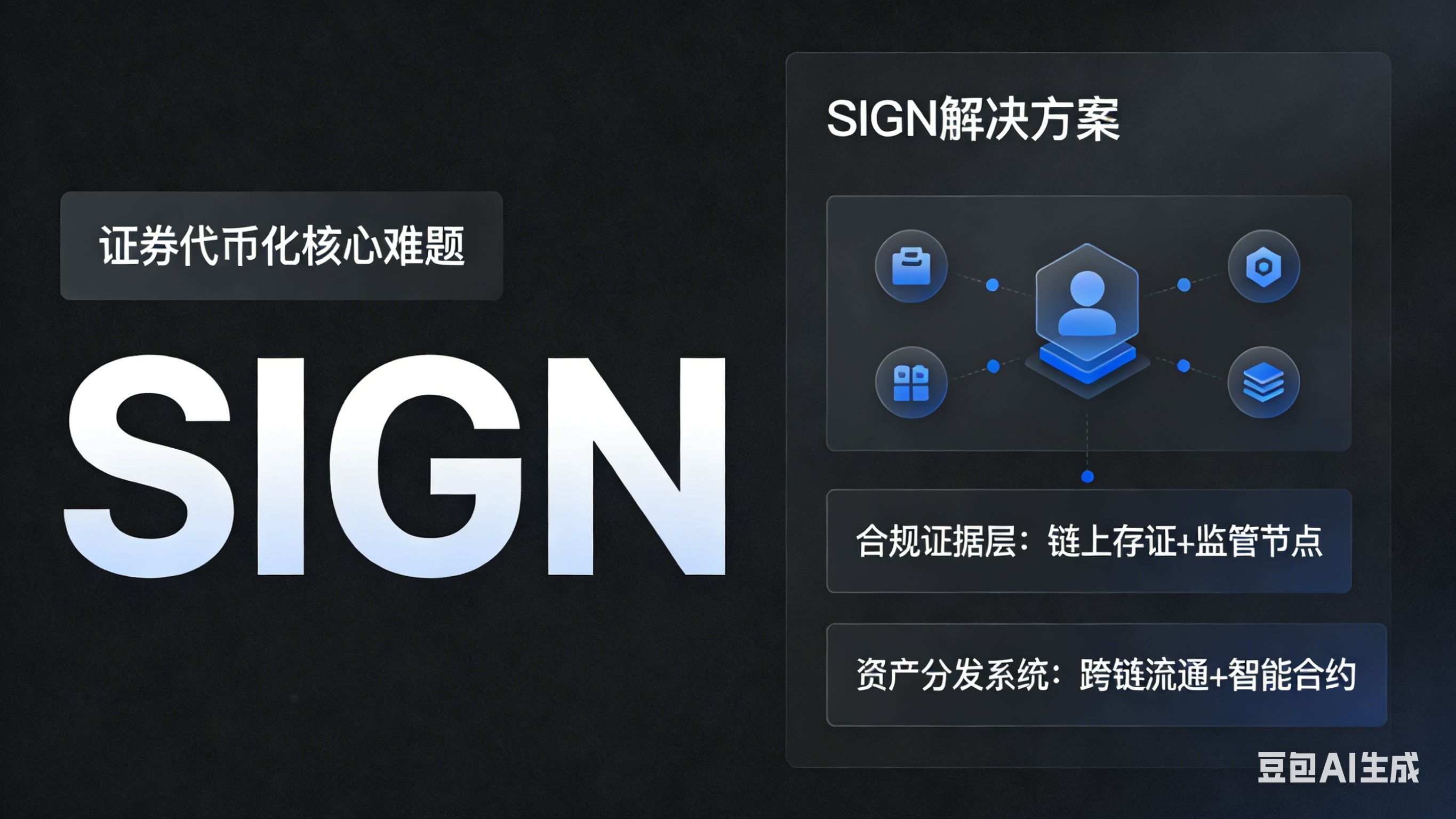
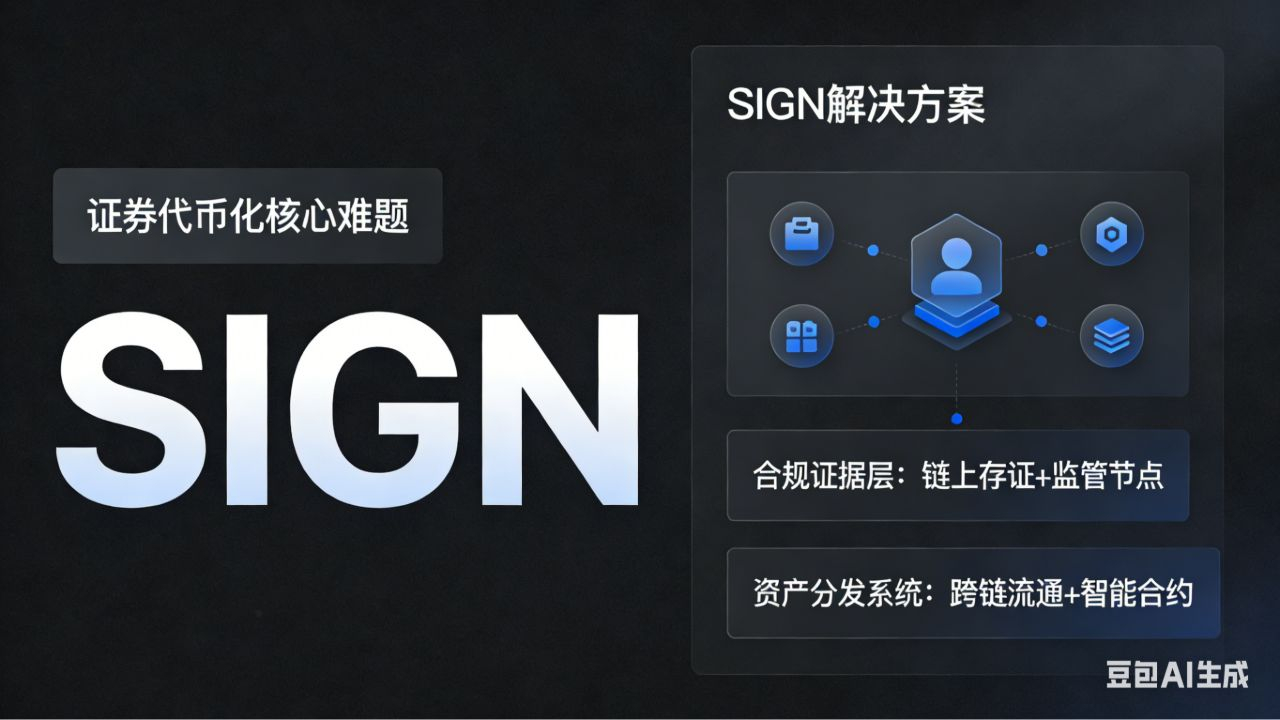
The core challenge of security tokenization: from trading to rules.
The SEC clearly pointed out in its discussions that tokenized securities could lead to faster settlements, lower transaction failure rates, more transparent shareholder information, and even round-the-clock trading. However, the real challenge has never been simply to put a token shell on securities, but rather how to ensure ownership confirmation, investor qualification verification, execution of trading rules, the realization of dividends and voting, and auditing and accountability after issues arise.
In other words, the hardest part of on-chain securities is: completely transferring the entire system of identity, permissions, rules, distribution, auditing, etc., from traditional finance to the blockchain.
In this context, I couldn't help but think of SIGN.
Why SIGN? It addresses the hardest demands of security tokenization.
If you analyze the SEC's discussion seriously, you will find that SIGN stands right at the core of the needs of security tokenization. SIGN is no longer a simple 'proof' tool, but a comprehensive digital infrastructure targeting money, identity, and capital.
Sign Protocol: providing a verifiable, auditable, and inspectable compliance evidence layer for security tokenization. It ensures who can hold, who can trade, who completed the qualification verification, under what rules the transfer was made, how the rights are distributed, and how auditing and tracing are conducted. These are precisely the rules and credentials that are most urgently needed in the process of security tokenization.
TokenTable: addressing the distribution issues of assets and capital. It provides systemic support for the distribution, incentives, lock-up, and compliance execution after security tokenization, ensuring dividends, rights, lock-up periods, etc., are executed as required, while retaining compliance records. The distribution and management rules involved here are directly connected to the requirements of security compliance.
SIGN combines these issues to form a rules, credentials, and distribution operating system after assets are on-chain. It provides a complete infrastructure for security tokenization, not just a trading entry.
The difference from other projects: SIGN is about rules rather than trading.
Look at those RWA projects; they are more concerned about whether assets can go on-chain, while SIGN focuses on whether the assets can operate in a compliant environment for the long term after going on-chain. This is a fundamental difference.
SIGN is not just 'telling a story'; it is building real infrastructure: it is not merely a trading platform but provides solutions in execution, rules, and management after assets are on-chain.
In simple terms:
Traditional projects: solving the problem of asset on-chain.
SIGN: solving compliance, identity, distribution, and auditing issues after assets are on-chain.
Market validation of SIGN: from concept to practice.
The most critical point is that SIGN is not just at the conceptual stage. It already has solid products and data support:
Sign Protocol: has grown from 4,000 schemas to 400,000, with the number of attestations increasing from 685,000 to 6 million.
TokenTable: has distributed over $4 billion in tokens to 40 million wallets, supporting the distribution to tens of millions of users, and is compatible with multiple platforms such as EVM, TON, and Solana.
These are not just numbers; they represent the real market demands and operational pressures behind the products. The distribution, rule execution, and qualification verification of SIGN have already passed the test of the real market.
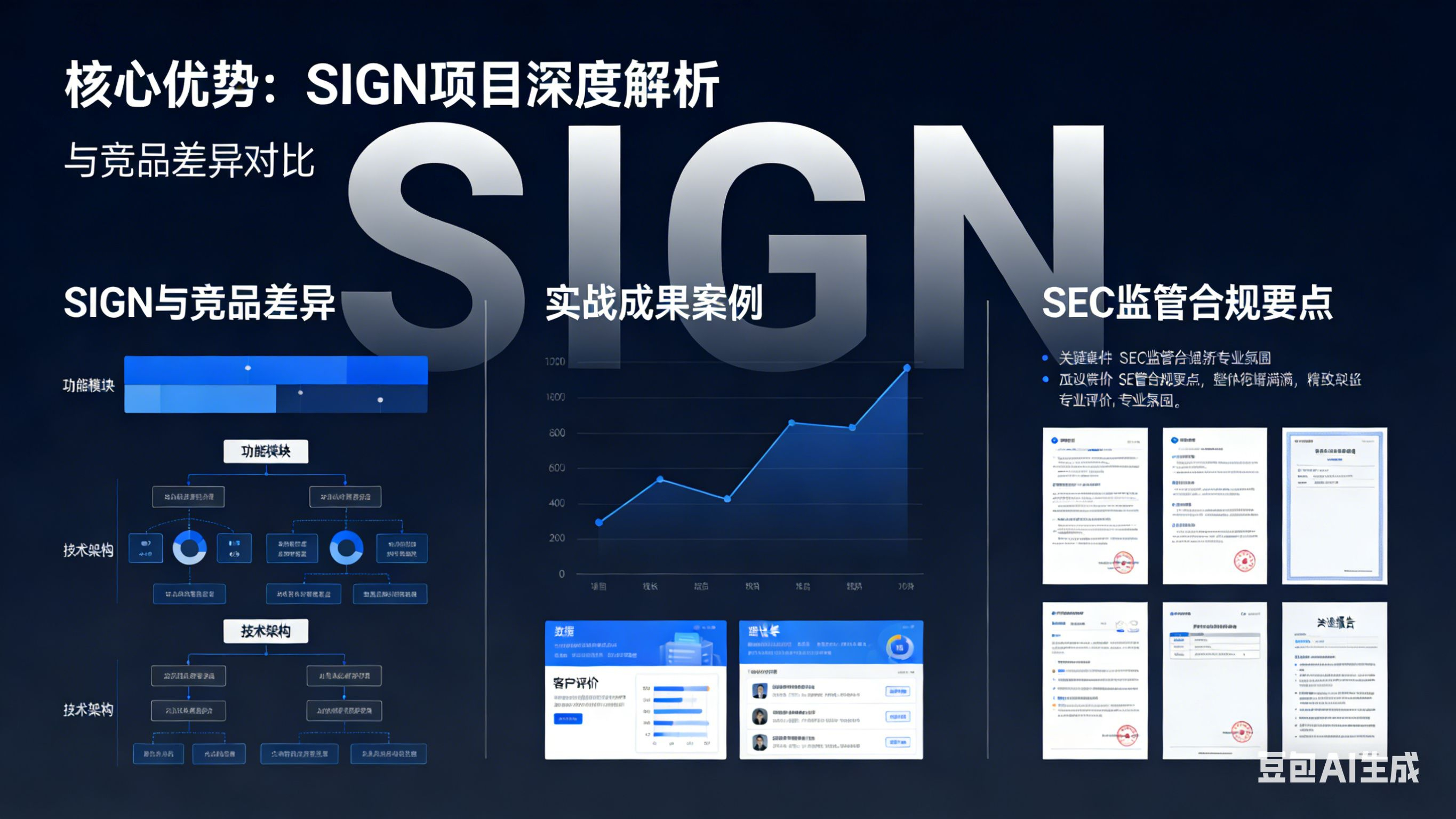
SEC and SIGN: Who is filling the regulatory gap?
The SEC's statement on security tokenization emphasizes compliance, investor protection, and auditing needs. In this field, SIGN happens to provide the most direct and hardcore solutions for these needs. Its narrative is not glamorous, but it deeply aligns with the long-term demands of the market.
SIGN may not be the most eye-catching project, but what it is doing is precisely what the market needs most: providing infrastructure for compliance, identity verification, distribution, and auditing after security tokenization. If the market truly begins to value the needs at the rules level rather than just a trading entry in the future, SIGN will undoubtedly become one of the most valuable projects.
Conclusion: Which is more important, the trading end or the rules end?
A core issue revealed by the SEC's discussions is: the most important aspect of security tokenization is not the bustling trading end, but the execution of rules and compliance layers. SIGN is the infrastructure provider on this road, and its value lies not in attracting traffic, but in whether it can provide a solid and compliant backend support for security tokenization.
Therefore, when Wall Street's securities on-chain begin to face real challenges in compliance, identity, rules, and auditing, SIGN may be closer to the core needs than trading platforms and entries. Its products and ideas resonate with the hardest demands of the current market.