

 So I went down another crypto rabbit hole tonight, like an idiot… and here I am, typing to you because my brain feels like it won’t shut up. Consensus 2025, midnight vibes, and somehow the whole thing keeps circling back to this idea that privacy isn’t just some academic fantasy or a side quest for cypherpunks, but that it actually has to live inside “real infrastructure” or else it’s basically cosplay. That’s the pitch, right? Privacy meets the stuff that actually runs. Not just pretty papers. Not just “trust us bro” cryptography.
But here’s the thing… every time I hear “privacy” now, my first thought isn’t romance. It’s risk. Like, sure, I want people to not get doxxed by default. I really do. I’ve watched too many on-chain explorers turn into surveillance toys. It’s creepy. It’s gross. And then the next thought is: okay, who’s building this, who’s paying, and what are they hiding? Because crypto always hides something. Sometimes it’s the smart part. Sometimes it’s the part that should’ve stayed in the lab.
I’m not even gonna pretend I’m fully convinced. I read stuff, I followed links, I looked at the usual bread crumbs, and I kept feeling this weird tension in my head. Like half of me wants to believe this can work at scale. The other half is sitting there going… “uhh, what about the tradeoffs?” Transaction privacy always comes with tradeoffs, even if they don’t say it that way. Sometimes it’s performance. Sometimes it’s complexity. Sometimes it’s how the system behaves when something goes wrong. And the worst part? Systems like this don’t fail gracefully. They fail weirdly.

Also, let’s be real: the competition is brutal. Privacy tech has been around forever, and not because people are slow. People are fast, and they move on. So if a project wants to claim it’s different, I don’t even know… I need to see receipts. I need to see what’s actually shipping, not just what’s being teased, not just the slick demos and the “it’s gonna change everything” language. The marketing hype is louder than the actual mechanics half the time. That’s crypto for you. It’s like walking into a concert where they play 80% soundcheck.
And yeah, I know, I’m probably being annoying with my suspicion. But I’ve been burned. Like, I’ve watched promises turn into dead ends. I’ve watched projects that were “so close” never quite get there. I’ve watched people move the goalposts without blinking. So when I see a privacy narrative that sounds too clean, my gut tightens a little. It’s not even about hating the idea. It’s the pattern recognition. It’s like I can smell the marketing from two rooms away. (Which is not a real sense. But you know what I mean.)
Still… I can’t deny I got curious. Because the whole “privacy meets real infrastructure” angle is tempting in a way that pure theory isn’t. Infrastructure stuff is where the rubber meets the road. If it’s actually integrated into the stuff people use, not just some sandbox, then it’s more than vibes. But “if” is the whole problem. The catch is always the implementation details. And the details are where things get messy.
I kept thinking about it like hardware. You can’t just talk about how a chip *could* work. You need the actual design, the actual manufacturing constraints, the actual power and heat and everything. Privacy tech is kind of like that. You can describe it in a clean way… but then you realize the world doesn’t cooperate. The system has to run. People have to interact. Attackers show up. Regulators pressure. And suddenly “privacy” isn’t a slogan anymore. It becomes a series of compromises someone has to justify.
And here I am reading, and I can’t decide whether I’m impressed or skeptical. Both. It’s annoying. I genuinely want better privacy in crypto, like I want it the way I want a seatbelt. Not because I plan to crash. Because I don’t control every variable on the road. But it’s also like… if you give someone too much privacy without guardrails, don’t act shocked when things get abused. The same features that protect normal people can also protect the worst people. That’s not moralizing. That’s just how incentives and anonymity work.
So I’m skeptical about what “privacy” means in practice. Is it optional? Is it default? Does it depend on some trust assumption that isn’t obvious? Are there operational steps people have to follow that everyone will understand? Because in the real world, users don’t read docs. Users click buttons. Users get confused. Users break things. That’s not me saying users are dumb, that’s just… reality. Crypto UI can be a tragedy. Even when the underlying tech is good, the human layer is messy.
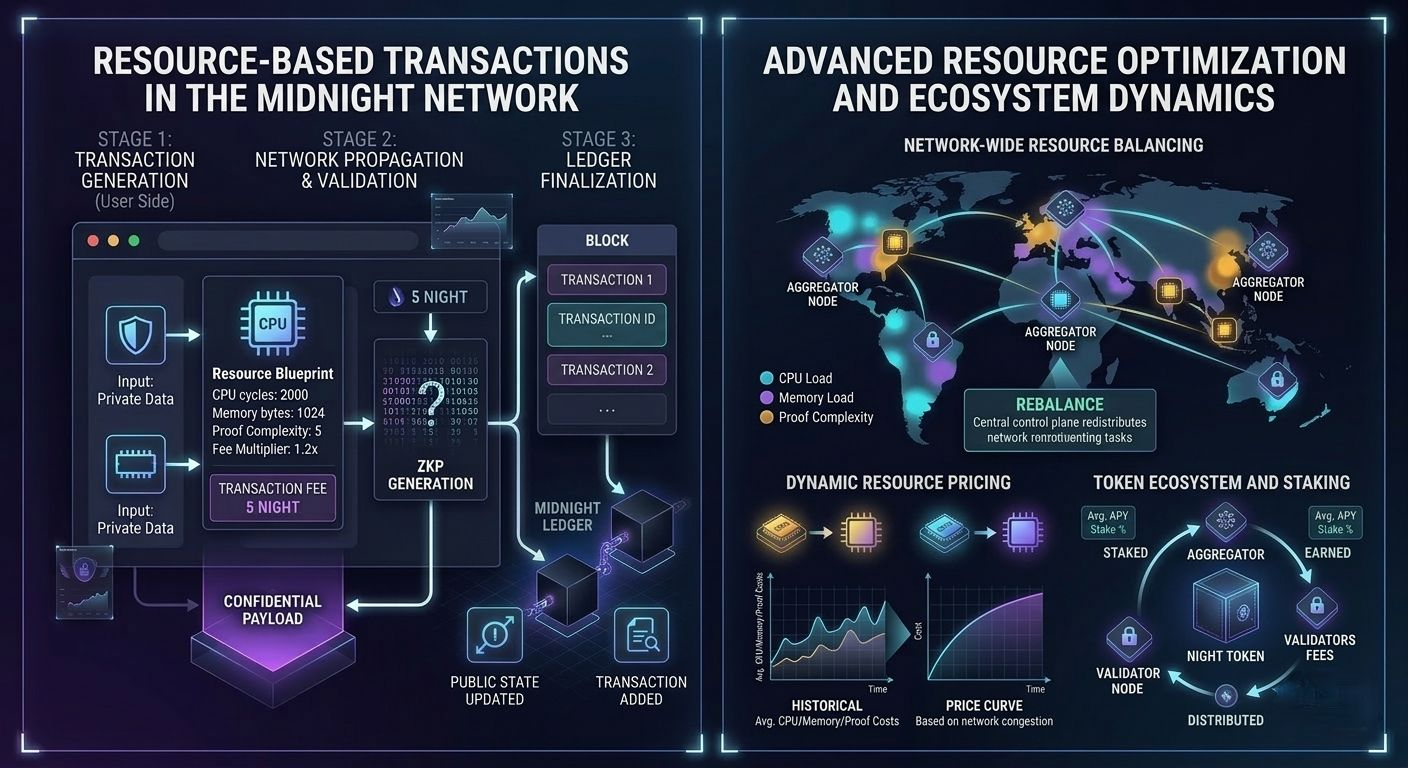
Then there’s the whole “real infrastructure” part. Infrastructure means long-term maintenance. It means reliability. It means updates that don’t introduce new weird vulnerabilities. It means monitoring. It means people watching. And I’m not sure the ecosystem ever does that part as well as it should. Everyone loves innovation until it’s time to patch stuff repeatedly and boringly. Overnight success is cute. Sustained work is less fun. It’s like building a house, then realizing you have to shovel snow forever. Nobody posts about shoveling snow.
Anyway, I’m looking at all the typical crypto signals: what’s actually built, who’s involved, whether there’s any credible track record beyond talking, whether the code or system behavior matches what they say. And sure, there are things that look promising. You can find the engineering intent. You can see the push toward making privacy more usable, not just theoretical. That part is real. I’m not denying it. There’s effort. There’s thinking. I can’t pretend I didn’t notice that.
But I’m also seeing the other side: the usual gaps. Like, are we talking about something that can handle broad demand? Or is it only “works great” under ideal conditions? Are there constraints they’re not shouting about? Is it one of those setups where it’s private but only for a narrow group of people, and everyone else is basically out of luck? Privacy that’s easy for insiders but painful for everyone else doesn’t feel like privacy. It feels like gating.
And then, what really makes me pause is the credibility factor. Not in a cheesy way. In a “do you have skin in the game” way. Who’s accountable if things go wrong? What happens if a privacy mechanism gets exploited? Crypto folks love to say “it’s trustless” and “it’s decentralized” like those words solve everything. Sometimes they do. But not always. Systems still have operators, still have dependencies, still have human choices baked in somewhere.
I keep coming back to this idea that maybe the project is trying to do something meaningful, and maybe the approach is legitimately better than the older stuff. But I can’t shake the feeling that it might still be one iteration away from being fully legit. And “one iteration away” is where a lot of crypto stories die. You keep iterating, you keep refining, and somehow the timeline stretches into eternity while the community moves on to the next narrative.

And yeah, I’m aware how harsh that sounds. But late nights make me honest in a way that daytime me doesn’t. I’m tired. I’m watching charts flicker like they’re judging me. I’m thinking about risk the way you think about weather when you’ve been caught outside too many times. You don’t plan for sunshine forever. You plan for storms. Same deal with privacy infrastructure. You assume attackers will come. You assume edge cases will matter.
One more thing that’s weird: privacy stories tend to attract people who are either super principled or super opportunistic. Sometimes both, even in the same room. And that mixture can be… messy. You can see it in the discourse. One moment it’s about protecting people. Next moment it’s about control, branding, and who gets to set the terms. I don’t always know which is happening. I just know it’s happening.
So yeah, I’ve got this conflicted feeling. Like I’m genuinely interested, but I also don’t want to get baited. I keep wanting to believe the midnight-at-Consensus vibe means something, like this is the moment privacy finally becomes infrastructure-grade. But it could also just be a stage in the usual crypto cycle. New narrative, big energy, lots of talk, then the grind. And the grind is where you find out who built for real and who built for headlines.
I guess what I’m trying to say to you is… I’m not ready to declare anything. I’m not running around saying it’s “the future” or anything. I’m also not dismissing it because I’m jaded. I’m the annoying middle: curious but cautious. I’m still watching. Still reading. Still thinking I might be wrong. That’s probably the most honest stance I can manage right now… because the only thing I’m sure of in crypto is that nothing stays the same for long.
And after all this, I still keep asking myself the same questions, over and over, like a broken song stuck in my head. Does the privacy actually hold up under pressure? Does it integrate smoothly into infrastructure without turning into a fragile mess? Are the tradeoffs clearly understood, or are they being waved away with hype? What’s the failure mode? Who’s accountable? Who profits? Who pays? Because privacy is never free. If someone says it is, I immediately don’t trust them. It’s either subsidized, externalized, or eventually you pay in some other way.
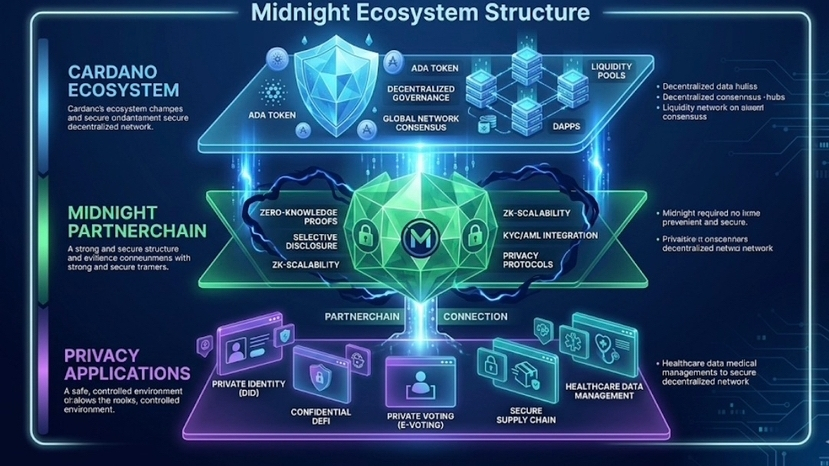
Midnight at Consensus 2025… yeah, I get the emotional hook. Privacy matters. Infrastructure matters. The combo sounds like progress. But I’ve been around long enough to know that “sounds like” can be a trap. So I’m watching it like I watch a new restaurant that everyone raves about. The food could be amazing… or it could be great marketing and a kitchen that falls apart the second it gets busy. Either way, you find out by going, and even then you pay for the experiment with your time and your trust. And right now? I’m still not sure if I wanna be the one paying.
…Anyway, that’s my messy take. I’m still in the weeds. I’m still doubtful. I’m still interested. Can’t decide which feeling wins tonight. But I know I’ll probably check it again tomorrow, like I alwa