
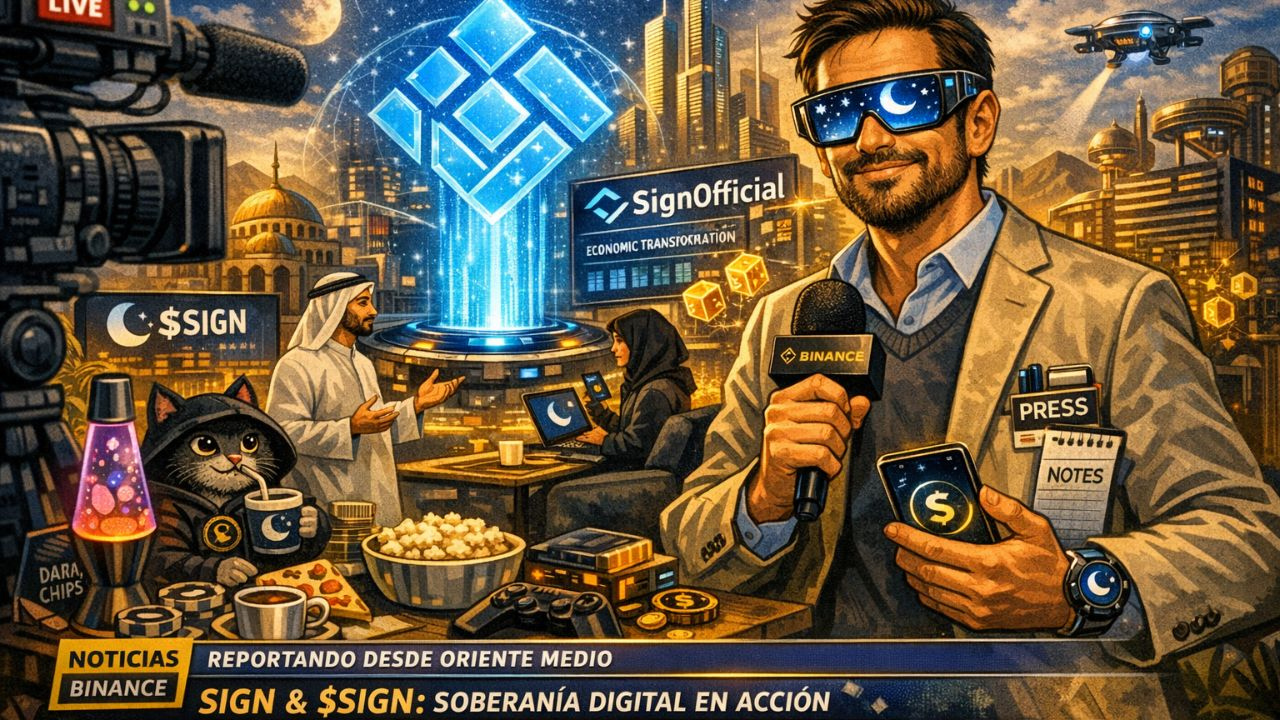
When I arrived in Dubai to cover a conference on technological innovation, I did not expect to encounter a silent revolution. Amidst dates and talks about AI, all paths led me to one name: @SignOfficial . Intrigued, I decided to investigate what made this project so special and why the token $SIGN was on everyone's lips.
What I discovered was more than a blockchain. Sign presents itself as a sovereign digital infrastructure, designed for Middle Eastern countries to build their own digital economies without relying on external tech giants. With #SignDigitalSovereignInfra , data, identities, and decisions return to local hands.
In an impromptu interview with a local developer, he told me: “Before, everything digital came from outside. Now, with Sign, we can build from within, with our rules.” And he said this while showing how his startup used $SIGN to manage smart contracts in public services.
The scene was surreal: a traditional souk with merchants using digital wallets, young people programming in cafes overlooking the desert, and a collective feeling that the Middle East is not just adopting technology, but leading it.
From my perspective as a reporter, Sign is not just a tool: it is a declaration of digital independence. And if the future has an Arabic accent and open source, it is probably written with $SIGN .