Digital refugees by the campfire
In early autumn at the top of Mogan Mountain, the night wind already carried a piercing chill. Lin tightened her jacket and added a piece of firewood to the campfire. The flames reflected her tired face; as an independent journalist who has been covering international news for years, she had just completed an in-depth report on global digital surveillance and internet shutdowns.
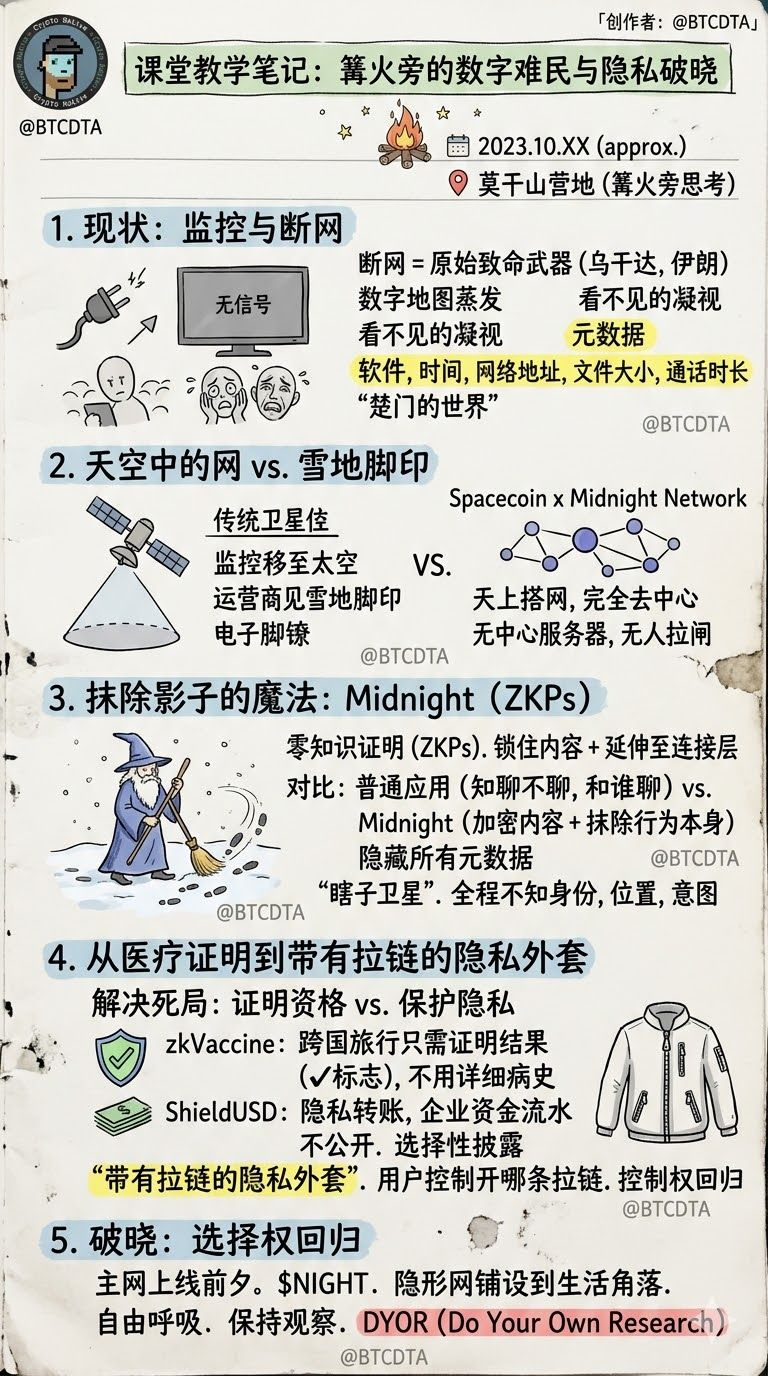
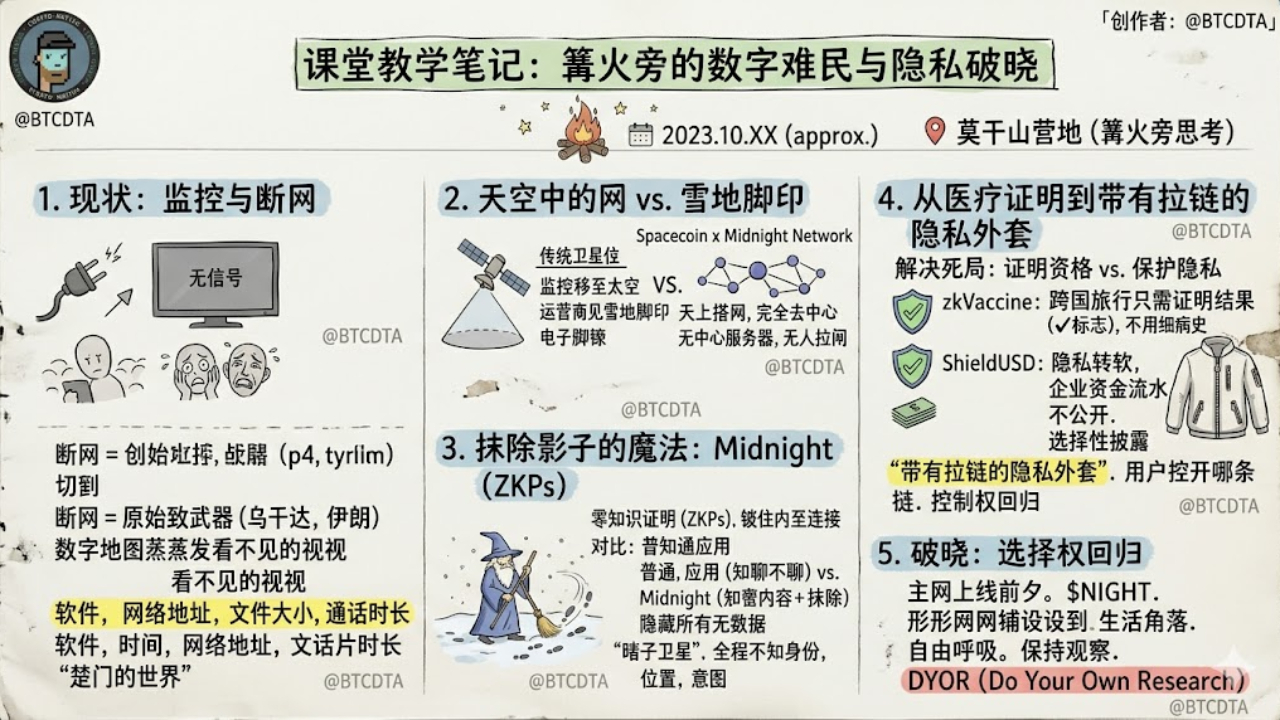
She handed me a cup of hand-brewed coffee and sighed, saying that in today's world, losing internet access has become one of the most primitive and deadly weapons. During the Ugandan elections, the entire country's internet was like it had been unplugged; during the protests in Iran, the digital world was also in complete silence.
Imagine that scene. One second you are video calling your family, and the next second the screen turns gray and shows a no signal status. Suddenly, a country with millions of people evaporates from the digital map. Those desperate mothers can’t reach their children on the streets, hospitals cannot dispatch ambulances, and everything regresses to the medieval times. For those in the eye of the storm, the lack of signal is not because the base station is broken or there has been a natural disaster, but because someone in a control room pressed the red button that cuts off the entire country's throat.
I took the warm enamel cup and looked up at the starry sky.
I told her that compared to directly pulling the plug, what is actually more hidden and terrifying is those invisible gazes. Even if your message miraculously goes out, even if the content is encrypted like a steel barrel, those ubiquitous network nodes are still collecting your shadow. What software you use, at what time, to which network address you sent how big a file, how long the call lasted. These things, known as metadata, have long sold you out completely.
Linzi shook her head with a wry smile and said, isn't this just a huge Truman Show?
Footprints in the snow and the net in the sky
I pointed to the deep night sky above and mentioned to her a plan called Spacecoin, as well as the cooperation with @MidnightNetwork that is quietly advancing behind it.
She responded somewhat alertly, satellite internet? Isn’t this just the leftover concept from Musk's Starlink? How does it relate to blockchain or combating surveillance?
I put down the cup and, using the light from the campfire, gave her an analogy. Suppose the digital world is a vast snowy field, and the messages you send are the goods you want to transport. Current encrypted communication can indeed put your goods into a locked box that others cannot open. But what about the footprints you leave in the snow? What time did you leave home, how deep were the footprints made, at which intersection did you turn, and finally, where did you stop in front of someone’s house? These footprints are the metadata.
Traditional satellite communication can indeed solve the problems of ground base stations being destroyed and wires being cut, but it merely moves the surveillance camera from the utility pole to outer space. Satellite operators can still see every footprint you leave in the snow. It’s like you’ve escaped from a besieged village, but you still wear a continuously flashing electronic ankle monitor in the wilderness, being monitored in another place.
What Spacecoin wants to do is to build a completely decentralized node network in the sky. There are no centralized servers on the ground that can be sealed at any time, and no one can pull the power switch. But what truly makes this net completely invisible is the privacy protocol called Midnight.
The magician who erases shadows
Linzi stared at the flickering flames and asked, who guarantees that the data running on that satellite won’t be intercepted or tracked?
I mentioned a picture that Fahmi Syed painted when announcing this cooperation. He said that only when the privacy lock is unbreakable, locking not only the content but also extending and protecting from the fundamental cryptography to the physical layer of network connections, can people truly enjoy the freedom of breathing online.
This is actually what Midnight's zero-knowledge proof encryption logic is doing. It not only turns your message content into gibberish but also erases the act of sending the message itself.
In order to help her understand better, I compared the software we use daily. Do you think the chat app you use really shuts its eyes? When you use WeChat, the system not only knows what you are chatting about, but also knows who you have chatted with the longest; when you use Telegram, although other people can't see the chat history, the server still records your login nodes, active periods, and your most frequent contacts. In the digital world, as long as you have appeared, this is the biggest privacy leak.
Midnight's zero-knowledge proof is like a machine that can automatically sweep away footprints in the snow while walking. It hides all the metadata, even the objective fact of who sent a message to whom is encrypted. The satellites in the sky only know that there is an encrypted data stream passing through, and after verifying the zero-knowledge proof, they pass it through directly. They have no idea which corner of which city this data stream came from, where it is heading, and what is inside.
Linzi's eyes lit up, and she asked, then according to this logic, isn't the satellite of Spacecoin blind, it doesn't even know who is using its bandwidth.
I nodded and said, it’s just a blind person. They have no idea who you are, where you are, or what you want to do. This is truly anonymous communication that cannot be tracked by anyone.
From medical certificates to privacy jackets with zippers
The night grew deeper, with only the occasional chirping of insects and the crackling of firewood. Linzi was silent for a moment, seemingly digesting these hardcore logics. She shifted to a comfortable position and asked me, besides being an invisible person in the sky, what else can this technology that can erase even shadows do in reality? The discussions with the $NIGHT label can't just be the self-indulgence of geeks, right?
I told her, of course not. The core of this technology is actually to solve a deadlock that everyone faces in the digital age: we need to prove to society that we meet certain qualifications, but we don’t want to expose everything.
I gave her an example of the zkVaccine project. In this system, Midnight is used to handle sensitive medical certificates. Imagine you are traveling internationally, customs or airlines only need to know one result: this person has received a qualified vaccine. They don’t need to know, nor should they know, which hospital you were vaccinated at, which company's batch it was, or even what other diseases you had previously.
When you present that code generated based on zero-knowledge proof, the other party's machine will simply display a passing mark. Your past medical history and all irrelevant privacy still quietly lie in your pocket.
This logic has not only worked in medical projects, but also in the financial field. In Europe, there is a stablecoin project called ShieldUSD, which has already used Midnight for private transfers. Think about your current bank account, either it is fully exposed to centralized institutions, or everyone can check your balance on a public blockchain. If a business is doing transactions, who would want their competitors to see their financial flows? However, in the Midnight network, transfer records become completely private.
Linzi finished the last sip of coffee in her cup and said thoughtfully, so the core of this thing is to return control to individuals.
I looked at her and said seriously, yes. From the censorship-resistant satellite in the sky to the medical data and wallet balance on your phone, the underlying logic is consistent. In the past, when we went online, we bundled all personal information and threw it into a transparent glass jar for everyone to see.
But the logic behind Midnight is professionally termed selective disclosure.
It’s like you can finally put on a jacket with countless zippers for your digital privacy. If you want to show the customs your vaccination record, just unzip that zipper on the sleeve; if you want to show your partner the proof of funds, just unzip the zipper on the chest. As for the rest, as long as you don’t want to, no one can see it. You decide how big the opening is.
The choice before dawn
It's almost dawn, and the eastern horizon is gradually turning fish belly white. I told Linzi that the mainnet will officially launch in a few days. The network marked with $NIGHT will soon lay this invisible net from outer space to every corner of our daily lives.
Linzi stood up, stretched, and looked at the distant morning mist. She said, it sounds like we finally have the chance to breathe like a truly free person in the digital world, anyway, this matter is worth following up on.
I smiled, stood up, and used dirt to cover the embers of the campfire. Although the road ahead is still long, and all technologies need time to be validated in the muddy reality, at least the choice is gradually returning to our hands. Keep observing, DYOR, this is the only survival rule we have in the new world #night .