
During this time, I've been following news from the Middle East, and it feels quite complex geopolitically. However, many countries are actually quite proactive in digital infrastructure, like Saudi Arabia and the UAE, who are working on digital wallets, promoting CBDCs, and trying to put infrastructure and resource assets on the blockchain.
Looking back at it, I find its logic quite clear.
They definitely don't want to completely rely on others' financial infrastructure for fear of being restricted; but building a blockchain network from scratch is both expensive and slow, plus they have to worry about security and other issues.
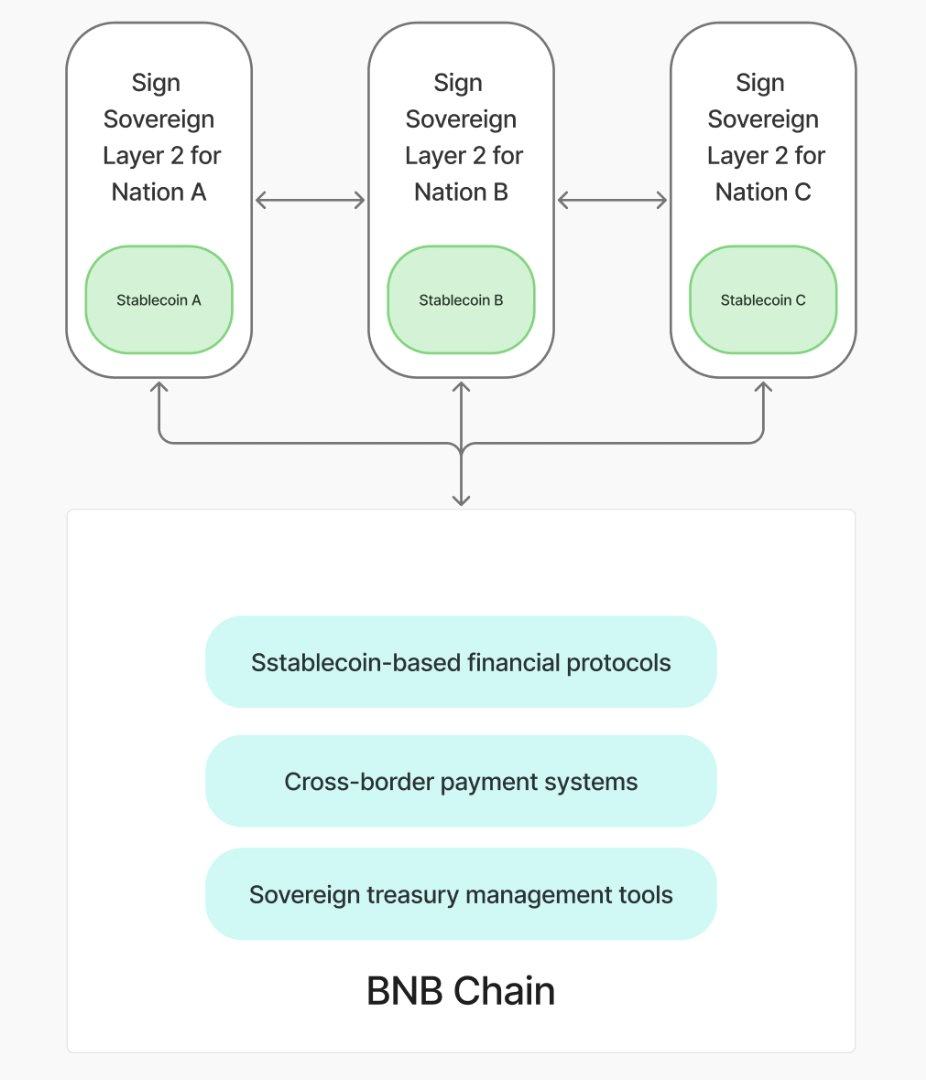
The Sign Layer 2 stack is much more convenient; it is based on BNB Chain, so there's no need to set up validation nodes yourself, and it can be deployed in a few weeks.
The key point is that the transaction sorter can be controlled independently, which preserves sovereignty while utilizing the existing ecosystem and liquidity of BNB Chain. This 'hassle-free and reliable' approach is something I believe many countries will consider.
Furthermore, I think its potential lies mainly in its tight binding with BNB Chain. Currently, many RWA tokenization projects in the Middle East, such as compliant funds in Dubai and those involving banks in Qatar, are choosing to operate on BNB Chain. Sign essentially provides a 'custom service' for BNB Chain, specifically helping countries develop sovereign-related blockchain.
In the future, if more countries use its tech stack for digital infrastructure, c-28 as a token in the ecosystem should gradually be applied in asset on-chain and identity verification processes, and its value will naturally emerge.
But to be honest, don't expect it to surge significantly in the short term.
The pace of infrastructure development in the Middle East is inherently slow. Whether it is digital wallets or CBDCs, they are all being gradually advanced. The realization of Sign's value is likely to follow this pace, making it a slow-burning type.
But this is precisely why I find it more reliable—it's not about speculation based on concepts, but really connecting with the country's infrastructure needs. Moreover, it has already established actual cooperation and deployment in places like the UAE and Thailand, not just telling stories.
Another point I think is quite important is that the regulatory environment in the Middle East is quite suitable for Sign. Countries there pay great attention to compliance. The UAE has already included digital assets and DeFi into its regulatory framework, and Saudi Arabia is also gradually standardizing after initial implementation.
Sign's Layer 2 itself supports adjustments according to national requirements, such as controlling transactions based on sanctions lists. This kind of 'manageable' technology will make governments feel more at ease.
In general, the prospects for Sign mainly depend on how far the sovereign digital infrastructure in these Middle Eastern countries can be advanced.
It just happens that they want to build their own digital system now. Sign can provide a hassle-free, compliant solution that preserves sovereignty, while also leveraging the BNB Chain ecosystem. If it secures cooperation with a few more countries, there should still be room for growth.
For me, it is more suitable for long-term attention, without needing to watch the ups and downs every day, mainly to see if there are any new implementation cases, whether the Middle East is really using its technology. Such projects that do things step by step feel more reassuring.