
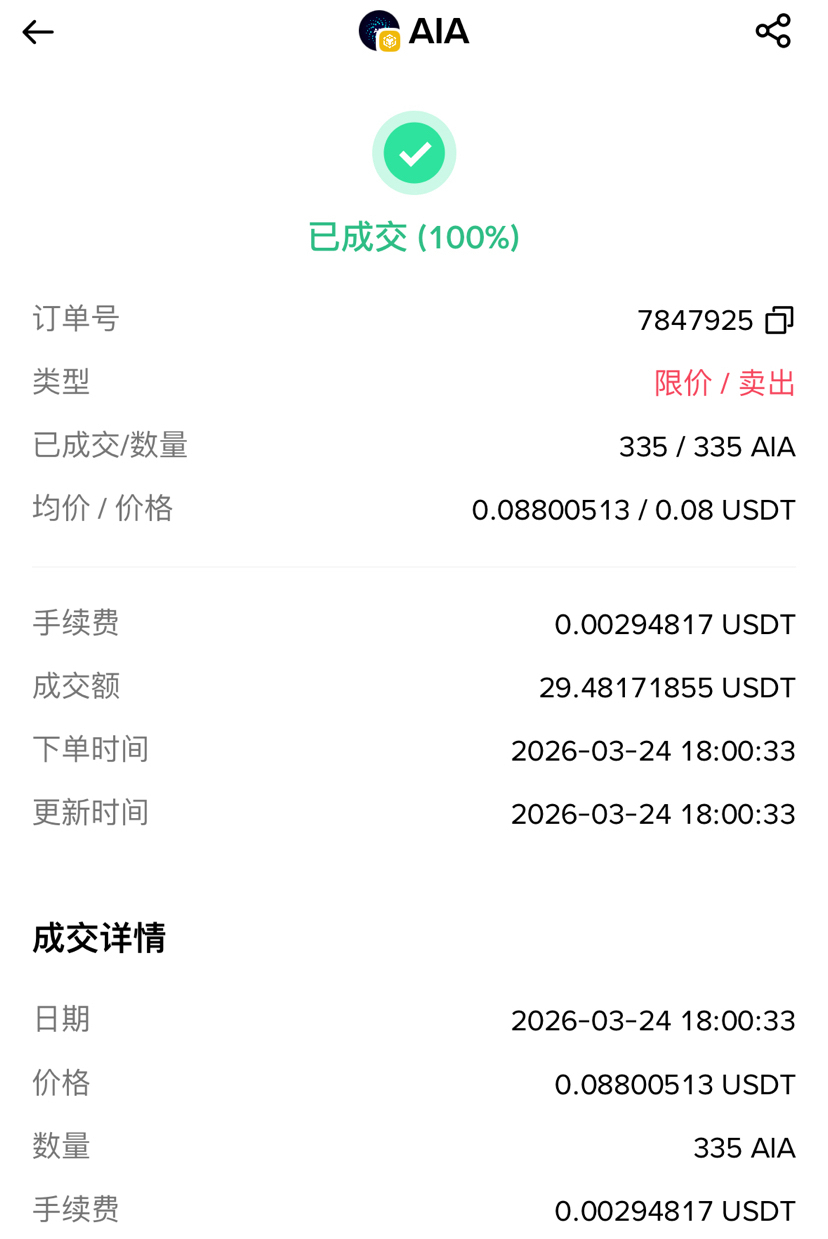
Did anyone grab that Alpha airdrop tonight? I took a quick look, and my points returned to 255, so I can participate in the airdrop scramble. If I had lost those 5 points from the booster task earlier, that would have been terrible 😅! I thought I could only watch the surge in visits, but to my surprise, I actually got lucky and grabbed it! A super useful little tip: clear the cache and pre-check before grabbing; it doubles the success rate!
Speaking of the alpha airdrop, what's even hotter today 🔥 is LayerZero and full-chain applications. Many people think that the infrastructure track is heating up again. However, from Xiaoxi's perspective, this is not a new wave of infrastructure trends at all, but rather a clearer core industry consensus: the next stage of competition is no longer about who can keep users locked on their own chain, but rather who can become the key interface for multi-chain collaboration. Under the premise of ensuring security, whoever can enhance the experience and capture value will be the winner.
So, over the past few days, I looked at the @MidnightNetwork white paper and felt it is a very worthy entry point. Most projects only focus on bridges, messaging layers, or asset mapping, while Midnight directly incorporates multi-chain collaboration into its economic model. This leads to a different logic compared to other projects.
Most projects address 'how to get there', while Midnight addresses 'what allows you to get there'.
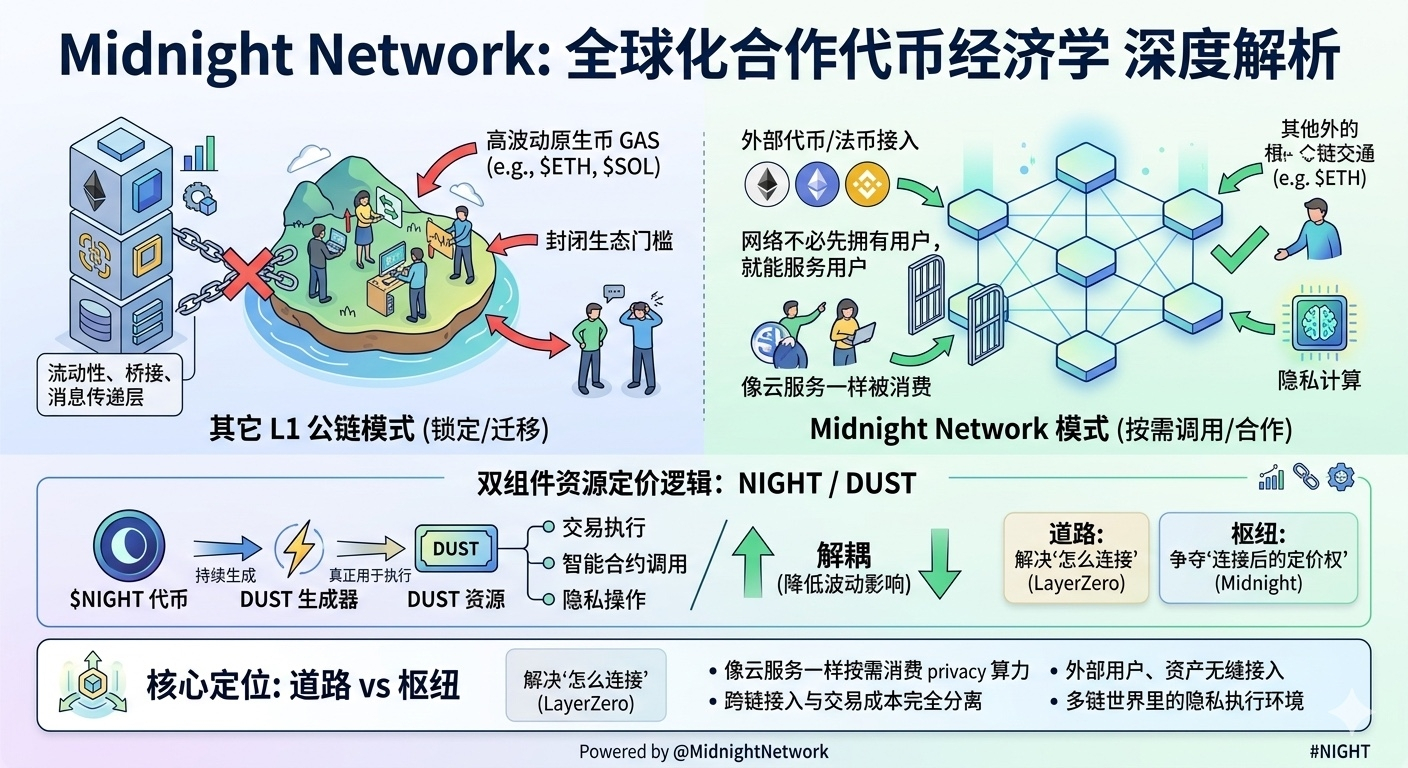
Many projects talk about interoperability, but the core issue is actually solving how to move assets or messages. However, Midnight poses a deeper question: when users are already scattered across different chains, wallets, and asset systems, why must a new network require everyone to complete migration before they can use it? It's like wanting to enter a restaurant, but not only do you have to buy its designated token to pay gas, you also have to learn its ordering system and payment methods first. This threshold prevents many good applications from even entering.
What Midnight attempts to break is this default premise. It proposes cooperative tokenomics, which is essentially a shift in network philosophy: a network does not need to first have users to serve users.
In simpler terms:
• Projects like LayerZero solve the road problem. They connect different cities (public chains) into a network.
• Midnight addresses the pricing power and positioning issue after the road has been built. It aims to be the layer that is the hardest to replace once connected into a network: when assets, identities, and business logic are scattered in a multi-chain world, Midnight provides an execution environment that has privacy capabilities, resource pricing logic, and allows external value access.
$NIGHT and the dual-component model of DUST's wonder.
This also brings out the most unique aspect of Midnight: its multi-chain narrative is tied to the $NIGHT /DUST dual-component model. Traditional public chains typically remain at the levels of liquidity, bridging, and messaging, but Midnight further separates cross-chain integration from transaction resource consumption.
• $NIGHT is an asset that continuously generates DUST.
• DUST is the true resource used for executing transactions.
This means that Midnight discusses how network resources should be valued in the cross-chain era. The most frustrating experience for users in a multi-chain environment often does not come from the bridging itself, but frequently from the disconnection in the cost system: every time a new chain is entered, its gas currency, volatility, wallet logic, and interaction thresholds must be re-understood.
The uniqueness of Midnight lies in its attempt to decouple the use of the network from holding and consuming highly volatile native coins through the resource mechanism of DUST. Thus, its role in the multi-chain narrative is to repackage the experience of multi-chain integration into a more stable and predictable resource invocation.
The future struggle for pricing power.
When LayerZero's news gained traction, most projects at most said, 'We also support full chain'; but what Midnight is worth mentioning is: it is thinking about the operational science in the full chain era. When cross-chain becomes the norm, the core issue a chain faces is no longer just technical interconnection, but how to accommodate external demand without creating additional user burdens.
Rather than focusing on the technology it discusses, one should see how it allows external users to access the unique capabilities of the chain without needing to convert (using other chain tokens to pay gas, or even fiat), without requiring external assets to be restructured, and without sacrificing the experience of external applications. Whoever can truly enable low-friction access to external demand is more likely to hold sustained pricing power in the next round of multi-chain competition. Therefore, what Midnight discusses is not just privacy computing or cross-chain protocols, but what kind of network deserves to be used long-term in a multi-chain world.