
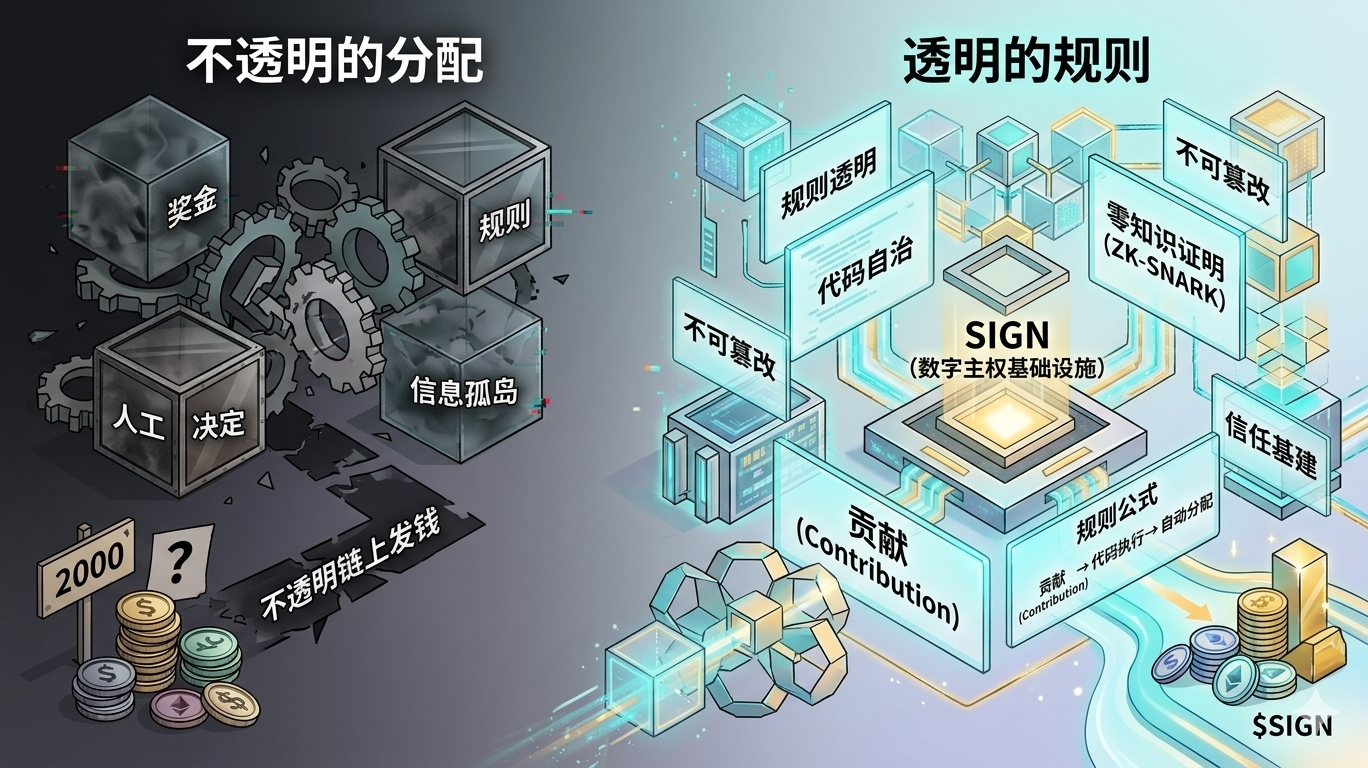
I still can't forget my experience as a store manager for the first time. This event completely opened my eyes to the most heartbreaking loophole in corporate compensation distribution, and it helped me understand the new capital system of @SignOfficial and how many people's pain points it actually hit.
At that time, the company launched an incentive activity where employees would receive 2 yuan for every good review they brought in. Everyone in the store worked hard to boost performance, and by the end of the month, we had managed to secure over a thousand good reviews. I was eagerly looking forward to receiving over two thousand yuan in extra bonuses, which was the reward for the entire team's late-night efforts, but on payday, the bonus was only 100 yuan.
I found HR's theory, and the response was that I haven't been confirmed yet, which does not meet the eligibility criteria for receiving the reward. However, the activity rules did not mention any confirmation restrictions from beginning to end, and no one informed me of this additional condition during the activity period.
I can present evidence that the team received over a thousand good reviews, but I cannot provide anything to prove the original version of the activity rules, approval time, and execution standards. The rules are all in the company's hands; they can change them as they wish and explain them however they like. I have performance evidence but no proof of rule execution, and in the end, I can only suffer this silent loss.
This matter has troubled me for a long time; the issue has never been about those two thousand yuan, but rather the lack of transparency, rights confirmation, and traceability in the traditional distribution system. You never know which version of the rules is being executed, who approved it, when it was approved, or what the basis for changes is. Vulnerable workers are always passively subjected to one-sided definitions.
After delving into EthSign's new capital system, I found that its core logic is precisely to solve this fatal problem. It is by no means a superficial way of just distributing money on-chain, but rather making the rules versions, authorization records, and execution basis behind each salary and reward distribution verifiable attestations.
Just like my experiences back then, using this system, anyone who approved the activity rules, the timestamp of approval, the parameters of the executed version, and any subsequent changes are all traceable on-chain and can be verified across systems, completely unchangeable. As stated in the white paper: proof of distribution is carried out under the approved rule set version. This is not a cold technical description but a real solution to the grievances of ordinary people—it's not just about proving that money was distributed, but also proving what rules it was distributed under, eliminating hidden manipulations.
Objectively speaking, I won't blindly praise it. The implementation of To B and To G requires a cycle; this system cannot immediately change the salary settlement model of all companies. Moreover, $SIGN the current circulation is less than 20% of the total supply, and the unlocking pressure is also an objective fact that cannot be avoided.
But the reason I continue to pay attention to it is simple: this demand has never been niche. Everyone who has ever received less bonus, been inexplicably disqualified, or suffered under opaque rules can understand this feeling. #Sign地缘政治基建
Sign has never been about forcing applications onto blockchain, but about building the underlying infrastructure for 'accountability', ensuring that every allocation is traceable and rule-based, making fairness reliant not on corporate conscience but on technology's confirmation of rights.
Whether it is worth paying attention to is already very clear; how to participate is a personal choice for each individual.