
At the factory, no one exposes the entire production process to view. There are workshops that only employees have access to, there is quality control, and there is the final result that the outside world sees. This is how normal systems operate.
And now look at the classic blockchain. Everything is the opposite there. All the internal workings of transactions, balances, interactions are recorded in an open ledger. Nodes verify this data, validators reach consensus, and the system remains honest precisely because of this openness.
This works. But only up to a certain level.
I checked how this model looks in real use. Data is not just stored; it is analyzed. Graphs are built, flows are tracked, and relationships between participants are identified. In fact, the blockchain becomes a tool not only for verification but also for observation.
And here a conflict arises.
Real systems do not work so that everything is always open. They need control over information. Not to hide something, but to be able to operate without external pressure.
That is why another logic appears.
In new architectures, the process is divided. Computation and interaction occur in a separate environment, and only the result is transmitted to the network in the form of a cryptographic proof. Nodes verify correctness, validators confirm the state, consensus records the result but without full data disclosure.
This means that the blockchain no longer has to be open in everything. It retains its verification function but changes the way it is done.
When I look at the Midnight Network, I see exactly such a model. The system allows to combine public and private levels, where part of the information remains inside, and only the confirmation is available outside.
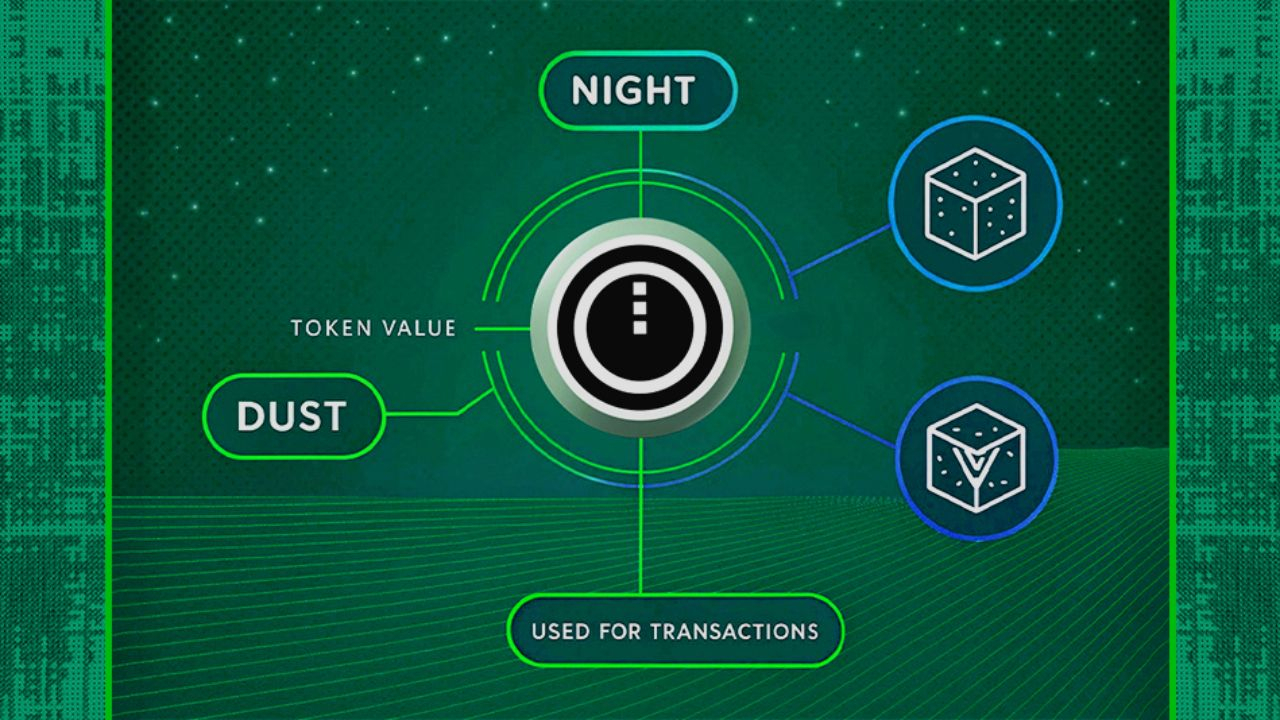
The economic structure is also adapted to this. The night token is used for participation in the network, governance, and maintaining its stability, creating incentives for those who ensure the operation of the protocol.
I don't think this is a simple solution. It is more complex than classical models and requires greater precision.
But when looking at the development of blockchains, it becomes clear: without such an approach, they will remain either too open or too restricted.
And perhaps it is the balance between these extremes that will determine which networks survive.
@MidnightNetwork $NIGHT #night
