

Recently, the whole internet has been drooling over 'Middle Eastern tycoons' and 'de-dollarization.' I read a few so-called in-depth research reports, and to be honest, they made me want to sneer.
Everyone is focused on that flowing hot money, watching which public blockchain is holding a press conference in Dubai, or which project has received the endorsement of a sovereign wealth fund. But there is a fundamental logic that these people haven't mentioned, or rather, they simply don't dare to think deeply: in the real political game and the trillion-dollar cross-border trade, what is most lacking has never been money, but rather the 'universally recognized truth.'
Over the past few days, I have gone through over a dozen white papers on digital transformation in the Middle East, while complaining: the current infrastructure track is really off course. Everyone is competing on TPS, on whose chain is smoother, just like building a Bugatti that can go 400 km/h on sand, only to find there's no road ahead, just quicksand.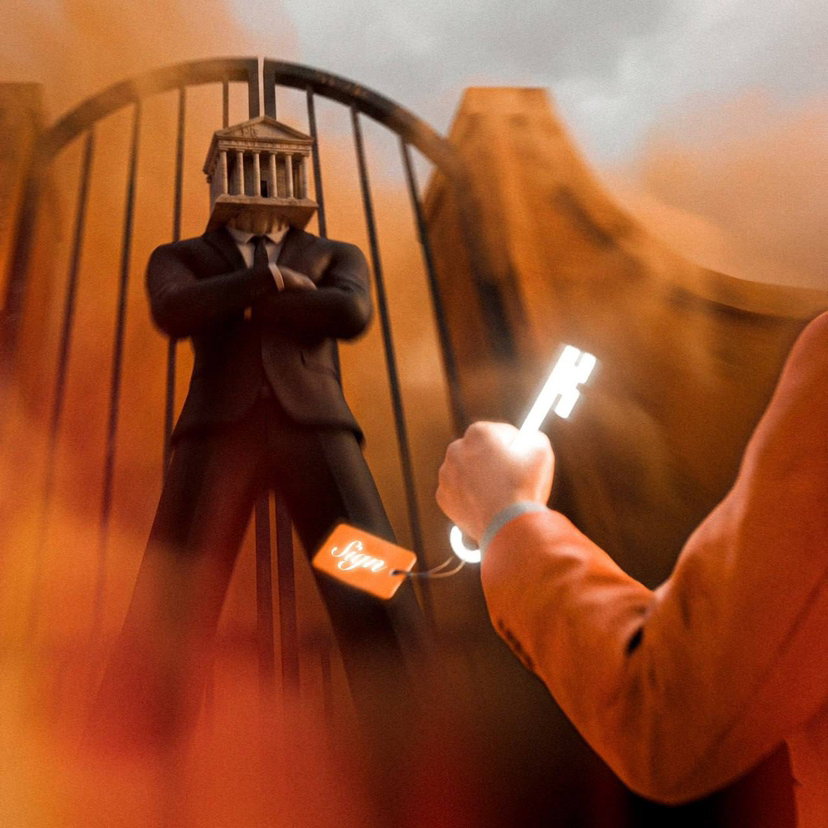
What Sign Protocol is doing is, beneath that quicksand, driving in 'digital rebar' piece by piece.
I. The Middle East lacks public chains, but it lacks 'testable evidence'.
Let me pour some cold water: the oil-producing countries in the Middle East know better than anyone how to write the word 'sovereignty'. They actively embrace Web3, not to let their assets run on a completely uncontrollable, unauditable 'black box'.
If you talk to regulators in Saudi Arabia or the UAE about 'code is law', they will only think you are a geek who has never farmed. In real heavy commerce, the law is written in sovereign will, and evidence needs to be mutually recognized across countries.
Where are the pain points in current cross-border trade?
You ship a batch of goods, the bill of lading is in Country A, the funds are in Country B, and the quality inspection report is in Country C. The current method is for everyone to send emails, mail documents, and stamp physical seals. You say you’re on-chain? Sorry, Customs in Country A doesn’t recognize the hash value on the chain from Country B, because to them, it’s just a string of meaningless gibberish.
This is Sign's most hardcore entry point: it’s not about 'transfers'; it’s about 'confirmation of rights'.
Through Attestation and Schema, Sign transforms the vague, fragmented reality of credit into a globally accepted digital language. It addresses not how the money moves, but how you prove that this money, this batch of goods, and this person's identity are legitimate and comply with my rules.
This attribute of 'digital sovereignty infrastructure' is the antidote that the geopolitically sensitive regions like the Middle East are most eager for. They need a set of 'trust pipelines' that can connect with the global system without being cut off by a single powerful entity.
II. Don’t be fooled by the two words 'signature'; it’s about defining 'rules'.
Many people see the name Sign and their first reaction is, 'Oh, it's an on-chain signature tool.'
I suggest these guys wash their faces first. If it’s just about signing, I can do it with a multi-signature wallet or any random contract. The truly terrifying aspect of Sign lies in its Schema.
To put it simply, Schema is 'rules'. Want to prove a cross-border green energy transaction? OK, Sign will define a set of standards for you: who measured the carbon emissions? Which institution audited it? How is the funding disbursed in stages?
Once this Schema is adopted by banks, logistics companies, and even government departments in the Middle East, it becomes the de facto digital standard.
• SignScan acts like a spotlight, turning dead data that was originally lying on servers into live evidence that can be searched and verified across the network.
• TokenTable directly turns this 'evidence' into cash. Want to receive dividends? Want to unlock tokens? Don’t talk to me about it; bring the certificate from Sign, and when conditions are met, the money will be automatically transferred.
Once this logic runs through, Sign is no longer just a simple protocol; it becomes the underlying code of a digital court. If you're playing in this ecosystem, you must accept its credentials. This monopoly power is much more stable than those public chains that rely solely on gas fees.
III. Why is it referred to as a 'decompression medicine' in geopolitics?
Let’s put it bluntly: what the global geopolitical environment lacks right now is 'decompression medicine'.
Middle Eastern countries want to establish digital sovereignty, and the biggest pressure comes from: how to build their own narrative without completely offending the old system?
Sign's approach is extremely clever; it doesn’t pursue a utopia of 'I want to overturn everything'. It follows compatibility.
It uses technologies like zero-knowledge proofs (ZKP) to allow sovereign nations to 'minimize disclosure'. For example, a bank in Saudi Arabia needs to prove the regulatory compliance of a certain client’s funds to European regulators; it doesn’t need to send all transaction records, just needs to provide a 'verification passed' certificate through Sign.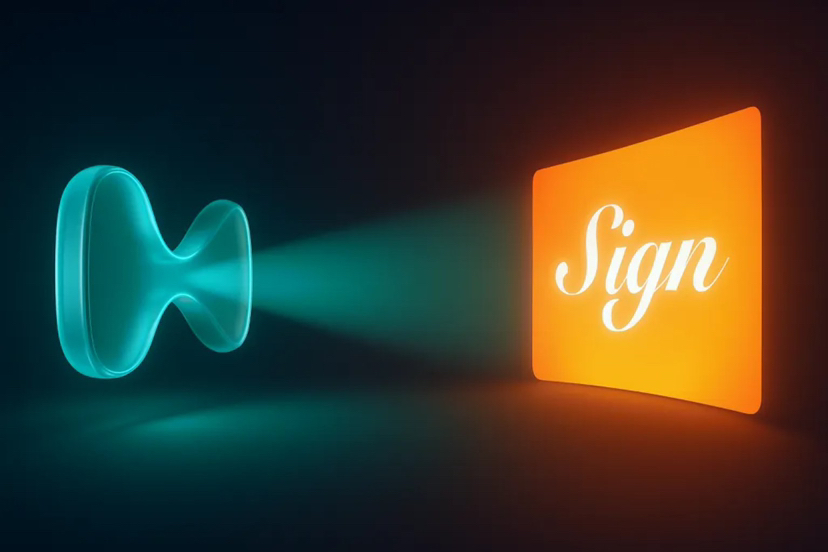
• Privacy is preserved: Core data is still in the hands of sovereign nations.
• Compliance has been achieved: External systems have received credible conclusions.
This is why I say that $SIGN type projects have 'life-preserving' properties. It’s not about creating dreams for speculators; it’s about providing a realistic, low-friction trust buffer for anxious sovereign entities. This geopolitical value will outweigh the TVL of any DeFi protocol in the next five years.
IV. Valuation logic: The leap from 'tool' to 'taxation'
I know what you guys are most concerned about: can this thing really go up?
Let’s be rational; don’t get too excited yet. I never look at how many points a project has pulled today; I only look at its **'rental space'**.
If Sign is just a token issuance tool, then its ceiling is limited after all; there are many tools available. But if it becomes the 'digital checkpoint' for RWA (real-world assets on-chain) in the Middle East and even globally, then the logic changes completely.
Imagine that in the future, every settlement of cross-border trade, every packaging of RWA assets, and every mutual recognition of sovereign identities will require invoking Sign's Schema and storing a certificate on SignScan. This is the 'stamp duty' of the digital age.
The current $SIGN has not yet reached that inflection point; everyone is still collecting airdrops and brushing data. This stage is actually most suitable for calm observation. What I want to see is not how many addresses it has, but how many real business entities start trying to write their own Schema on it.
Conclusions are not absolute; prioritize survival first: the risk of Sign lies in its dirty and labor-intensive work. The explosion cycle of this underlying infrastructure is usually very long, unlike those MEME coins that shout for a rise today and make you rich tomorrow. But its ceiling is that once it becomes the de facto 'trust protocol', it is the hard currency of the digital world.
V. Final words: Understanding the monopoly power of the 'trust pipeline'
Stop competing over those meaningless TPS metrics; that's just speed on a physical level. True commercial hegemony has always been about the **'power of definition'**.
Whoever defines what is 'true' holds the pricing power.
What Sign is doing is laying out a 'trust pipeline' that no one can bypass in the world's richest and most complex geopolitical landscape. It doesn’t decide where the water flows, but it decides whether the water that flows is clean.
In this era of collapsing trust, this kind of 'certainty' is the most expensive luxury.
If you're still looking at market trends like you're scrolling through short videos, you're likely to miss these infrastructure-level opportunities buried in the mud. Calm down and look at those quietly piling in the desert; they are the future safe havens for big capital.
This content is for reference only and does not constitute any investment advice. The market is risky; enter with caution. Doing your homework is your own responsibility; don’t let others lose money for you.