
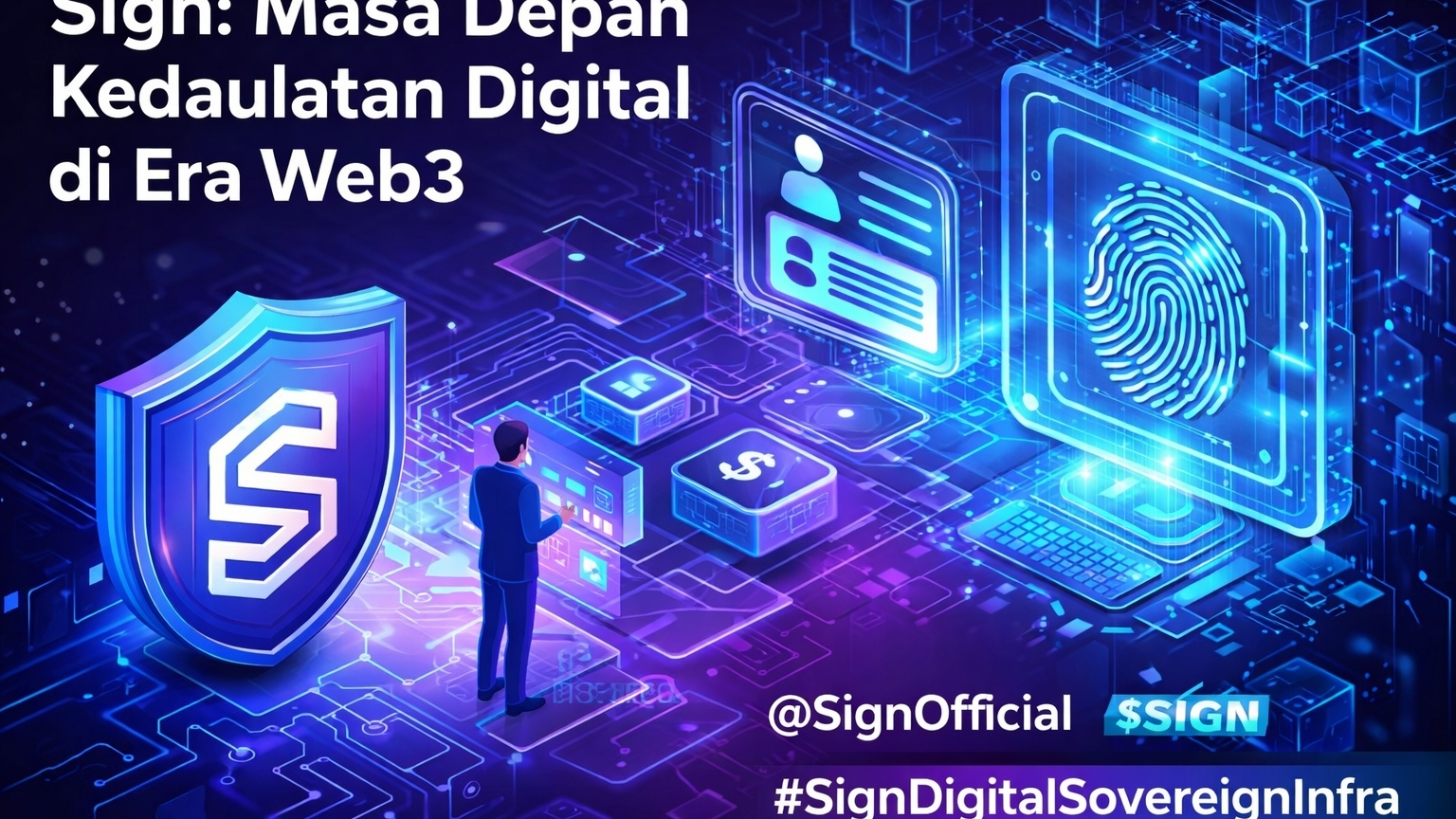
Sign (@SignOfficial): Foundation of Digital Sovereignty Infrastructure in the Web3 Era
In the ever-evolving landscape of Web3, a key issue that is starting to gain attention is the ownership of identity and the validity of data. Many systems today still rely on centralized authorities, which can potentially pose risks of manipulation, data leaks, and limitations in interoperability. This is where Sign (@SignOfficial) plays a role as a provider of blockchain-based digital sovereignty infrastructure.
Sign focuses on the development of trustless data and identity verification systems, where the validity of information can be verified without needing to rely on third parties. This approach is crucial for various use cases, such as verifiable credentials, on-chain agreements, and secure and transparent cross-platform identity integration.
From the tokenomics side, $SIGN serves as a core element in the ecosystem, encompassing incentive mechanisms, governance, and potential utility in the validation and use of services. This adds value not only from a technological perspective but also from an economic network perspective.
From a fundamental standpoint, Sign has a strong positioning in the narrative of 'digital sovereignty infrastructure,' which is likely to become one of the important sectors in the global adoption of Web3. With the increasing need for secure, scalable, and interoperable identity systems, projects like Sign have the potential to become an important layer in the architecture of the future internet.
It is interesting to see how @SignOfficial develops its ecosystem and how $SIGN will play a role in driving the adoption of more decentralized and trusted digital identity solutions.
#SignDigitalSovereignInfra