
Recently, I revisited @SignOfficial, and the thought that came to my mind was not 'what track is this project really on,' but a more realistic question: Many systems ultimately have issues, not because no one was working at the beginning, but because once things start to hand over between different people, different platforms, and different processes, responsibilities slowly become distorted.
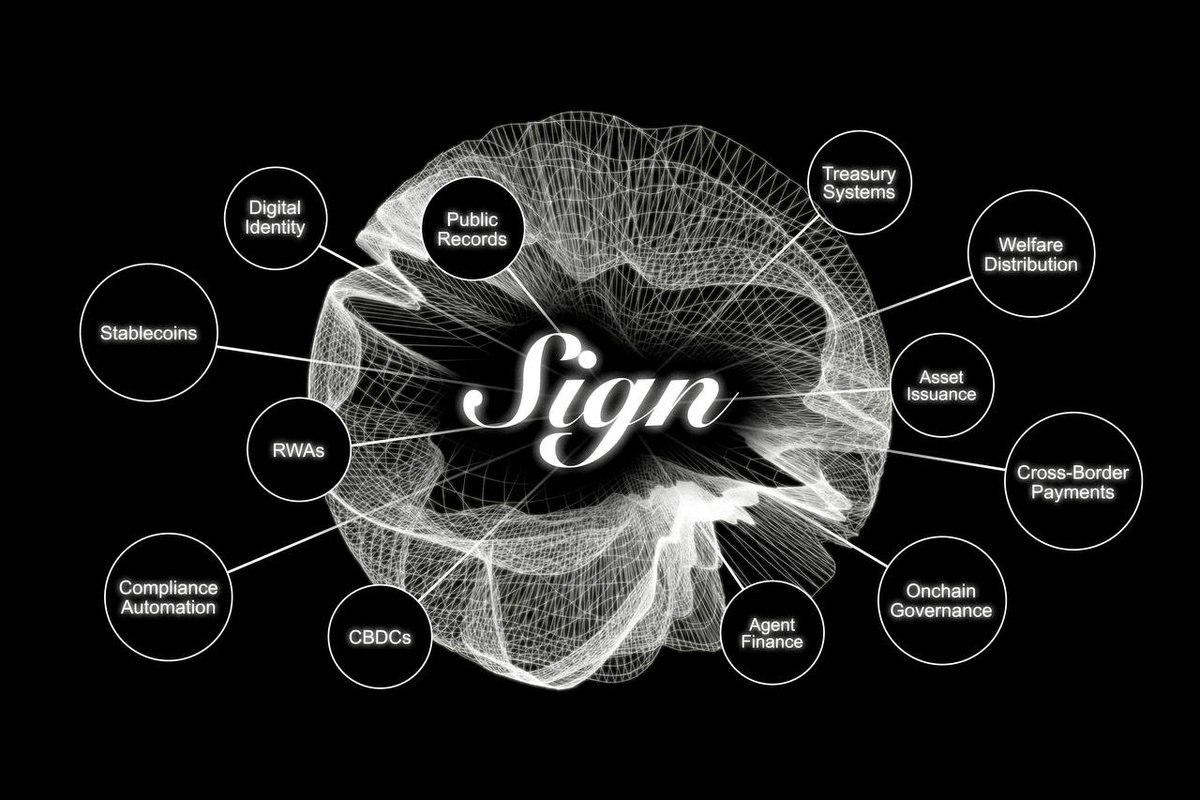
I actually didn't take this matter seriously before. Because most of the time, when we discuss projects, we tend to look at the results first: Is there growth? Are there users? Are there collaborations? Is there enthusiasm? But later, the more I looked, the more I felt that the truly fragile parts of many systems are not in the spotlight, but at the moment of handover. When something moves from one person's hands to another's, when processes jump from one system to another, when confirmation shifts from one record to the next execution, the problems often start from here. Everyone claims to know at the front end, and everyone says they've taken over at the back end, but when issues arise, you find that the layer in between is actually illusory.
When I look at $SIGN now, it increasingly resembles a layer of 'responsibility transfer structure.'
Why do I think this way? Because many processes seem to be completed on the surface: someone confirmed, someone signed, someone distributed, someone recorded. But these actions standing alone do not mean the entire chain is truly stable. What systems fear most is not that a single node does nothing, but that each node does a little, yet there’s no layer to nail down 'who confirmed it, by what rules it was confirmed, handed over to whom, and how to continue executing.' In plain terms, many issues arise not from the absence of action, but from the connections between actions being too loose. Today, you might still rely on people’s memories, chat logs, backend searches, or centralized roles to explain things; but once the number of participants increases, processes lengthen, and collaboration crosses borders, those loose connections will eventually cause problems.
I increasingly feel that SIGN is not just about verification, recording, or distribution. The deeper layer is about handling 'how responsibility can be transferred without distortion.' Who confirmed it, who authorized it, who is qualified to move forward, and when should someone step in for the next action—these aspects have always existed but were often too soft. Just because a process runs smoothly doesn't mean the responsibilities are clearly handed off; just because a result comes out doesn't mean the next person can seamlessly pick it up. When you really ramp up the system’s complexity, you’ll find that the cost of handover is the easiest cost to underestimate.
That's why I won’t just consider SIGN as one of those big, easily summarized projects. Because big terms are too prone to drifting; narratives, infrastructure, collaboration networks—everything sounds great, but when you break it down, the hardest issues are often those very specific, particularly unsexy ones: who is taking over, how is it being taken over, what justifies its establishment after the handover, and where to trace back in case of problems. Many projects love to talk about creation, but I’m now more concerned with 'how not to drop the ball during the handover.' Because creation is undoubtedly important, but once a system starts collaborating, the real cost often isn't generating a result but ensuring that this result can be stably picked up by the next phase.
Of course, this direction isn't naturally appealing. Because transferring responsibility isn't as stimulating as price movements nor as noticeable as hype. When there are no issues, very few people specifically praise it; but once a problem arises, that’s when you realize what the system truly lacks. So I won’t easily get hyped about these projects. Not because they aren’t important, but because they are too close to the foundational layer, naturally progressing slowly, while the market always wants to price it quickly. You’ve made the story big; everyone wants to trade it; but when you dive deeper, people complain that it’s not explosive enough. The challenge with these projects isn't about 'convincing people of its importance,' but about 'waiting for it to be integrated into more processes.'
So now when I look at $SIGN, I'm most concerned not about whether it can continue to be discussed, but about three things. First, is it starting to enter scenarios that truly involve multi-party collaboration, multiple processes, and multi-layer confirmation? Second, has it transformed the notion of 'confirmation' into a structure that can be directly inherited in the next step? Third, after the hype dies down, what remains outside—discussion or more real processes starting to rely on it? Because for me, high-level infrastructure isn’t about making the story bigger, but about ensuring responsibility doesn’t become increasingly vague during the transfer.
So ultimately, I don’t view $SIGN merely as a 'verification project' or a 'distribution project.' I prefer to see it as a layer of responsibility transfer. Many systems are most fragile not at the start or the end, but in that middle moment—from one person to another, from one action to the next, from one result to the next execution. If that layer can’t hold, no matter how complete the front is, the back can easily fall apart. For me,$SIGN whether it’s worth continuing to monitor really depends on whether it can solidify this handover structure over time.
@SignOfficial $SIGN #Sign地缘政治基建