
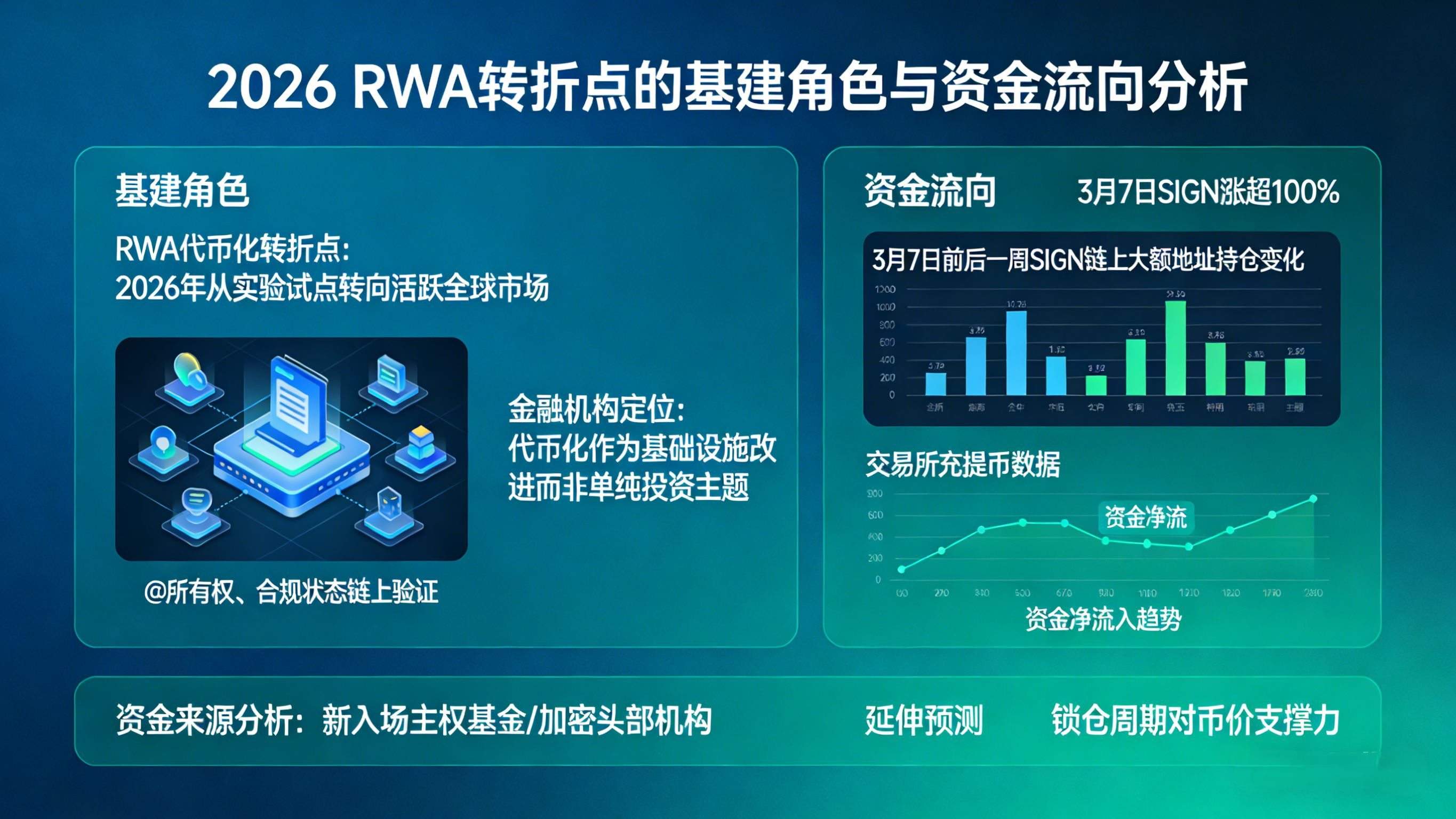
On March 7, 2026, the crypto market was generally sluggish, with Bitcoin fluctuating narrowly between $67,000 and $68,500. However, the $SIGN token surged against the trend by 152.6%, skyrocketing from $0.02089 to $0.05278. Such increases are usually not driven by retail investors but signal the initiation of due diligence processes by sovereign funds and family offices.
The real logic of the RWA turning year
2026 is the turning point for RWA tokenization to shift from experimental pilots to active global markets. At the 2026 Davos Forum, tokenization is repeatedly mentioned as the 'turning point' for digital assets. Financial institutions study tokenization as an infrastructure improvement rather than merely an investment theme.
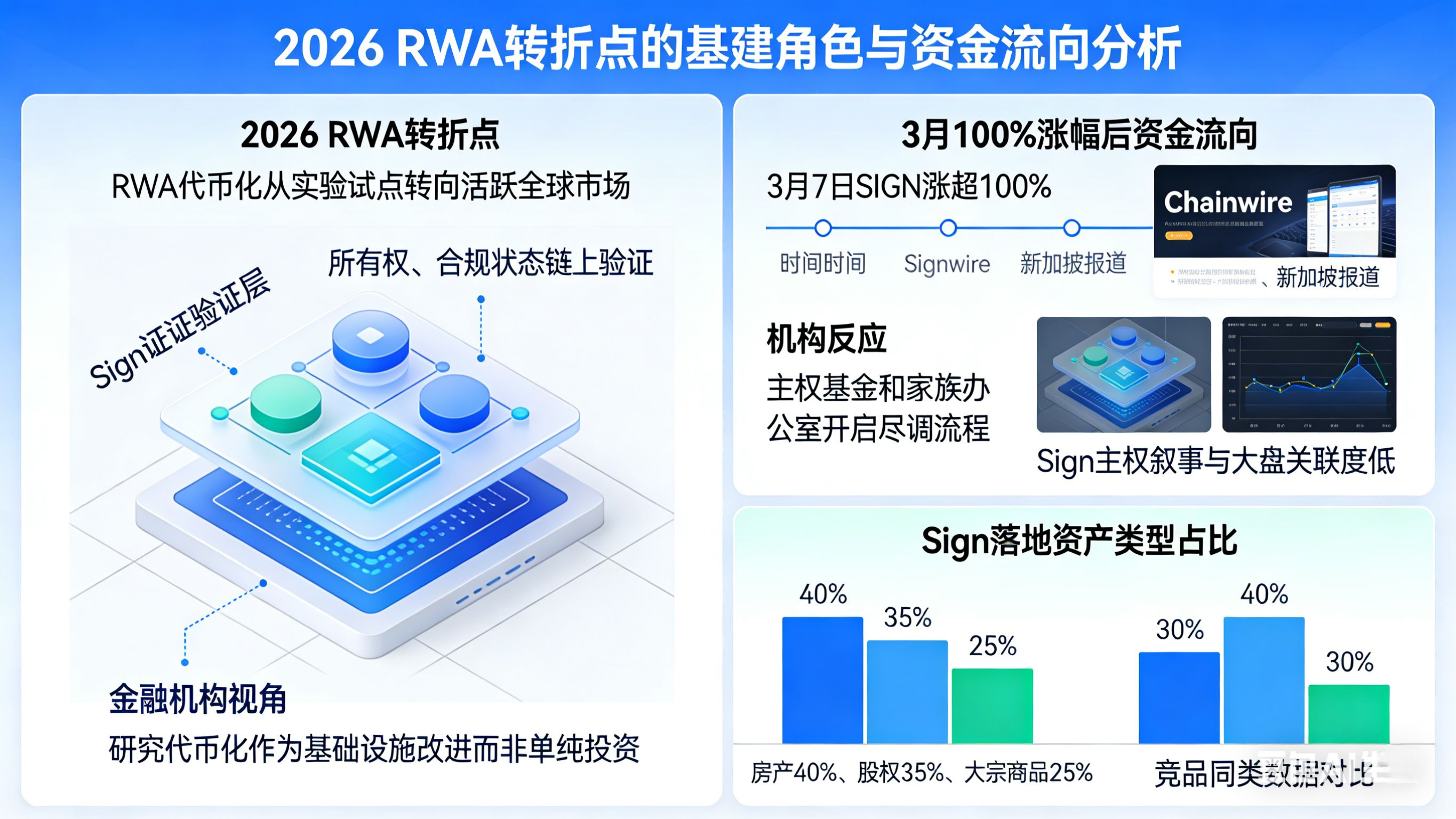
@Sign's credential verification layer provides a trust foundation for asset tokenization—ownership and compliance status can be verified on-chain. This reminds industry observers of another recent signal. On February 6, 2026, the People's Bank of China, together with multiple departments, released new regulations on RWA supervision, formally establishing a dual-track framework that prohibits domestic and requires overseas filing. Clarification of the compliance framework is a prerequisite for institutional capital to enter.
Capital flow after media exposure
Chainwire and Singapore media report simultaneously, increasing institutional attention. Such media coverage usually attracts sovereign funds and family offices for due diligence. An investor who has participated in due diligence revealed that after seeing the media reports, they do not buy immediately but first retrieve on-chain data—distribution records, compliance audits, and government contracts. Only when all three pass will they enter the allocation pool.
At the 2026 Hong Kong Consensus Conference, leaders from Animoca Brands, Mastercard, and Robinhood emphasized the focus on tokenizing U.S. Treasury bonds, money market funds, and stablecoin integration. The sovereign narrative of @Sign has low correlation with the overall market, and compared to pure DeFi protocols, this independence is precisely the characteristic most valued by institutional capital.
Which type of assets will be tokenized on a large scale first?
Some analysts privately predict that in Q4 2026, three types of assets may be the first to achieve large-scale tokenization. The first type is sovereign bonds, as the issuing entities are clear and the regulatory framework is defined. The second type is precious metals such as gold, due to stable value and mature audit pathways. The third type is energy resources, as cash flow is predictable and institutional demand is strong.
In the Kyrgyzstan CBDC project, the @Sign system processes an average of 350,000 verification requests daily, with a human intervention rate of less than 0.3%. This real-use scenario makes sovereign asset tokenization no longer just a concept but an executable business logic.
Balance between media exposure and fundamentals
In 2026, when media exposure combines with fundamentals, projects can secure sustained funding. Those projects that only have media coverage but lack on-chain data may find that capital inflows are only temporary. @Sign's system is set to begin deployment in Q3 2026, serving millions and becoming a key infrastructure for bank-stablecoin integration.
A market maker revealed that after monitoring the increase on March 7, the on-chain transfer volume significantly decreased, indicating that early holders are actively lowering their selling pressure expectations. This signal is more persuasive than any announcement.
Conclusion
The crypto industry has been shouting 'asset on-chain' for so many years, but what is truly accepted by sovereign nations are often those willing to achieve system collaboration and willing to reduce redundant costs in infrastructure. A 152% increase is not small, but every cent behind it has a verifiable distribution record and a traceable use case.
When RWA shifts from experimentation to the global market, and when media exposure is bound to real business data, the coming of age for the crypto industry may truly arrive. Some games have never been on the K-line, but in those verifiable sovereign contracts, and in those genuine approvals of institutional due diligence.
