
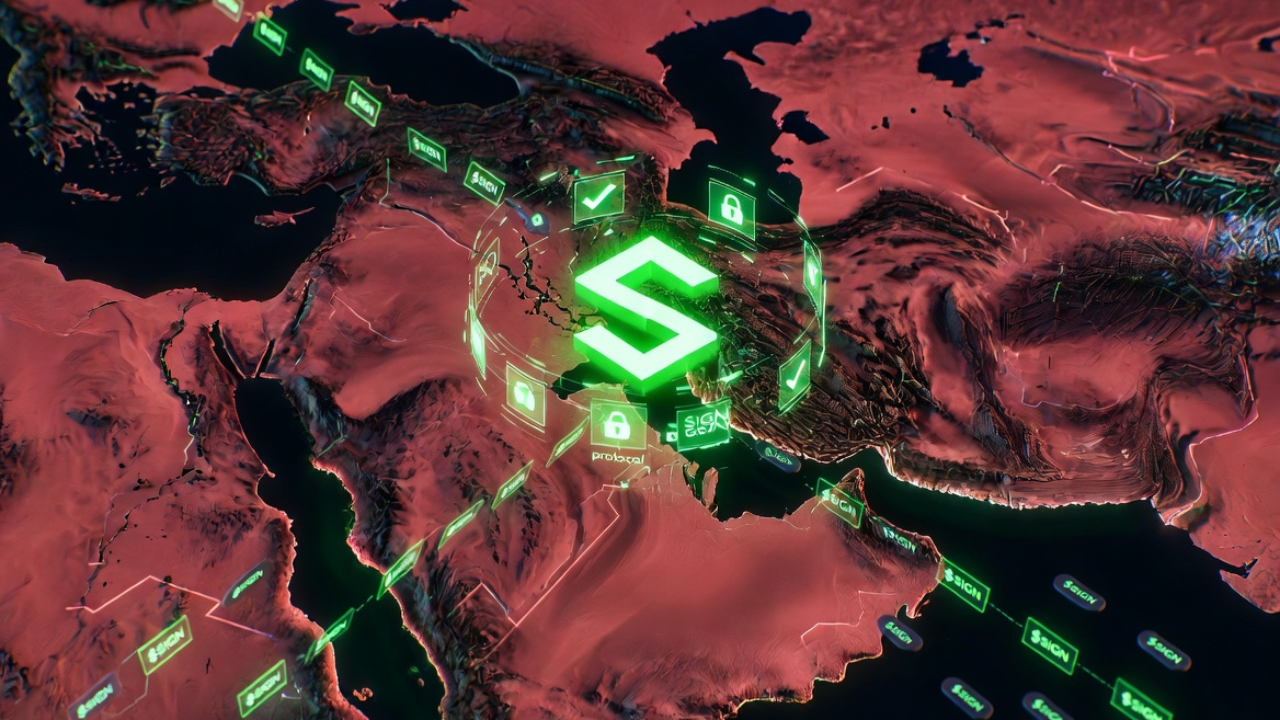
@SignOfficial Keep falling, I will open a short position beautifully!
Market discussions about the situation in the Middle East usually focus on two types of assets: one type is traditional safe-haven assets like gold and oil, and the other type is cryptocurrencies like Bitcoin that are repeatedly used to absorb the 'global uncertainty premium'. However, if you take a step back, you will find that what is truly driving demand due to geopolitical conflicts is not just 'safe-haven assets', but also 'infrastructure that can rebuild trust'.
This is precisely the @SignOfficial aspect that is worth re-examining.
Many people look at SIGN and their first reaction is to categorize it within the conventional narrative of airdrops, distribution, and certificates, thinking it is a more efficient on-chain identity verification or token issuance tool. But if we only stay at this level, we actually underestimate it. Because when the global situation enters a stage of high friction, high division, and high scrutiny, certificate verification and value distribution will no longer just be 'tools for enhancing efficiency in Web3', but will gradually become a more fundamental capability: who can prove who you are, who can confirm what you have done, and who can deliver what is due to you without the full cooperation of traditional intermediaries.
When these issues begin to move from marginal scenarios to the mainstream, SIGN's position will change.
@SignOfficial The most interesting point is that it is not simply putting 'identity' on the blockchain, nor merely automating 'token issuance,' but rather attempting to create a more complete path: integrating verifiable credentials, behavior confirmation, and value distribution into the same logical framework. The significance of this logic may not be striking enough during stable periods, as the old trust system can still operate, bank accounts can still be used, platform reviews can still be conducted, and traditional organizations can still act as intermediaries. However, when geopolitical conflicts intensify, cross-border friction rises, and regional financial channels encounter obstruction, the friction costs of the old system will soar quickly, while the advantages of the new system will be magnified.
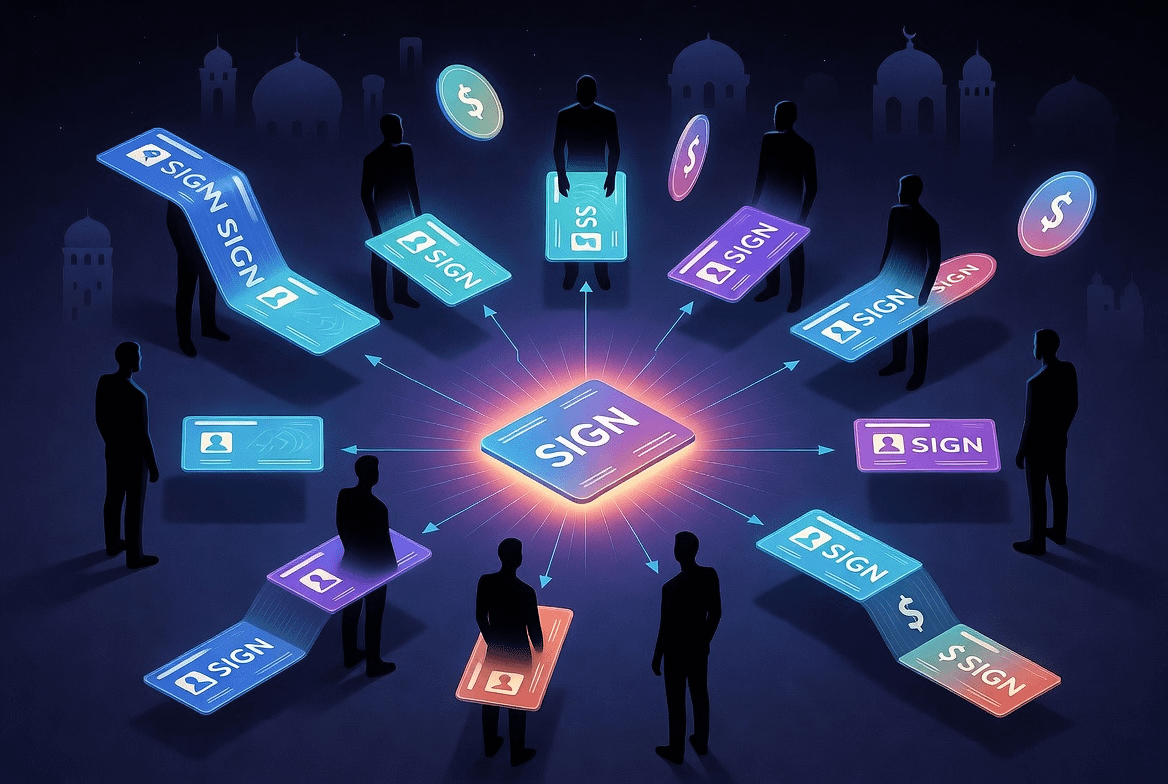
The Middle East is a very typical amplifier.
This region does not lack funds, does not lack population movement, and certainly does not lack complex cross-border relationships. What it lacks is a low-friction, verifiable, and executable trust coordination mechanism. The traditional system can certainly partially fulfill this function, but the problem is that the traditional system is highly dependent on existing order: it relies on stable banking networks, clear judicial boundaries, sustainable cross-border settlement cooperation, and a policy environment that does not tighten suddenly. Once the situation becomes sensitive, this system will slow down, become more expensive, and even partially fail. For individuals, identity verification may become troublesome; for organizations, confirming and distributing subsidies, incentives, rewards, fundraising, employment, and collaboration will also become more complex.
At this time, @SignOfficial the value of such infrastructure begins to become very real.
Because what it solves is not an abstract 'on-chain story,' but a very concrete real issue: in an environment where trust costs continue to rise, how to reconnect 'verifiability' and 'distributability.' Who is a qualified user, who has completed the task, who has a certain qualification, who should receive certain rights, can it be confirmed and executed more efficiently without relying on lengthy manual reviews or layers of intermediary endorsements, but rather through an on-chain credential system? This issue may seem like efficiency optimization in a bull market, but in complex regions, it could directly become a necessity.
So, if we must say what the situation in the Middle East has brought to SIGN, it is not just a simple hotspot, not just a narrative trend, nor a short-term emotional stimulus, but rather it has made the market realize earlier that what will be most valuable in the future is not just liquidity itself, but also the ability to 'direct liquidity accurately to its target'; it is not just asset pricing capability, but also the ability to 'credibly verify people, behaviors, qualifications, and rights.' The former determines whether money can flow, while the latter determines where money should go. What SIGN does is precisely the latter.
And this is also $SIGN the fundamental reason worth paying attention to.
The value of many projects' tokens is more based on trading expectations, platform popularity, or ecological imagination; but if it can truly bind credential verification, value distribution, and usage growth within the SIGN network, what it undertakes is not just market sentiment, but the actual demand in the system's operation. To put it more directly, $SIGN the potential growth space does not lie in whether it can be speculated in the short term, but in whether there will be more and more on-chain rights distribution, user screening, qualification confirmation, and identity collaboration that need to be completed through SIGN's mechanism. If the answer is affirmative, then $SIGN is not a flimsy 'concept coin,' but an infrastructure asset that grows alongside the depth of network usage.
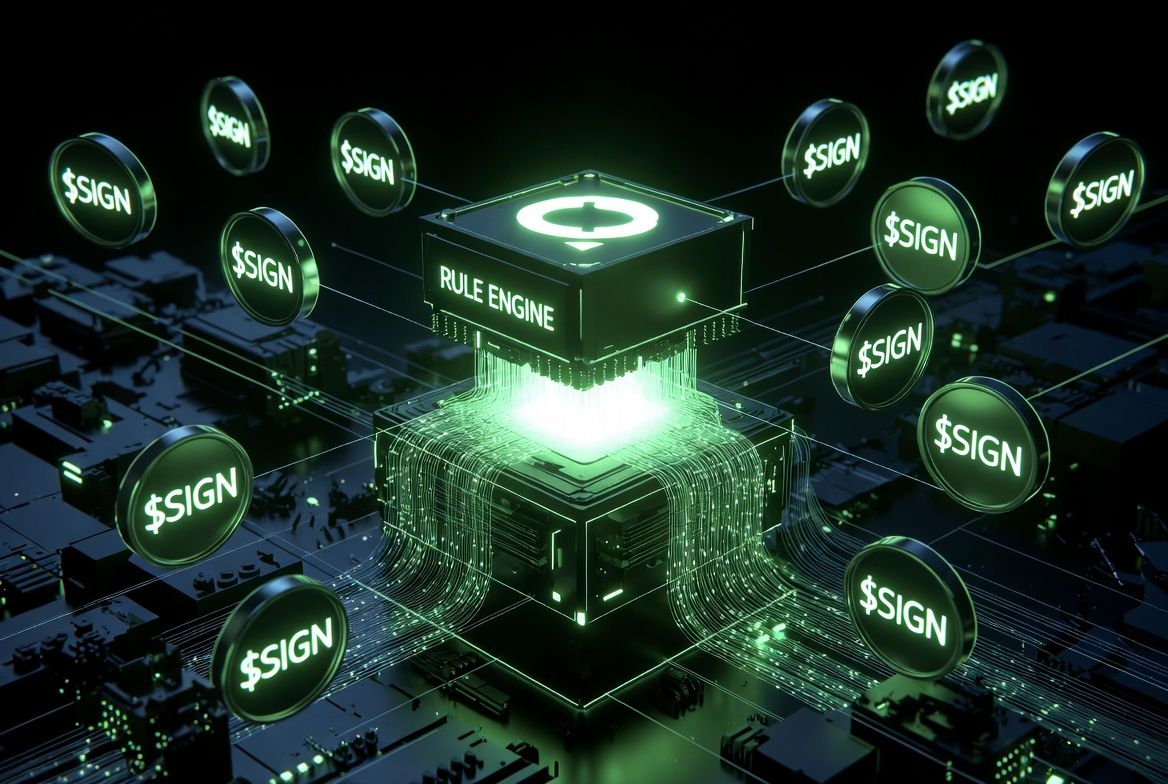
This is different from many projects that rely solely on storytelling. Stories can bring about a market cycle, but structural demand can lead to a longer lifecycle.
More importantly, the Middle East may not just be a regional variable; it could be a global rehearsal. Today, the market sees the Middle East as a center of geopolitical risk, and tomorrow it will discover that more and more regions around the world are facing similar issues: cross-border identities are hard to unify, traditional review processes are inefficient, benefits and incentive distributions are easily distorted, and platforms and institutions increasingly need more refined user verification mechanisms. In other words, the Middle East is not an isolated case, but has brought the 'reconstruction of the trust system' to the forefront. If SIGN can prove its applicability in this high-complexity environment, then what it gains is not just a single-point opportunity, but a spillover capability.
From this perspective, @SignOfficial the growth path may be larger than many people imagine. In the short term, it serves as the infrastructure for credential verification and token distribution; in the medium term, it may evolve into an important entry point for on-chain rights confirmation; looking further ahead, it even has the opportunity to become an intermediate protocol connecting identity, behavior, and value settlement. Whoever can define 'who is qualified, who has contributed, who should be allocated' in the future on-chain world will hold very strong discursive power. This discursive power may not be as lively as that of public chains, nor as explosive as that of memes, but it may be more enduring and easier to solidify into real usage scenarios.
Therefore, what is truly worth discussing is not 'Will the situation in the Middle East lead to short-term speculation on SIGN?', but a more important issue: when geopolitical fragmentation continues to raise global trust costs, will projects like SIGN that connect credentials, verification, and distribution become necessities rather than options? If so, then SIGN cannot just focus on sentiment or popularity, but must begin to reassess from the perspective of infrastructure.
The market always likes to chase the loudest narratives, but often, what eventually emerges are those projects that solve specific problems amidst chaos. The situation in the Middle East is certainly not a positive factor, and conflicts will not automatically confer value to any project, but it will expose the fragility of the old system and accelerate the market's demand for new trust tools. Whether SIGN can truly capture this wave of demand determines whether it will be merely a phase-based theme or an agreement layer asset capable of cyclical growth.
If it catches this, then @SignOfficial is not a temporary fluctuation caused by news stimulation, but a long-term space gradually released during the global trust reconstruction process.