
🌍 Next to the powder keg of the Middle East, why am I fixated on @SignOfficial's $SIGN?
When it comes to the Middle East, the first reaction is oil, conflict, and great power competition. But beneath these superficial appearances, a deeper competition is fiercely unfolding—the digitization and security of critical infrastructure in the physical world.
Ports, oil fields, oil pipelines, cross-border power grids, seawater desalination plants... these are the 'veins' and 'skeleton' of modern society. Whoever holds the real-time data rights, authentication rights, and scheduling rights for these facilities has an extra card in the geopolitical game.
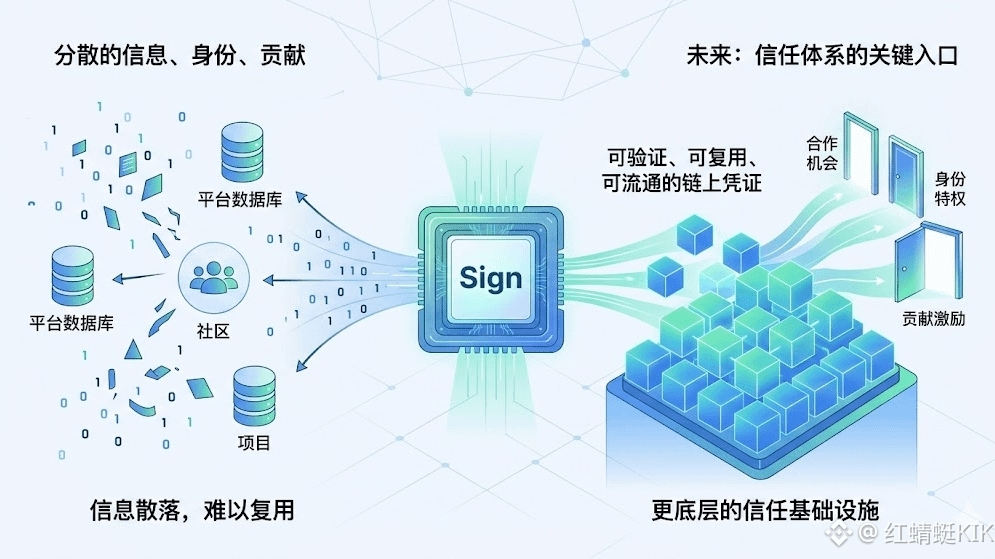
What @SignOfficial is doing is precisely providing on-chain identity and trusted data verification for these physical assets in a decentralized manner. $SIGN is not a worthless token; it is the data infrastructure token that connects critical facilities in the real world with the trustworthy network of Web3.
In sensitive areas like the Middle East, traditional centralized databases are too fragile—one cyber attack, one server being compromised, or even one insider tampering with data can trigger supply chain disruptions or geopolitical misjudgments. Sign's decentralized verification mechanism ensures that data is immutable from the source and fully traceable. For sovereign countries, multinational energy giants, and large infrastructure operators, this is not an "option" but a "necessity."
Looking again at the growth potential. Several countries in the Middle East are fully promoting economic diversification plans like the "2030 Vision," pouring trillions of dollars into new city construction (such as NEOM), smart grids, green energy, and digital ports. These projects share a common point: they rely heavily on a trustworthy data foundation. $SIGN is precisely cutting into this trillion-dollar market's underlying infrastructure layer.
Moreover, Sign's business model does not rely on speculation but on real use cases: each critical piece of data that is verified on-chain requires consuming $SIGN; every physical asset node that is integrated is deeply tied to the token economy. With more infrastructure projects in the Middle East and globally being connected, the practical value of $SIGN will become like the water and electricity networks: an existence that is "invisible but indispensable."
In the midst of geopolitical changes, the hardest assets are often not gold, but rather the three essential elements of "necessity + irreplaceability + incremental market" that are present in the underlying protocols. What $SIGN is doing is embedding itself in the digital nervous system of global critical infrastructure.
This is not speculation; it is about understanding the main line of the integration of the physical world and Web3 over the next five to ten years.
#Sign Geopolitical Infrastructure $SIGN @SignOfficial