
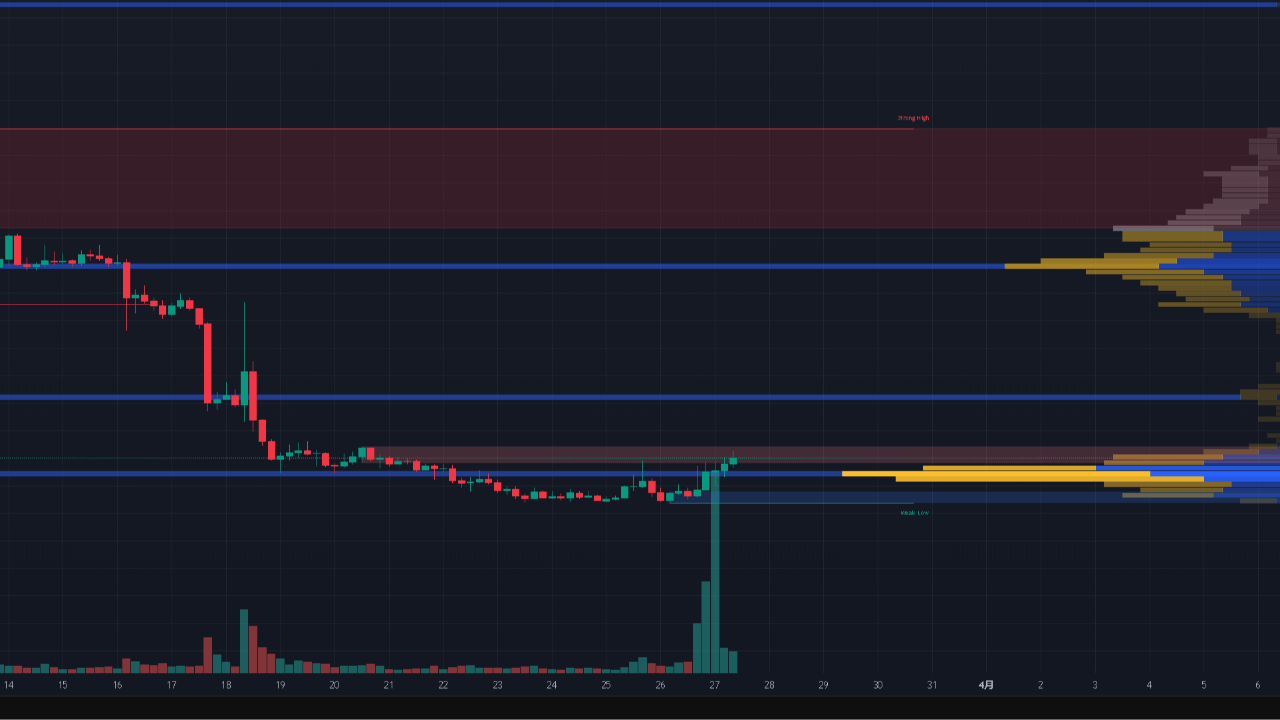

ROBO is a decentralized infrastructure protocol under OpenMind, aimed at the robot economy (Machine Economy). Its core is to enable robots to have on-chain identities, autonomous payment, and collaboration capabilities. The tokens are used for payment, staking, governance, and value capture. The following analysis covers project positioning, technology, token economics, ecology, risks, and prospects.
1. Project positioning and core value
1. Track and positioning
Track: Web3 + Robot / AI integration (Machine Economy), belonging to an early-stage high-growth, high-risk track.
Positioning: The underlying protocol layer of a decentralized robot network, providing machine identities, task matching, on-chain settlement, and governance, breaking the closed ecosystems of hardware manufacturers.
Core Vision: Upgrade robots from 'tools' to autonomous economic entities, achieving M2M (Machine to Machine) collaboration, payments, and autonomy.
2. Core Components
OM1 Universal Robot OS: Hardware-agnostic robot operating system that processes perception, planning, and action, supporting natural language programming, similar to a robot version of 'Android'.
Fabric Protocol Layer: Blockchain coordination layer, providing machine identity, decentralized task matching, atomic settlement, PoRW (Proof of Robot Work) and reputation systems.
ROBO Token: Network-native token, linking payments, staking, governance, and value capture throughout the chain.
Two. Technical Architecture and Innovation
1. Technical Stack
Underlying: Initially deployed on BNB Chain + Ethereum (Base L2), planned migration to self-developed Fabric L1 (optimized for machine operations).
Privacy: ZKP (Zero-Knowledge Proof) + MPC (Multi-Party Computation) to ensure machine data and transaction privacy.
Consensus: PoRW (Proof of Robot Work), rewards distributed based on the quantity and quality of tasks completed by robots.
2. Core Mechanism
Machine Identity System: Generates a unique on-chain identity for each robot, enabling verification and traceability.
Decentralized Matching Engine: Task broadcasting → Machine screening → Reputation sorting → Optimal matching → Atomic settlement, without the need for a centralized server throughout the process.
Skill Chips: Modular functional plugins similar to an App Store, allowing developers to publish/sell skills, with robots subscribing as needed.
Three. Token Economy (ROBO)
1. Basic Information
Total Supply: 10 billion.
Circulation: About 15–20% at the initial launch, gradually unlocked thereafter.
Core Uses:
Payments: Settlement for robot tasks, skill subscriptions, network service fees.
Staking: Robots/operators stake ROBO to obtain service qualifications and profit sharing; veROBO participates in governance.
Governance: Voting determines protocol upgrades, ecological fund distribution, and parameter adjustments.
Value Capture: Network fees and part of skill subscription revenue are used for the repurchase/destroying of ROBO.
2. Distribution and Unlocking (Core)
Table Allocation Category Percentage Unlocking Rules Ecology and Community 29.7% TGE unlocks 30%, remaining 40 months linear unlock Investors 24.3% 12 months locked, then 36 months linear unlock Team and Advisors 20.0% Same as investors: 12 months locked + 36 months linear unlock Foundation 15.0% Gradual unlocking for ecological construction Early Contributors 11.0% Linear unlocking
3. Supply and Demand and Inflation
Demand Side: Robot registration, task payments, skill subscriptions, staking, and governance participation.
Supply Side: Early unlocking pressure is significant (2026–2028), long-term relies on deflationary mechanisms (fee buybacks/destroying) for balance.
Four. Ecological and Implementation Progress (March 2026)
1. Exchanges and Liquidity (Core Benefits)
Binance: Spot trading (ROBO/USDT/USDC/TRY) launched on March 4, with deposits/withdrawals opened simultaneously; a trading competition (30 million ROBO prize pool) held from March 6 to 27; HODLer airdrop (100 million) on March 18.
Other Platforms: BitTap launches perpetual contracts (50x leverage); Bithumb launches ROBO/KRW fiat pair, opening the Korean market.
Liquidity: Trading volume exceeded $142 million on Binance's first day, significantly improving liquidity.
2. Ecological Cooperation
Has connected with leading robot manufacturers like UBTech (优必选) and Fourier to promote hardware compatibility and cross-protocol payments.
Collaborating with AI companies and smart city projects to explore scenarios like automated delivery, industrial automation, and robot services.
3. Technical Progress
OM1 Beta version iteration, supporting multi-brand robot integration.
Fabric mainnet features launched: Robot identity registration, task matching, basic settlement.
Skill chip market opened, first batch of 20+ skill modules launched.
Five. Core Advantages
Track Scarcity: The leading protocol in Web3 + robotics economy is in its early stages, with a very high ceiling (the global robot market is expected to reach $25 trillion by 2050).
Technical Differentiation: Machine identity, PoRW, ZKP+MPC privacy, OM1 universal OS form a complete technical barrier.
Capital and Traffic: Deep support from Binance (launch, airdrop, trading competition), top institutional investment, sufficient traffic and liquidity.
Implementation Potential: Linked to the physical robot industry, supported by real hardware and scenarios, not a purely speculative project.
Six. Core Risks
1. Technical and Implementation Risks
OM1 commercialization progress is uncertain, and there are significant challenges regarding hardware compatibility and large-scale deployment.
In-house Fabric L1 migration poses technical risks and time costs.
The machine economy is still in its early stages, with user and robot growth not meeting expectations.
2. Token Economic Risks
Unlocking Pressure: 2026–2028 investors and team tokens gradually unlocked, significant selling pressure.
Insufficient Demand: If ecological implementation is slow, actual usage demand for ROBO may be inadequate, and prices are easily driven by speculation.
On-chain Risks: Airdrops have suspected witch attacks, with about 40% of airdrops acquired by concentrated addresses, be wary of centralized sell-offs.
3. Competition and Regulatory Risks
Traditional robotics giants (like Boston Dynamics) may enter the market, increasing competition.
Uncertainty in robot data privacy and autonomous behavior regulatory policies.
Seven. Outlook Assessment (2026–2028)
1. Short-term (2026)
Price: Volatile, driven by Binance launch, airdrop, and trading competition, rising sharply then correcting, with wide fluctuations.
Core: OM1 commercialization validation, quantity of hardware compatibility, growth of on-chain robots and task volume.
2. Medium-term (2027–2028)
Optimistic (30%): OM1 small-scale commercialization, rapid ecological expansion, ROBO becomes the core token of the machine economy, breaking historical highs.
Neutral (40%): Slow commercialization progress, only proof of concept, price volatility, dependent on capital and liquidity.
Pessimistic (30%): Implementation does not meet expectations, unlocking selling pressure, prices continue to decline.
3. Long-term (2029+)
If the machine economy explodes, Fabric becomes the underlying standard, ROBO has the potential for a thousand-fold increase; otherwise, it risks becoming a niche project.
Eight. Investment Conclusion
ROBO is a high-risk, high-potential return early-stage target, primarily driven by speculation and liquidity in the short term, while medium to long-term depends on the commercialization of OM1 and ecological expansion.
Suitable Audience: Investors who can withstand extreme volatility, are optimistic about the Web3 + robotics track, and are willing to track progress in the long term.
Core Observation Indicators: OM1 commercialization progress, number of robot integrations, on-chain task volume and payment data, unlocking rhythm, and continued support from Binance.