
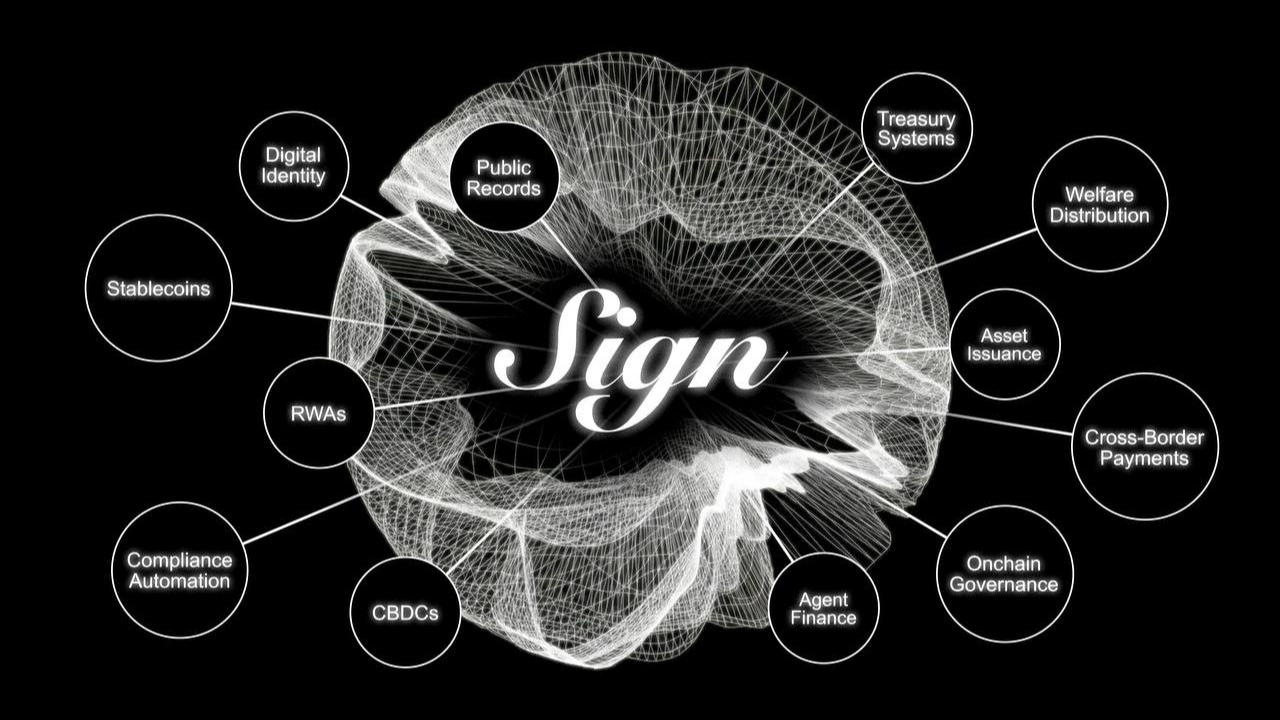
$SIGN The recent price drop is mainly due to the overall market sentiment in the Middle East being poor, dragging it down with it. However, the core technology of the project itself—on-chain certificate verification and cross-chain proof—is currently running quite steadily.
Today, let's not talk about short-term candlestick charts, but rather casually discuss its more reliable aspects: the advantages of compliance and what will truly reflect its value in the future.
SIGN has been able to establish a foothold in the Middle East, and compliance is a tangible characteristic for it.
Many cryptocurrency projects there operate relatively loosely, but SIGN has designed its system with room for compliance. Its system can adjust the unlocking and distribution of tokens according to local regulations and supports identity verification tools like SignPass, making it convenient to meet KYC and AML requirements.
This aligns well with the current regulatory direction in the UAE. Dubai has VARA, an agency specifically managing virtual assets, requiring projects engaging in related businesses to go through compliance filing processes.
SIGN is currently advancing its application along this route. Among many projects, its proactive approach to compliance can help avoid some pitfalls and facilitate smoother operations.
The overall attitude towards blockchain in the Middle East is supportive. Dubai has no capital gains tax and is attracting such companies, creating a gradually vibrant ecosystem.
SIGN has a collaboration with the Abu Dhabi Blockchain Center, mainly helping the public sector handle digital record verification. This is a relatively practical attempt, not just talk.
Saudi Arabia's policies are also slowly loosening, allowing banks to collaborate with licensed crypto companies.
For projects like this that do foundational infrastructure, the path to connecting with traditional finance may be wider in the future.
Want to see if SIGN can make it in the future, don't just look at price fluctuations; focus on these practical aspects:
1. Compliance Progress:
Whether it can obtain the VARA-related licenses on time. This is a basic condition for it to conduct normal business in the Middle East. By 2026, the regulatory focus has shifted to actual supervision, requiring time and substantial preparation for the application process.
2. Application Promotion:
Whether the super app previously planned can truly be used in government or large enterprises depends on the number of on-chain proofs and actual usage, which can reflect the real level of user and demand.
3. Cooperative Execution:
Whether the collaboration with the Abu Dhabi Blockchain Center can expand from the initial stage to more public projects. Many places in the Middle East are pushing for digital transformation, including record management and payment verification. If it can grow step by step, these will support its long-term value.
In summary: SIGN is easily influenced by market sentiment in the short term, but in the long term, it still depends on whether the technology can be implemented, whether compliance can keep up, and finding its position within the digital transformation needs in the Middle East.