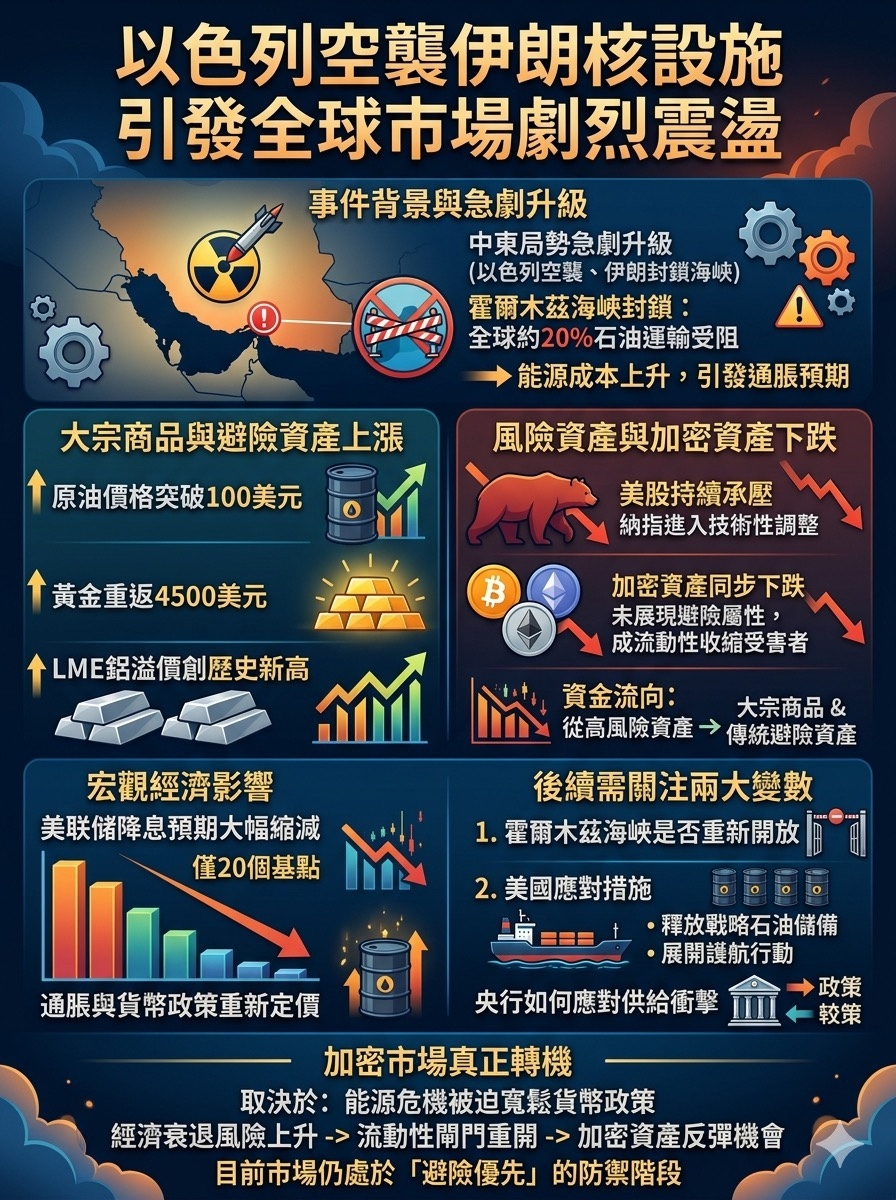
Crude oil prices have surpassed $100, gold has returned to $4500, and LME aluminum premiums have reached all-time highs. US stocks continue to be under pressure, with the Nasdaq entering a technical adjustment, reflecting the market's repricing of inflation and monetary policy.
The Strait of Hormuz is a vital passage for about 20% of global oil transportation. A blockade would directly raise energy costs and trigger rising inflation expectations. The Federal Reserve's interest rate cut expectations have been significantly reduced to only 20 basis points.
In this environment, cryptocurrencies like Bitcoin have not demonstrated safe-haven properties; instead, they have fallen in line with risk assets, becoming victims of liquidity contraction. Capital is flowing from high-risk assets into commodities and traditional safe-haven assets.
Subsequently, two major variables need to be monitored:
1. Whether the Strait of Hormuz is reopened;
2. Whether the United States releases strategic oil reserves, launches escort operations, and how central banks respond to supply shocks.
For the cryptocurrency market, the real turning point depends on whether global central banks are forced to loosen monetary policy due to the energy crisis. If the risk of economic recession rises and liquidity gates reopen, there will be a chance for a rebound in crypto assets. The market is still in a 'risk-off' defensive phase.