
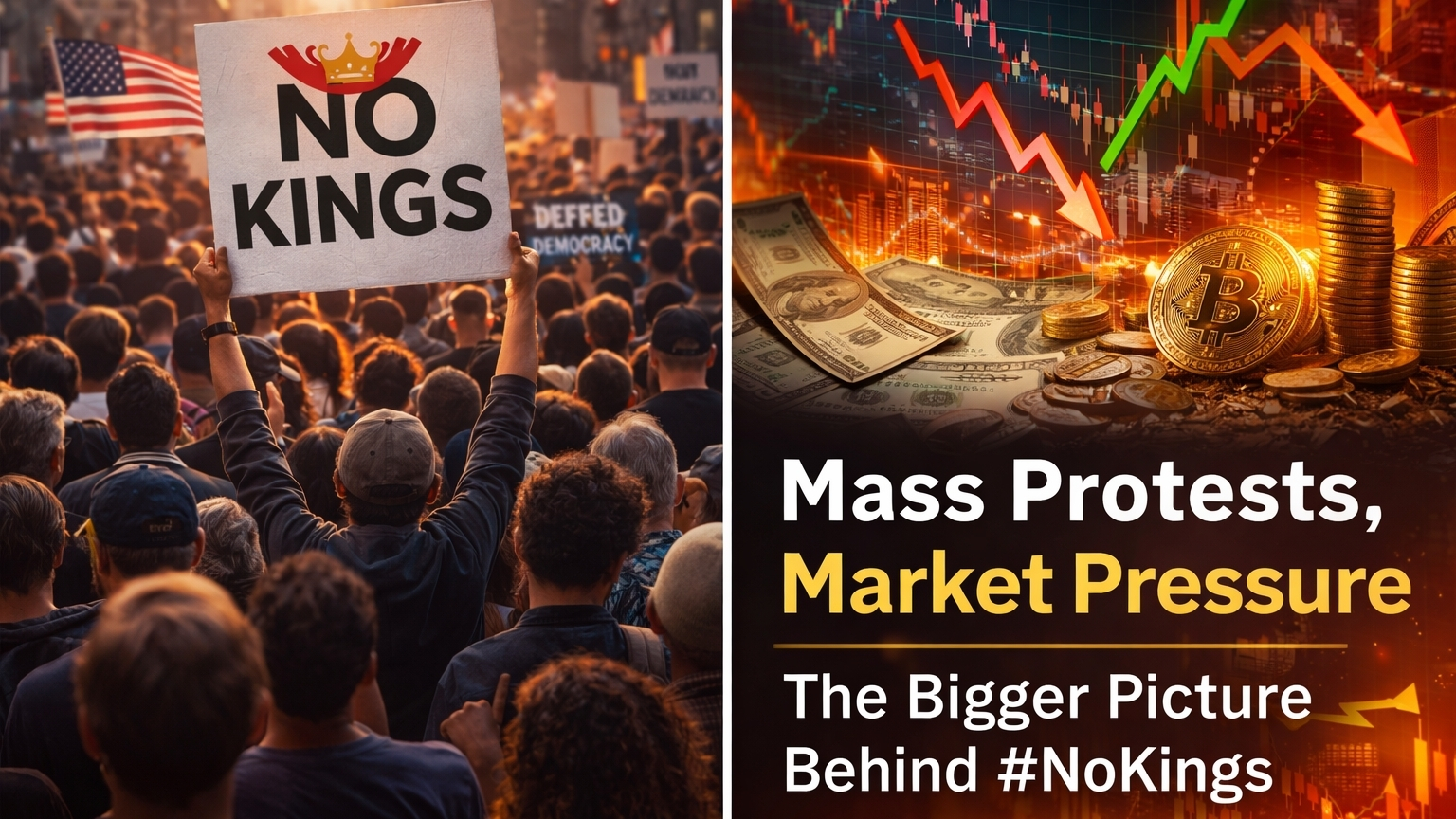
🚨 The #USNoKingsProtests are sending a clear message — and it’s bigger than just politics.
Tens of millions of people across the United States have taken to the streets under the “No Kings” movement, pushing back against what they see as growing authoritarian behavior in leadership. The slogan itself isn’t random — it taps directly into America’s foundational idea: rejecting concentrated power and demanding accountability.
But this isn’t just about protests. There’s a deeper layer here that markets and investors are quietly watching.
When movements like this gain scale, they start influencing perception — not just politically, but economically. In the short term, large-scale protests can introduce uncertainty. Policy decisions may slow down, narratives shift, and markets tend to react cautiously when the political climate becomes unpredictable.
At the same time, grassroots movements have a way of reshaping long-term sentiment. They signal that public pressure is building, and that can eventually translate into policy changes — whether it’s regulation, fiscal direction, or leadership dynamics.
From an investor perspective, confidence isn’t just about numbers. It’s about stability. When people feel that the system is being challenged, capital often becomes more defensive, waiting for clarity before making big moves.
Now here’s where it gets interesting.
There’s a growing parallel between movements like this and the rise of decentralized systems — especially in crypto.
At the core, both are driven by the same idea:
→ Reducing reliance on centralized authority
→ Increasing transparency
→ Giving more control back to individuals
It’s not a coincidence that during times of political tension or institutional distrust, interest in decentralized assets tends to rise. People start looking for alternatives that operate outside traditional power structures.
That doesn’t mean protests directly drive markets overnight — but they do shape narratives. And narratives are powerful.
So the real question isn’t just what’s happening on the streets —
it’s how this sentiment evolves and where that pressure eventually flows.
Because when public sentiment shifts at scale, it rarely stays contained.
