
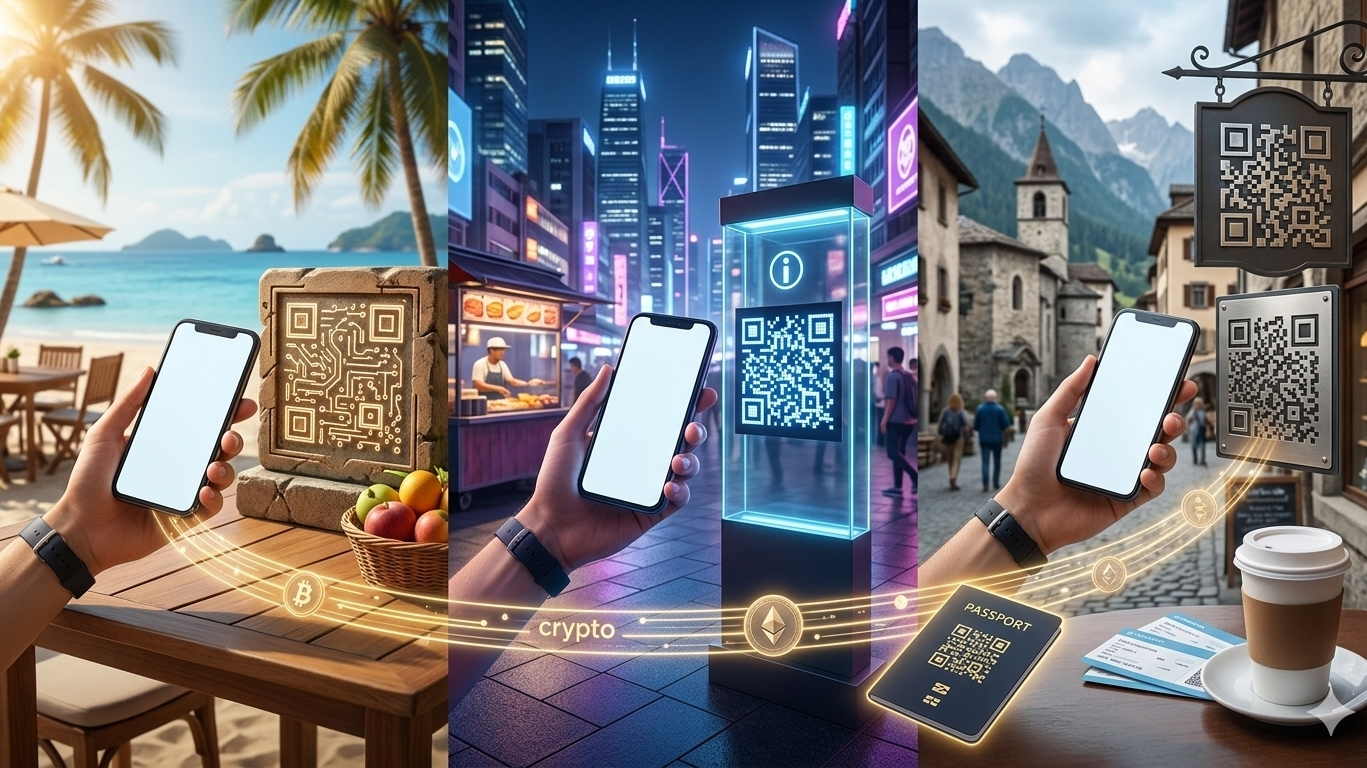
Life "on the move" has long become the norm for thousands of freelancers and IT specialists. But so far, the main pain point remains the banks: exorbitant conversion fees, card blocks in new countries, and the eternal search for ATMs with a "good" exchange rate.
What if we completely abandon fiat cards and cash? I decided to conduct an experiment and live for a month in several popular countries among nomads, using only Binance Pay. I'm sharing what came of it.
🗺️ My route and preparation $BNB
The idea was simple: to move between countries with different levels of crypto acceptance to make the test fair. I chose Southeast Asia and part of Europe (conditionally: Thailand — UAE — Georgia).
Experiment rules:
No cash withdrawals.
Use of plastic crypto cards only as a last resort (if direct QR code is not accepted).
The entire budget is in USDT and BNB in the Binance account.
🌴 Location 1: Thailand (Level: Advanced)
Thailand was pleasantly surprising. Although you can't expect crypto at a street stall with pad thai yet, the infrastructure is ready in major cities.
Accommodation and tickets: I booked a hotel and domestic flight immediately through Binance Marketplace partners (Travala). Payment went through in seconds. $USDT
Transport and food: In Bangkok and Phuket, there are many cafes and even small shops that accept Binance Pay directly via QR code. For ordering a taxi (Grab), I had to link the crypto card, as direct integration is not available yet.
Verdict: 8/10. You can live comfortably if you know the places.
🏙️ Location 2: UAE, Dubai (Level: Maximum)
Dubai is a crypto paradise. Here, the question 'Do you accept crypto?' does not surprise sellers.
Luxury and everyday life: With Binance Pay, you can buy everything here — from coffee at Starbucks (via gift cards in the app) to renting a supercar and purchasing real estate. $XRP
Services: Local delivery and taxi services are actively implementing payment with digital assets. Most purchases in shopping malls I made directly from the Binance wallet.
Verdict: 10/10. Fiat here feels like an outdated tool.
🏔️ Location 3: Georgia (Level: Developing)
Georgia is known for its liberal attitude towards crypto, but the infrastructure for daily expenses is still catching up.
Contrasts: In Tbilisi, you can find bars, coworking spaces, and even real estate agencies accepting USDT. But in an ordinary supermarket at home, they don't yet recognize the Binance Pay QR code.
Solution: The ecosystem of Binance partners saves the day. I purchased gift cards for international services (for example, for food delivery or subscriptions) to cover everyday needs.
Verdict: 6/10. Requires ingenuity and planning, but it's possible.
🤔 Pros and Cons
Main advantages:
Unified wallet: No need to open accounts in local banks or exchange currency at every airport.
Minimal fees: Transactions within Binance Pay are almost free, unlike cross-border bank transfers.
Speed: Payment is instant, no need to wait for network confirmation.
😁 Main challenges:
Local business: Small shops and markets still require cash.
Dependency on the internet: No network — no payment. It's easier in this regard with a fiat card.
Need for planning: In some countries, you have to look for places that support Binance Pay or buy Gift Cards in advance.
😎 Conclusion: Is the future ready?
Living a month using only Binance Pay is no longer a fantasy, but a very real scenario, especially in major crypto hubs. Yes, it still requires some flexibility and the use of partner services, but the trend is obvious.
Binance Pay is transforming from just a convenient feature into a full-fledged financial hub for people around the world. For digital nomad 2.0, it's the #1 tool for freedom.
Have you tried paying with crypto abroad? Share your experience in the comments!
#BinancePay #TravelWithCrypto #DigitalNomad #CryptoLifestyle #BinanceSquare #GlobalCitizen