
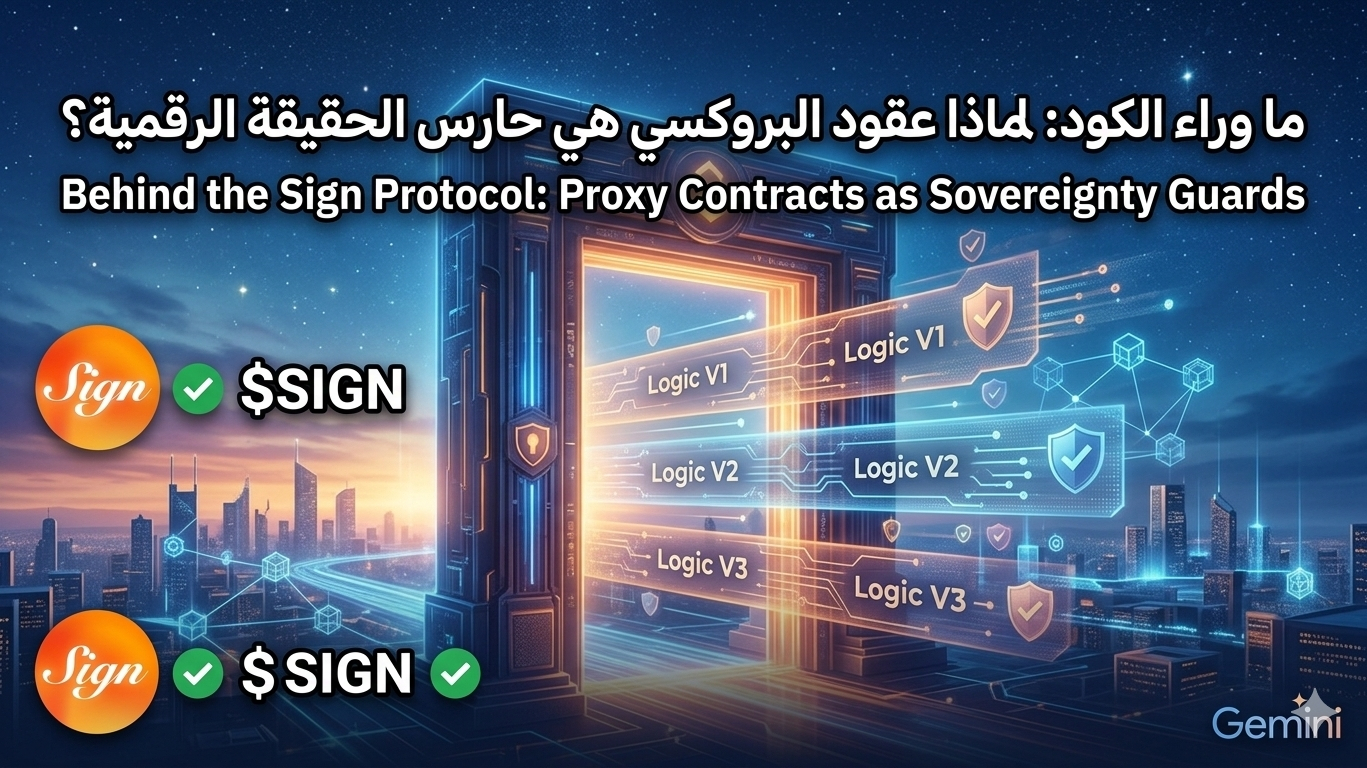

💾 Many fear "Proxy Contracts" because they give developers the "key to change". But in $SIGN, the proxy is not a control tool, but a "shield of protection". 🤔
Based on the recent discussions about "hidden update risks", let's break down the programming logic that protects your digital sovereignty inside #SignDigitalSovereignInfra :
📍 Why is the proxy in $SIGN the "guardian of truth"?
In traditional systems, an update may mean "changing the rules" without your knowledge. But engineering $SIGN clearly separates:
1️⃣ Your fixed address (The Identity Anchor): Your identity and credentials address remains constant forever, protecting your digital reputation from being lost with every update.
2️⃣ Data vs. Logic: Your data (Attestations) lives in an independent layer. The update only extends the "execution code" to enhance security, while the "documented truth" remains untouched.
3️⃣ Verifiable upgrades: Sovereignty means that the update is not a "black box". In $SIGN, every change in "programmatic logic" is a documented and transparent process that ensures that technical improvement does not turn into a "central authority".
🚀 Technical vision:
True digital sovereignty is not in "code rigidity", but in having an "Exit Strategy" and full clarity on how the system around you evolves. The proxy ensures that your system will not become obsolete, and your sovereignty will not change.
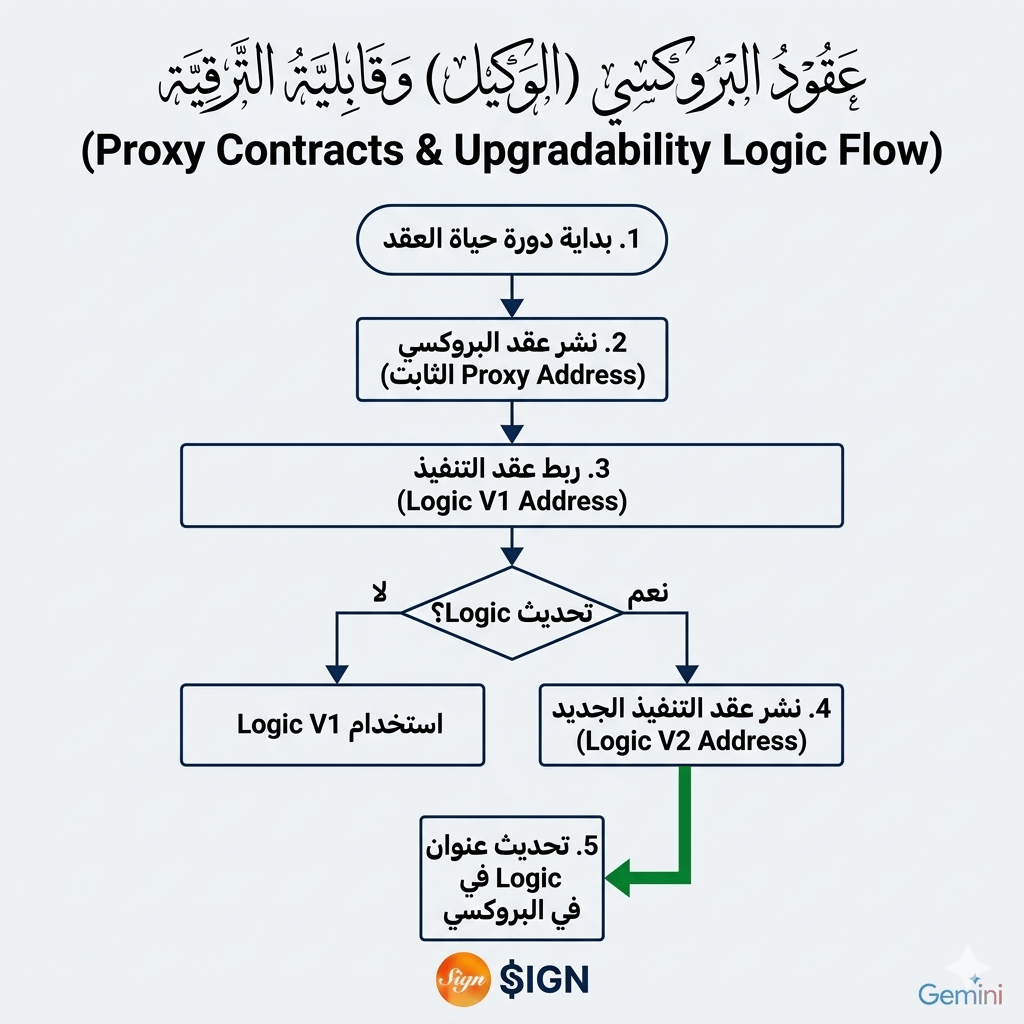
📍 The attached map illustrates the life cycle of "sovereign updates":
Notice how the "proxy" remains constant in front of the user, while the "logic" evolves in the background to serve security and transparency.
👇 A question for the elite and followers:
Do you think that "transparency in updates" is enough to ensure sovereignty, or do we need governance models (DAO) that hold the keys to the proxy? Share your thoughts! 👇
$SIGN @SignOfficial #Web3 #ProxyContracts #DigitalSovereignty #SmartContracts