
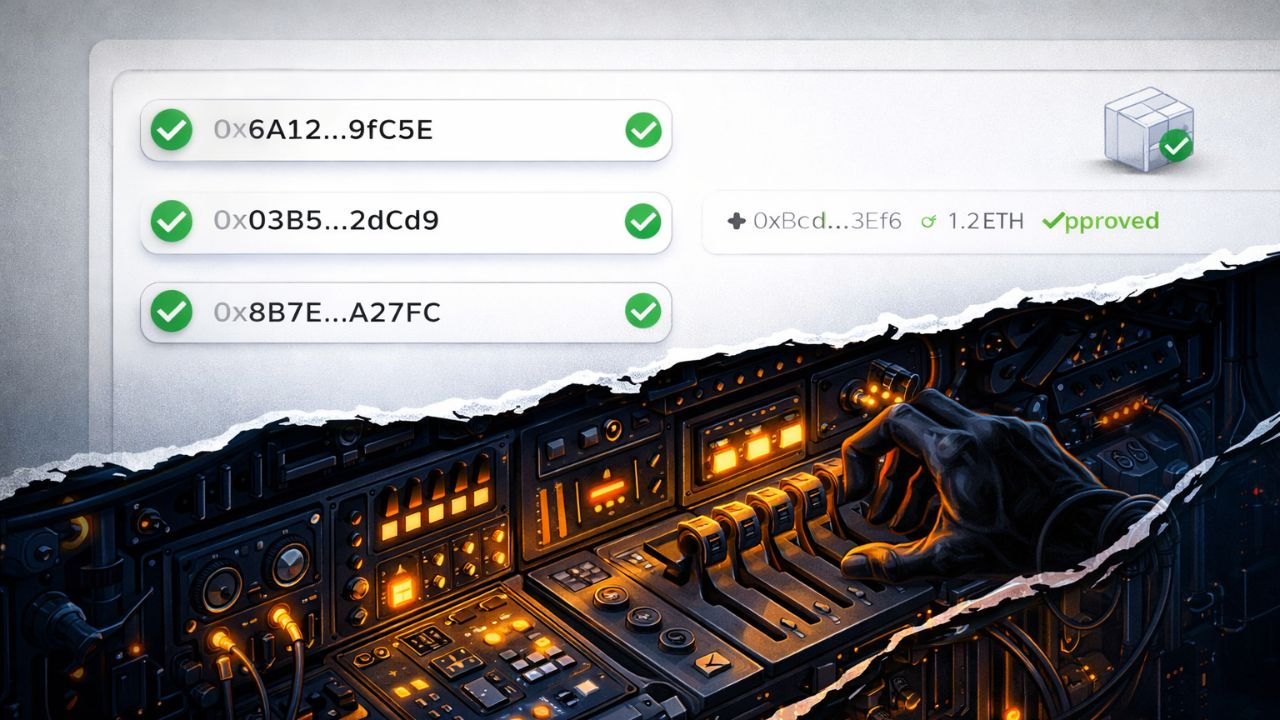
The first time I heard about upgradeable proxy contracts, I also thought this was just a dry technical concept for developers. But the deeper I researched, the more I realized that this is not just a technical story; it is a story about power.
The mechanism is simpler than you think
Imagine this: instead of locking all the logic into a rigid contract, developers separate it into two distinct parts.
A part holds data: balance, transaction history, user identity.
A part holds the logic: operational rules, execution conditions.
The proxy stands in the middle, acting as a bridge. Users only interact with the proxy and never touch the underlying logic directly. And the most important part: the logic can be completely replaced while the contract address remains unchanged.
You still use the same wallet address. The application still displays normally. But the rules of the game below have changed without notice.
In theory, this is a smart solution.
No one can deny its usefulness. The blockchain system needs to evolve and patch, improve performance, adapt to changing legal environments. Without upgrade capabilities, most protocols will become obsolete or dangerous over time.
But this is where convenience and risk intersect: who holds the key to that upgrade?
Silent power, no need to freeze, no need for notifications.
Suppose an entity, whether a small group of developers, a company, or a government agency, controls the rights to deploy new logic through the proxy. They don’t have to make any noise. No urgent announcements. No need to lock public accounts. They just need to push a new deployment.
And suddenly:
Transactions may be filtered based on new criteria.
Some wallet addresses may lose access.
The identity verification rules may change.
Transaction limits may be tightened.
Everything happens in silence. No events, no notifications, no migration. Users look at the interface, and everything seems normal.
That is precisely the most frightening power: control that does not look like control; it looks like maintenance.
Sign Protocol complicates this picture.
When signing protocols like Sign Protocol are integrated into this layer, everything becomes much more sophisticated. The identity verification and attestation layer is no longer purely technical. It determines who is allowed to do what in the system.
Combine that with the ability to upgrade the proxy, you have a system that:
On the surface: decentralized, open, transparent.
Inside: there is a built-in control lever, waiting for someone to use it.
The difference between a good system and a dangerous one lies not in the technical architecture but in the governance structure behind it.
Three levels of risk need to be recognized.
If the upgrade rights belong to a small group of developers, that is a centralization risk, susceptible to internal pressures or conflicts of interest.
If belonging to a company, that risk expands: investor pressure, legal requirements from multiple countries, commercial goals change over time.
If belonging to a government or regulatory body, we are no longer talking about patching. We are talking about policy enforced through code, without going through a parliament, without public debate.
So where does Sign Protocol stand?
I am still monitoring. The direction towards verifiable and portable data is truly valuable; it is the issue that the market needs to address. But the real value of any protocol is not shown when everything is smooth. It is demonstrated when there is pressure, when someone tries to manipulate the system, when regulations change, when interests conflict.
The question I always ask before trusting any protocol:
Who controls the upgrade key? Is that process transparent? Does the community have the right to veto?
If the answer is clear and verifiable, that is a good sign. If the answer is ambiguous or buried in documents that few read, that is exactly where you need to focus your research.
The code you see on the screen is not the true owner of the system. The person holding the key is.
Learn first. Decide later.