
When I really sit with what SIGN is trying to do, it does not feel like something loud or attention seeking, it feels calm, almost patient, like it is building something underneath everything else rather than trying to stand on top of it, and the more I think about it, the more it starts to feel less like a product and more like a shift in how digital life could work if trust was handled properly.
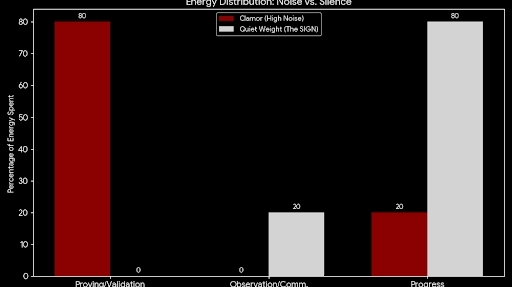
Right now, most of us move through digital spaces in a way that feels repetitive without even noticing it, we keep proving who we are again and again, we keep confirming things that have already been confirmed somewhere else, and every platform seems to act like it is the first time it has ever met us, and that creates this quiet friction that never really goes away, even if we have learned to live with it.
SIGN is trying to soften that experience by introducing a way for proof to actually stay with you, not in a heavy or intrusive way, but in a form that can be verified whenever it is needed without forcing you to start from the beginning each time, and that small shift begins to change how everything feels because it replaces repetition with continuity.
At its heart, SIGN works through something called attestations, which are simply records that say something has been verified, whether that is who you are, what you have done, or what you are eligible for, and instead of those records being locked inside one system, they are created in a way that allows them to move, to be checked, and to remain meaningful across different spaces, and there is something very natural about that idea because in real life, once something is genuinely confirmed, it should not need to be questioned over and over again.
There is also another side to this that feels just as human, which is how value is shared and distributed, because behind every reward, every allocation, or every opportunity, there is always the question of fairness and clarity, and too often those processes feel distant or unclear, like something is happening but you cannot fully see how or why.
SIGN approaches this in a way that feels more grounded, where distribution is not just about sending something from one place to another, but about doing it in a structured and visible way so that it can be understood later, checked if needed, and trusted without hesitation, and that creates a sense of reassurance that is usually missing in digital systems.
What starts to happen when you bring these ideas together is that identity and value stop feeling disconnected, because before anything can be given fairly, there has to be a clear understanding of who it is meant for, and before that understanding can be trusted, there has to be proof that holds its shape across different environments, and SIGN is quietly building that connection without making it feel complicated.
What I find especially meaningful is that this is not limited to small use cases or niche communities, there is a clear sense that this kind of system could support something much bigger, like public programs, financial access, or even national level digital identity, where trust is not just important but essential, and in those spaces, the ability to prove something without exposing everything about yourself becomes incredibly valuable because it respects both security and privacy at the same time.
At the same time, SIGN does not try to take over everything, it does not ask systems to disappear or be replaced, instead it offers a way for them to connect through a shared layer of verification, which feels more realistic and more human because the world is not built in one piece, it is made of many parts that need a way to understand each other.
As this kind of infrastructure slowly settles in, the experience of using digital systems begins to change in small but noticeable ways, things start to feel smoother, less repetitive, less uncertain, and over time that quiet improvement becomes something you rely on without even thinking about it.
Even the role of the token within this system feels like it belongs to the structure rather than sitting outside of it, helping align the people who build, use, and support the network so that everyone has a shared reason to keep it working well, which makes the whole system feel more balanced and less fragmented.
The more I reflect on SIGN, the more it feels like an attempt to bring a sense of calm into digital interactions, not by simplifying everything on the surface, but by strengthening what sits underneath, making sure that when something is claimed, it can be proven, and when something is given, it reaches the right place without confusion.
And maybe that is what makes it meaningful, because it is not trying to change everything all at once, it is trying to make things feel right over time, to replace doubt with quiet certainty, and to build a kind of trust that does not need to be forced or repeated, but simply exists and holds steady in the background, doing its job without asking to be seen.