
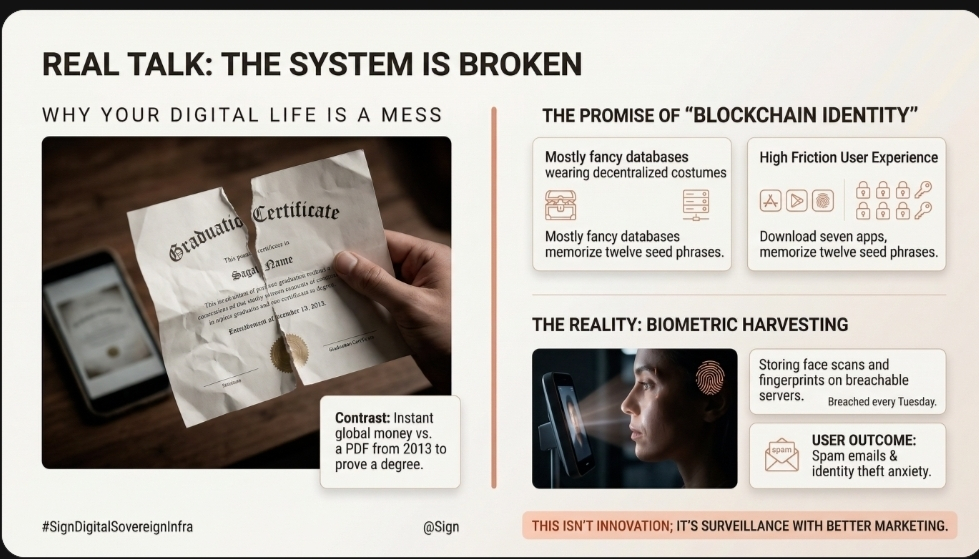
We've built this incredible internet that lets us send money across borders in seconds and create digital art that sells for millions, but we still can't figure out how to prove we graduated college without emailing a PDF from 2013. It's embarrassing.
The System is Broken
Here's what the press releases won't tell you: most "blockchain identity" projects are just fancy databases wearing decentralized costumes. They're building castles nobody wants to visit, requiring you to download seven apps and memorize twelve seed phrases just to prove you're old enough to buy concert tickets. Sign isn't playing that game.
We looked at the current landscape and saw something disturbing. Companies are harvesting biometric data like it's a natural resource, storing your face scans and fingerprints on servers that get breached every Tuesday. Meanwhile, you—the actual person—get nothing except spam emails and identity theft anxiety. This isn't innovation; it's surveillance with better marketing.
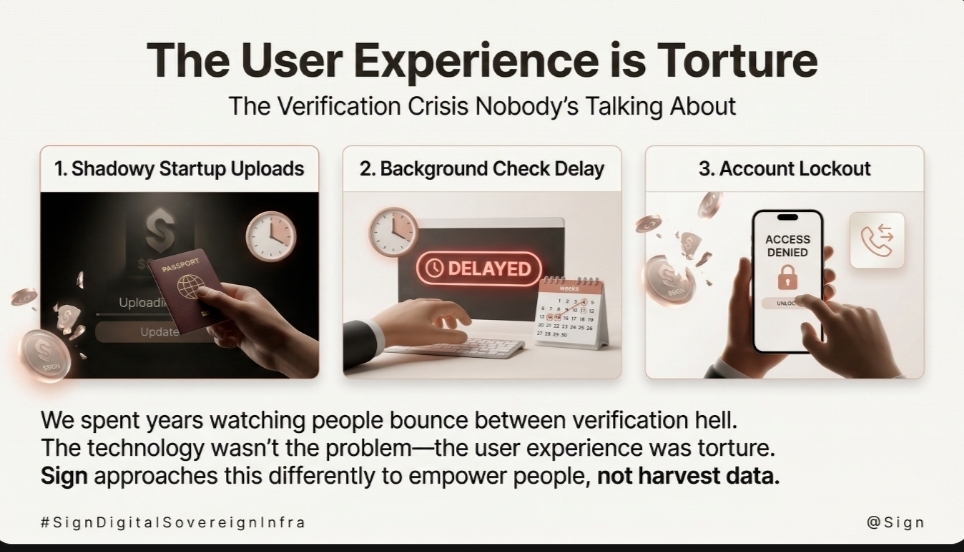
Sign approaches this differently because we had to. The team spent years watching people bounce between verification hell: uploading passports to shadowy startups, waiting weeks for background checks, getting locked out of accounts because they got a new phone number. We realized the technology wasn't the problem; the user experience was torture.
What Actually Changes
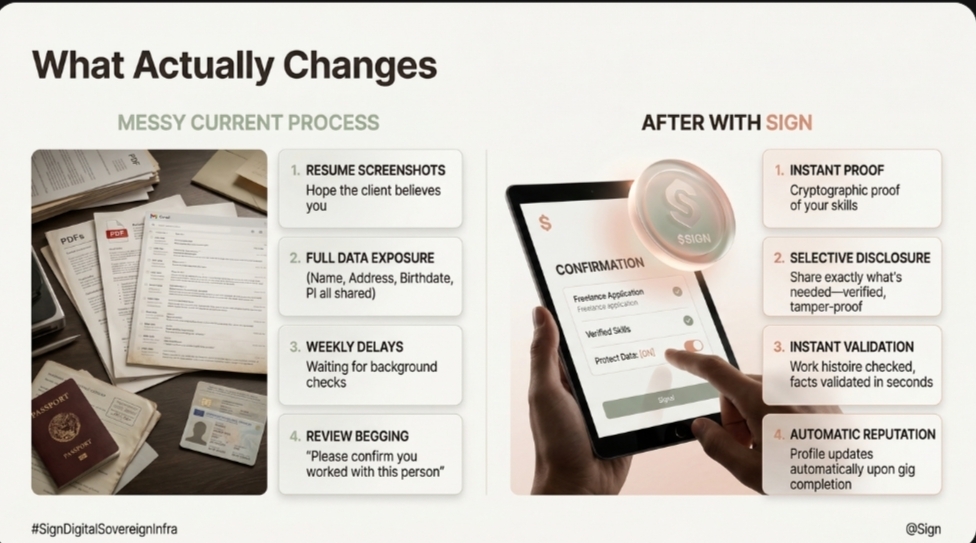
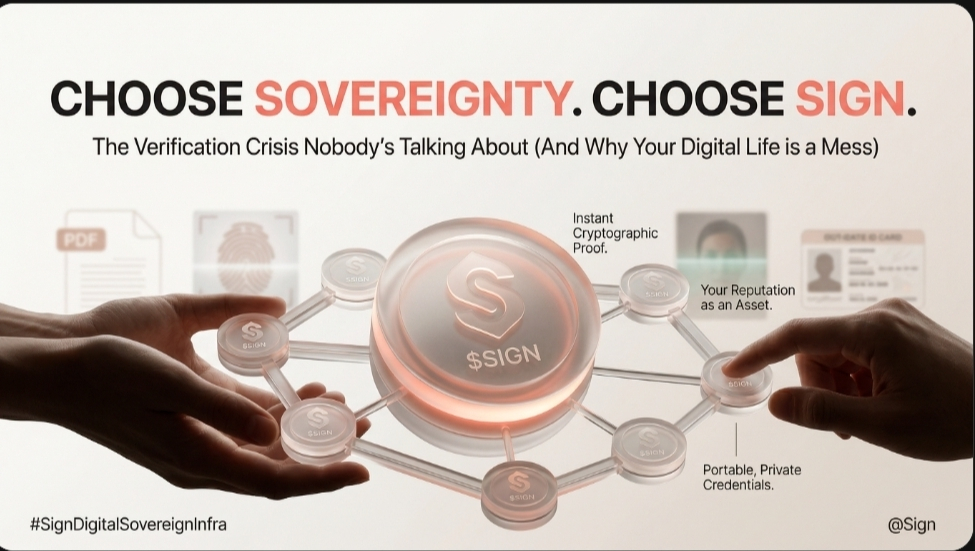
you apply for a freelance gig. Instead of sending screenshots of your LinkedIn and hoping the client believes you, they get instant cryptographic proof of your skills. You don't share your birthdate, your address, or your mother's maiden name. You share exactly what's needed—verified, tamper-proof, and instantly. When the gig ends, your reputation updates automatically. No begging for reviews. No "please confirm you worked with this person" emails.
This matters for the gig economy worker proving their delivery history across platforms. It matters for the immigrant sending credentials back home without paying 200 for "official" translations. It matters for the teenager building a portfolio that colleges can actually verify instead of trusting a self-reported Common App essay.
The Token Part (Without the Hype)
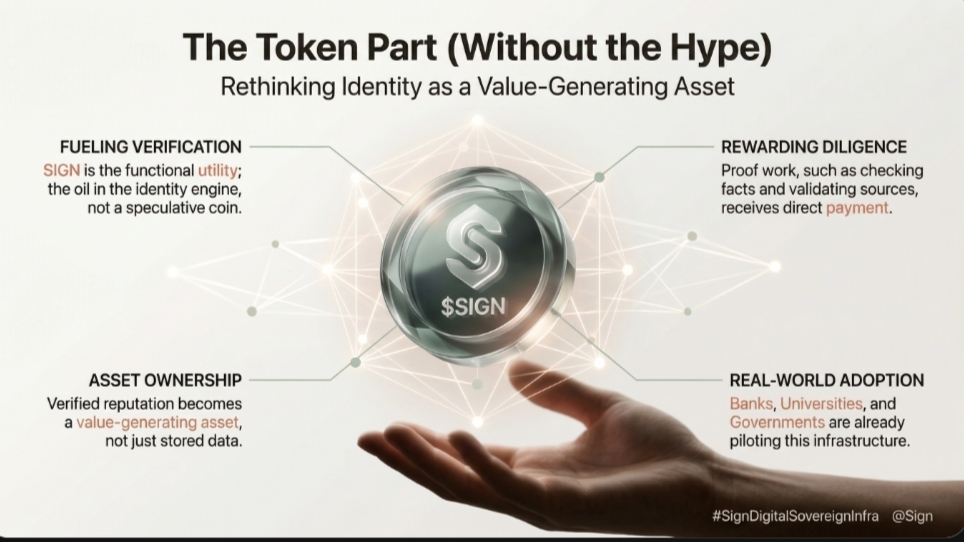
SIGN isn't just another coin to speculate on while watching candle charts. It's the oil in the engine. When you verify someone's credential, you're doing work—checking facts, validating sources—and that work deserves payment. When you hold a verified reputation, you're holding an asset that should generate value, not just sit in a database.
We're building infrastructure for the moment when "who you are online" becomes more valuable than your credit score. Banks are already testing this. Universities are piloting it. Governments are quietly exploring it. The infrastructure either gets built now by people who care about privacy, or it gets built later by people who care about control.
Where This Goes
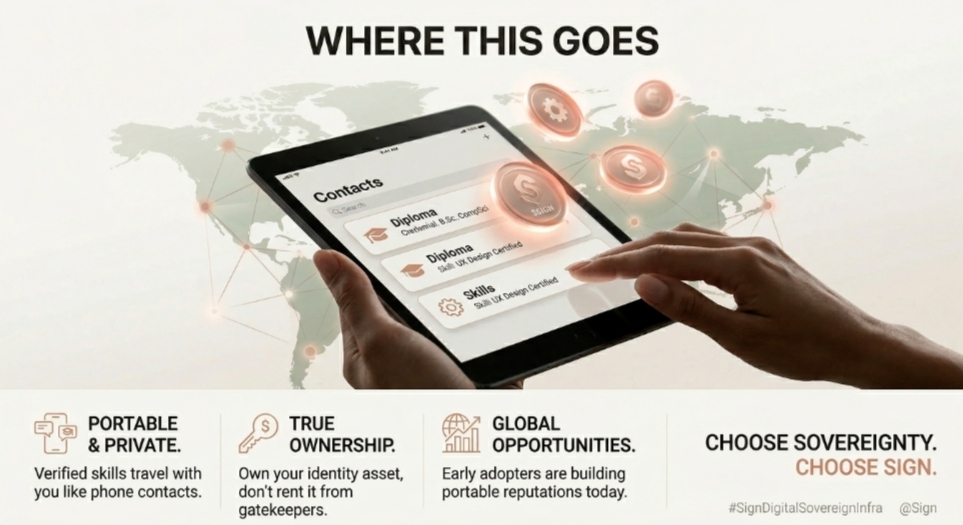
In three years, explaining your work history with a resume will feel like sending a fax. Your verified skills, reputation, and credentials will travel with you like your phone contacts—portable, private, and actually yours.
The question isn't whether decentralized verification becomes standard. It's whether you own your piece of it or rent it from the same old gatekeepers wearing new hats.
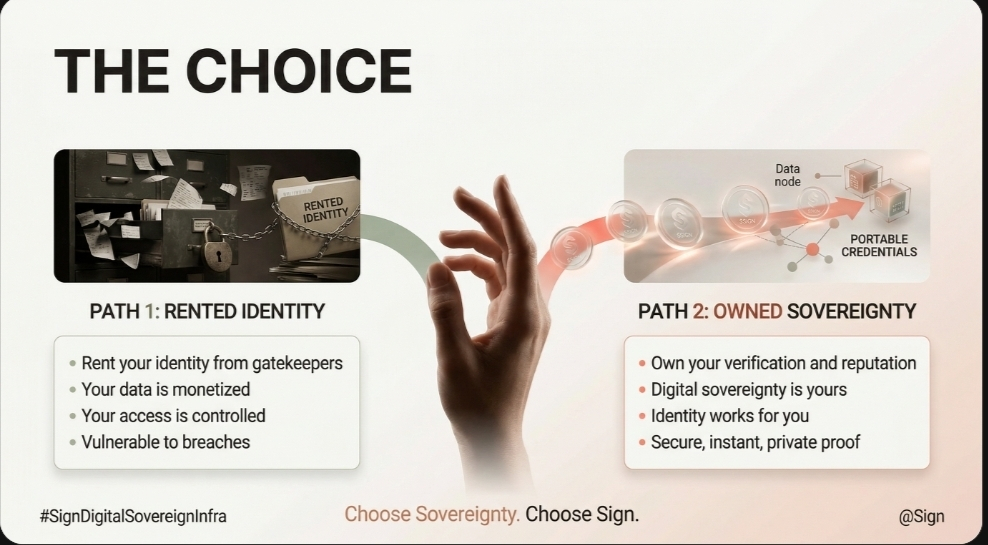
Choose sovereignty. Choose Sign.