
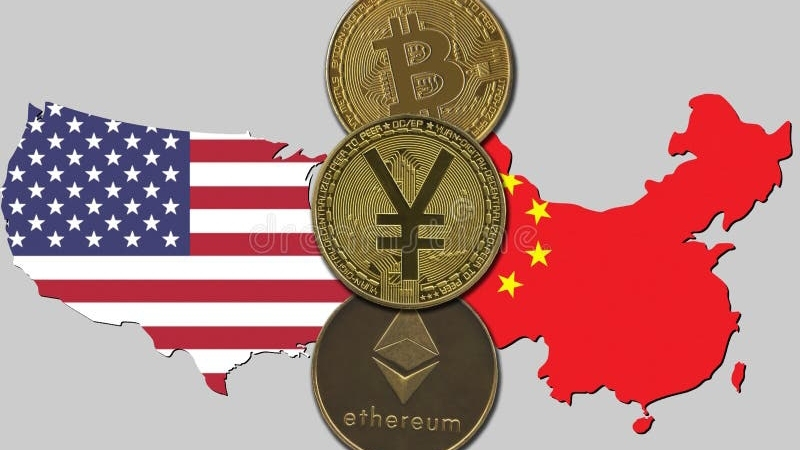
The war that broke out at the end of February 2026 between Iran, Israel, and their allies not only shakes up global geopolitics: it deeply impacts financial markets, especially cryptocurrencies. Between volatility, safe haven role, and strategic uses, crypto-assets find themselves at the heart of this crisis.
1. High volatility of crypto markets
As in many conflicts, the first reaction of the crypto market is unstable and emotional.
At the beginning of the strikes, Bitcoin fell by more than 3% in a few hours.
Journal du Coin
Then it quickly rebounded around $67,000, showing some resilience �
Coindesk +1
👉 This shows a key reality:
Cryptos remain highly speculative assets, very sensitive to military and political announcements.
2. The return of Bitcoin as a 'safe haven'
Despite the initial volatility, a trend is emerging:
➡️ cryptocurrencies are becoming safe-haven assets again in times of crisis.
Barron's
The Times
Bitcoin Price Rises as War Escalates. Why Cryptos Are Havens Once Again.
Trump threatens obliteration of Kharg Island if no deal made - as it happened
Yesterday
Today
Bitcoin and Ethereum have advanced during the escalation of the conflict
Investors are looking to protect themselves against:
inflation
economic shocks
geopolitical instability
According to analysts, the crypto market is in 'strategic waiting' mode, but remains attractive compared to traditional markets �
Barron's
👉 Conclusion:
Cryptos are starting to play a role similar to digital gold.
3. Global inflation indirectly boosts cryptos
The war causes a major energy shock:
oil > $115
global inflation on the rise
slowed economic growth �
The Times +1
👉 Effect on cryptos:
fiat currencies are losing value
Investors are turning to alternative assets
➡️ Result: increased demand for Bitcoin and stablecoins.
4. Cryptos as a tool for circumventing sanctions
This is one of the most important (and worrying) impacts.
Iran is using cryptocurrencies to circumvent international sanctions
They are used to:
finance allied groups
selling oil under embargo
supporting the local economy �
euronews
👉 With the war:
crypto flows to Iran have exploded
some activities are linked to state actors
➡️ This reinforces the geopolitical role of cryptos.
5. Explosion of cyberattacks and risks for platforms
The war also includes a digital dimension:
cyberattacks between states
hacks of crypto platforms
threats to financial infrastructures �
Wikipedia
Example:
an Iranian platform has already suffered a massive hack of $90 million in 2025 �
The Gazette France
👉 Consequence:
increased risk for investors
possible loss of confidence in the short term
6. Towards a questioning of the global financial system?
The war weakens the dollar-based system:
questioning the petrodollar
rise of off-dollar transactions (China, Russia, Iran) �
Reuters
👉 Impact on cryptos:
they appear as a neutral alternative
they could play a role in a future multipolar system
7. A crypto market between opportunity and danger
Opportunities:
adoption increasing as a safe haven
use in sanctioned countries
diversification in the face of crises
Risks:
increased regulation (fear of illicit financing)
cyberattacks
extreme volatility
🧠 Conclusion
The Iran–Israel war acts as a major accelerator for cryptocurrencies:
short term → volatility and uncertainty
in the medium term → increased adoption
long term → possible transformation of the global financial system
👉 In summary:
Cryptos are no longer just speculative assets — they are becoming strategic geopolitical and economic tools.