
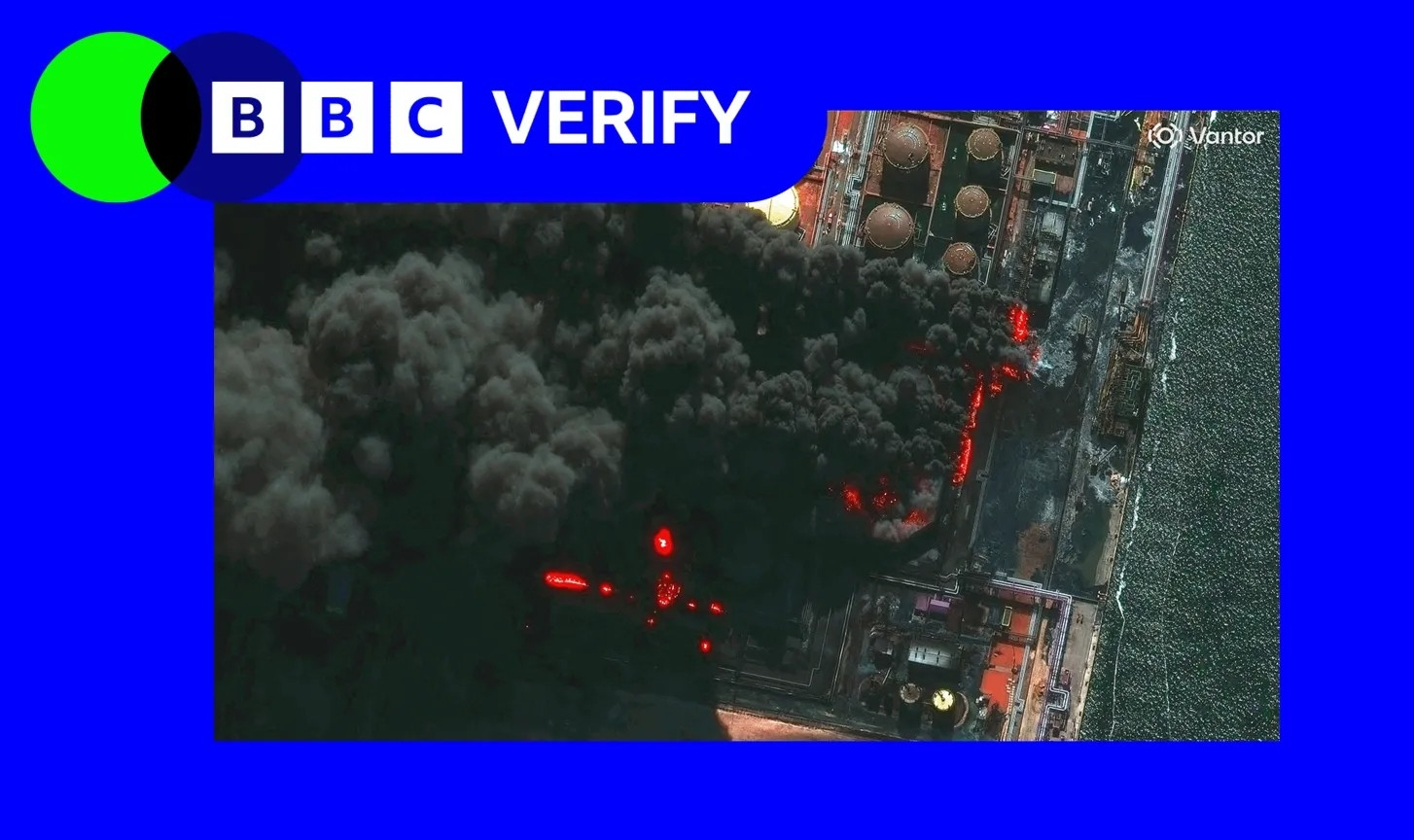
Satellite images and verified video recordings show that over the past week Ukraine has repeatedly struck key facilities of the Russian oil export infrastructure near the Baltic Sea, resulting in some facilities burning for several days.
BBC Verify confirmed that since March 23 at least three oil facilities in the Leningrad region of Russia have been attacked, including the ports of Ust-Luga and Primorsk, as well as the inland Kirishi oil refinery.
On Tuesday, Ukrainian drone commander Robert Brovdi stated that Ust-Luga was hit again on Monday evening "to continue the fire."
Leningrad region governor Alexander Drozdenko stated that during the attack in which 38 drones were shot down, three people were injured, including two children.
According to analysis by the Finnish Center for Research on Energy and Clean Air (CREA), 20% of all Russian oil exports went through Ust-Luga, while 22% went through Primorsk.
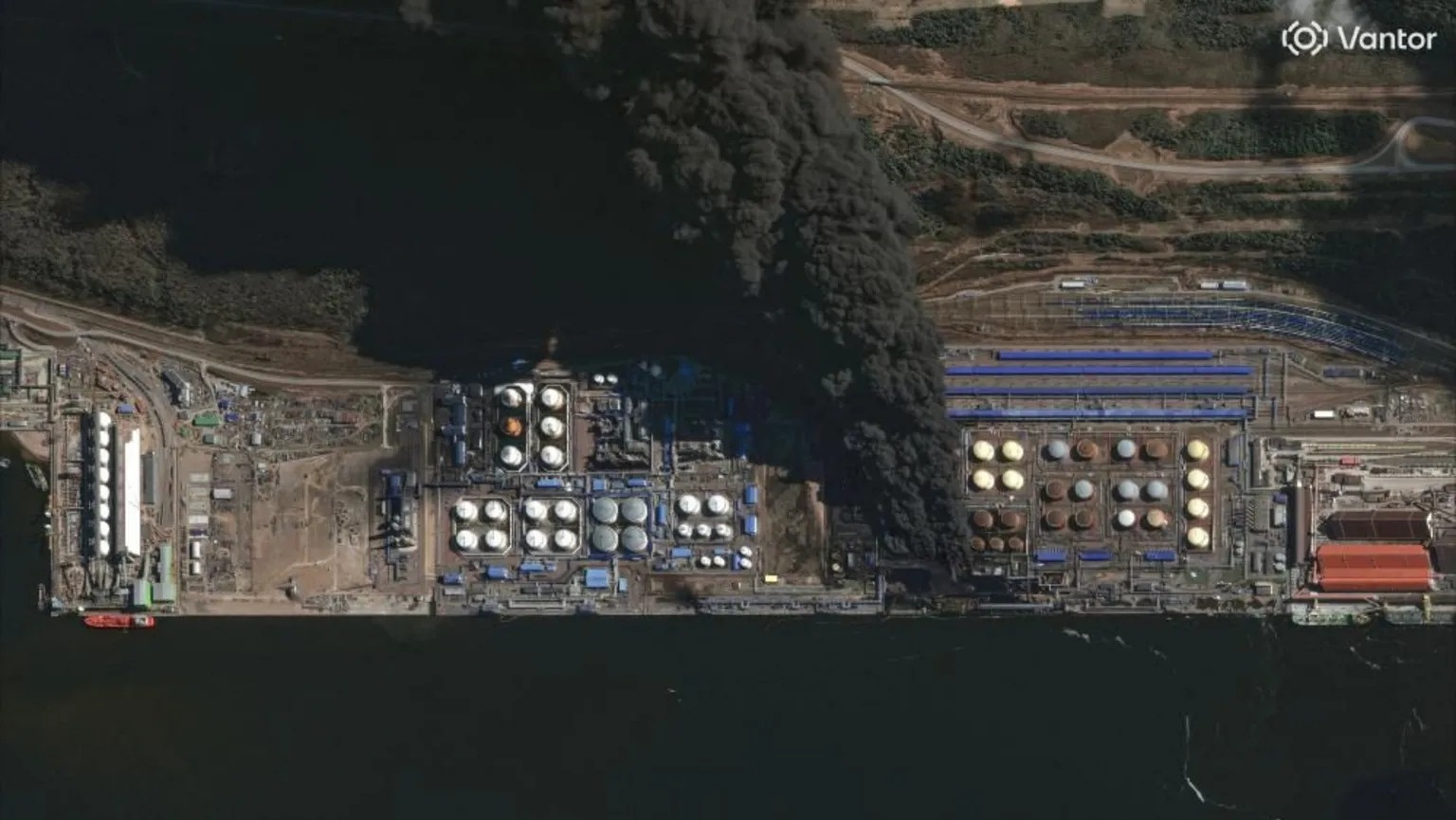
A satellite image of the smoke plume over Ust-Luga, obtained by the intelligence company Vantor on March 27.
Recent data shows that on March 26 and 27, no ships were loaded with oil at any of the three Russian Baltic ports. According to CREA, this is the first time such activity has been absent for two consecutive days since Moscow launched its full-scale invasion of Ukraine in 2022.
Satellite images from March 24 show huge plumes of smoke rising from burning oil refineries in Primorsk, as well as fires in Ust-Luga and significant destruction in Kirishi on March 27.
Analysis of photographs conducted by BBC Verify shows the following:
Primorsk - at least eight storage tanks have been destroyed or damaged.
Ust-Luga - at least eight tanks have been destroyed or damaged.
Kirishi - at least two storage tanks have been damaged.
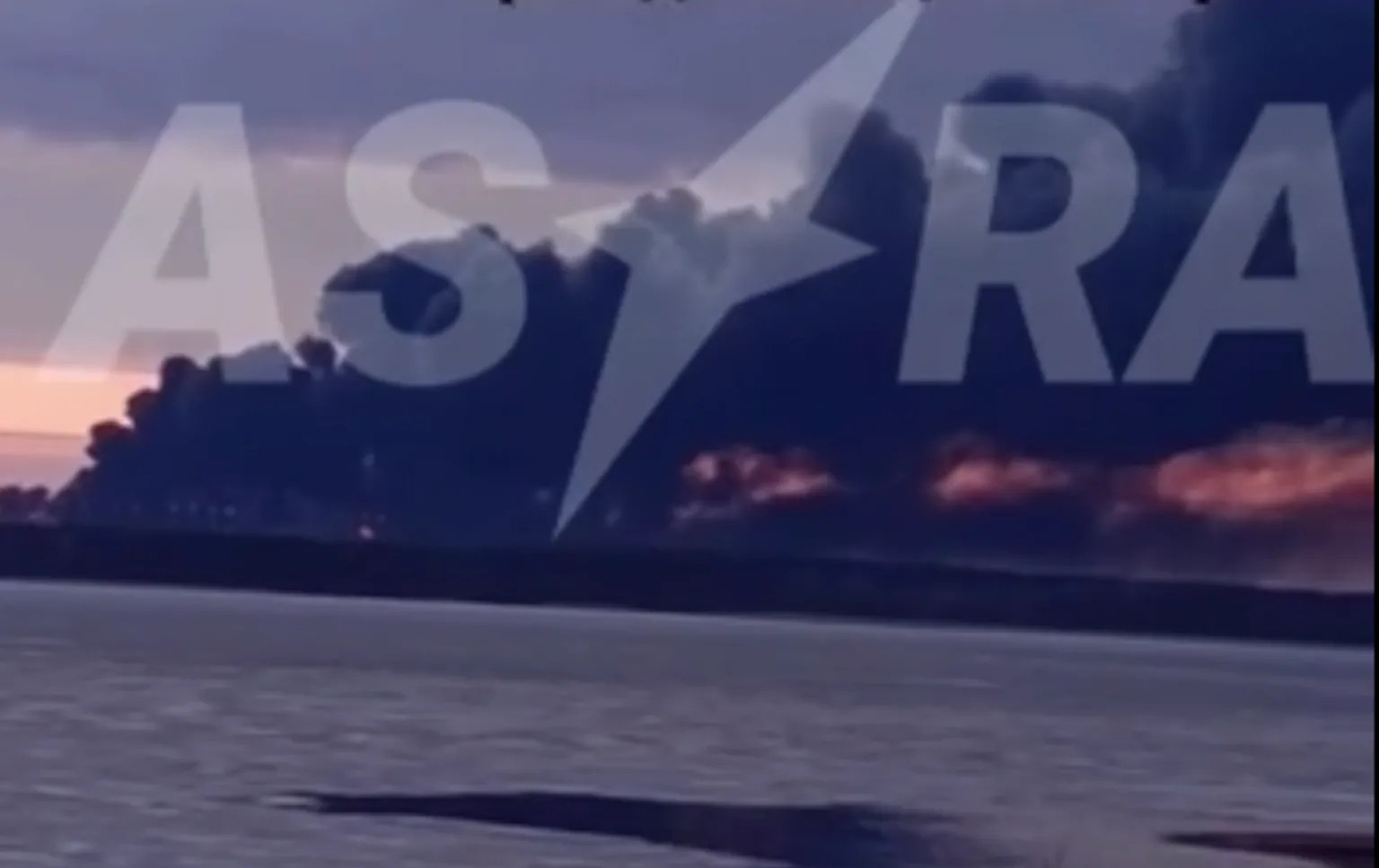
On March 23, a confirmed video of a smoke plume rising over the port of Primorsk was published online.
NASA's FIRMS satellite resource, used to detect thermal signals on the Earth's surface, indicates that Primorsk was still burning as of 02:54 British Summer Time on Monday, while Ust-Luga was burning at 12:28 on Monday.
BBC Verify also confirmed the existence of several videos showing the aftermath of attacks on all three facilities over the past week, including footage showing huge plumes of smoke rising into the sky over Primorsk.
Earlier, the Brovdi company stated that the operation to destroy these three Baltic oil refining facilities began on March 23, and that the strikes were aimed at "demilitarizing Russian pipelines, refining capacities, and oil export infrastructure."
Ukrainian military officials stated that the Kirishi oil refinery is among the top three largest oil refining enterprises in Russia, including those producing "fuel that supports the armed forces of the aggressor state."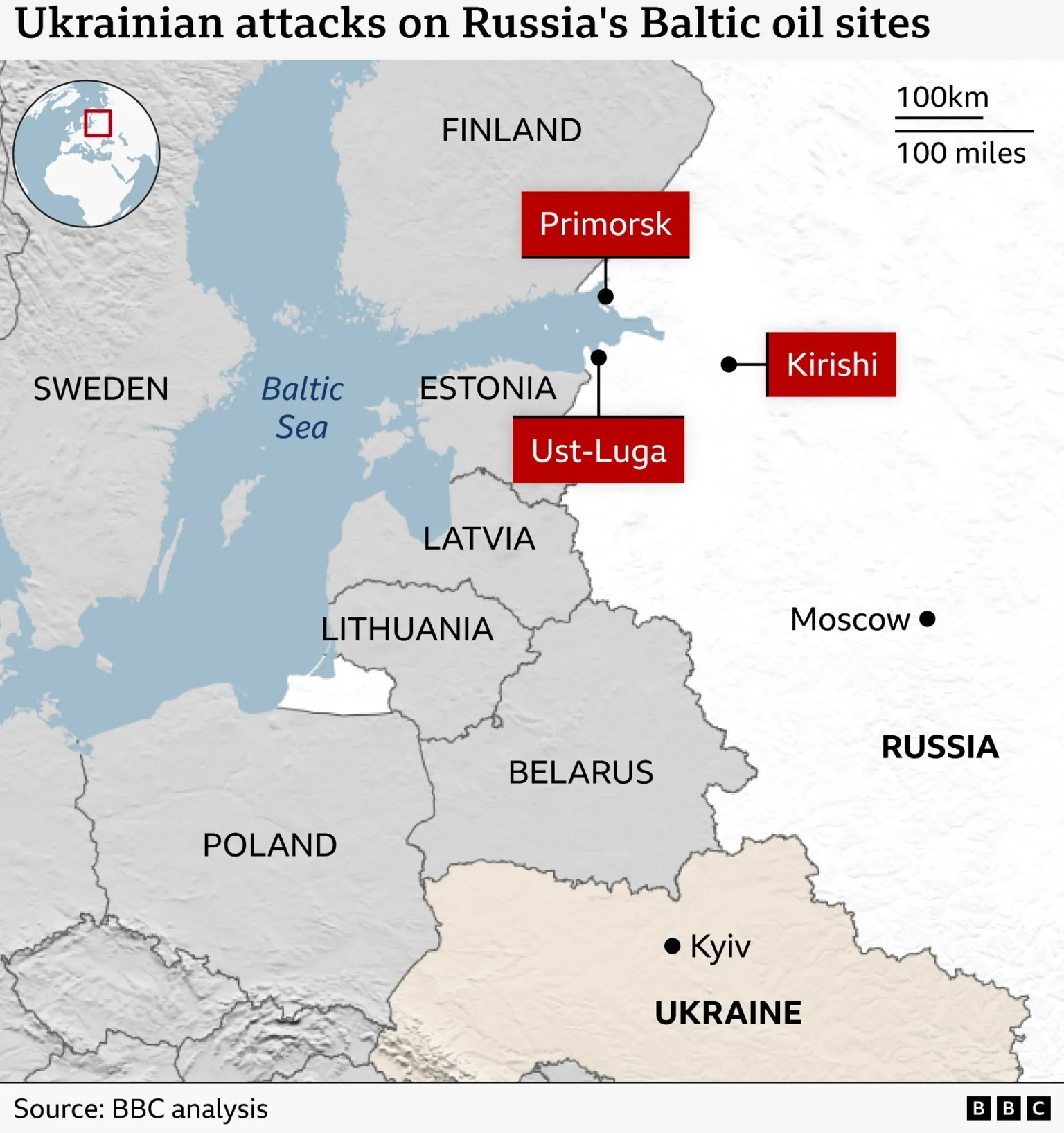
According to calculations by the Reuters news agency, based on market data, at least 40% of Russia's oil production export capacity was suspended after the first attacks on March 25.
According to analysis by Crea, Russia earned about £7.1 billion from oil exports in the last three weeks of March, as prices soared due to disruptions caused by the U.S. and Israel's war with Iran.
Ukrainian President Volodymyr Zelensky stated on Monday that allies asked Kyiv to reduce attacks on the Russian energy sector due to the global energy crisis. He added that the attacks would cease only if Russia stops shelling the Ukrainian energy system.
Alexander Lord, an analyst at the British intelligence company Sybelline, stated that "Kyiv is likely trying to offset the additional revenues currently being earned by Russian oil and gas exporters."
However, Lord added that the longer the war continues, the more likely it is that "the U.S. will try to pressure Ukraine to stop these targeted strikes as part of broader efforts to suppress global oil prices."
