
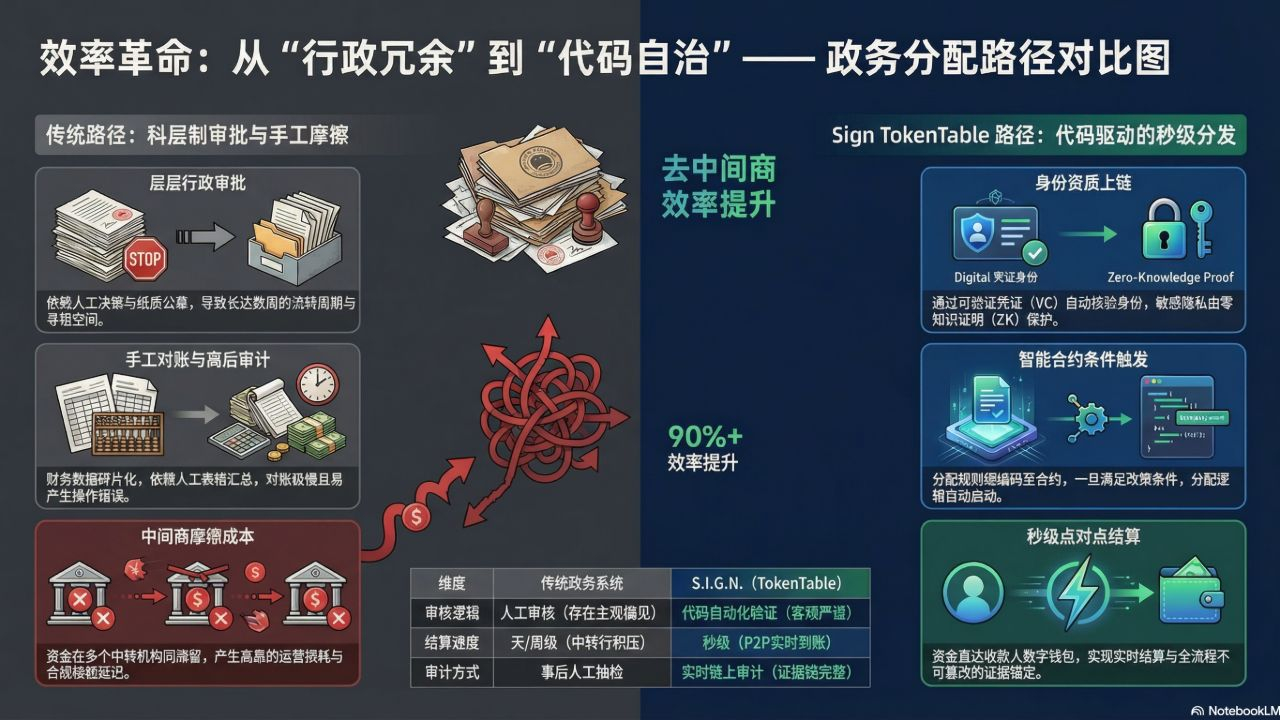
Last year, my oil service team applied for a special subsidy for foreign-funded enterprises in a Middle Eastern country. The approval had long been granted, but the funds were delayed for half a year before they arrived.
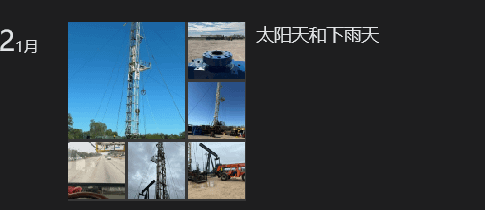
What happened during these six months? It was simply a disaster. The local different departments are not connected at all; to obtain this money, we had to submit cumbersome paper financial statements and qualification certificates every month to cooperate with them in manual reconciliation. Moreover, I also heard that a considerable part of the budget in this total fund has been siphoned off by the local falsely reported 'phantom companies'.
In real cross-border governance and sovereign fund allocation, the inefficient manual reconciliation and multi-layered administrative nodes generate enormous friction costs every day.
Many people study @SignOfficial every day and talk about decentralization. If you view it through this anarchist bias, you will never understand why it can secure orders from sovereign nations.
Go read its developer documentation; there is an extremely hardcore architecture called New Capital System. It is not fundamentally overturning the traditional system, but providing sovereign countries with an extremely ruthless 'anti-exploitation' tool.
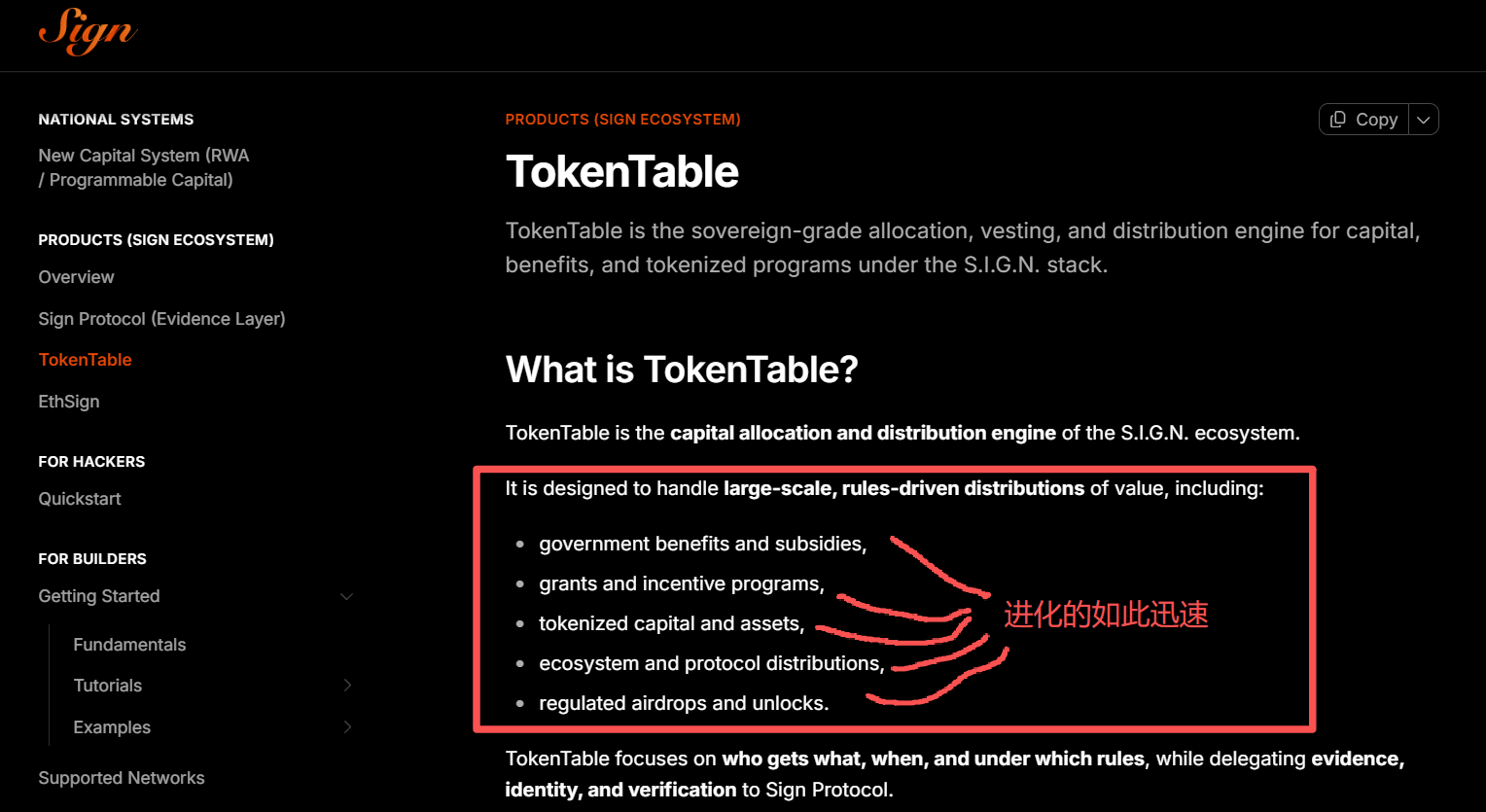
The core engine underlying this system is called TokenTable. How does it compromise with the pain points of reality?
In the past, government subsidies had to go through countless intermediaries such as the Ministry of Finance, local banks, and auditors. However, in the architecture of Sign, the government directly writes the subsidy rules (such as the necessity of compliant foreign investment and completing certain indicators) into the smart contracts of TokenTable. The system then directly reads the identity proofs on the chain (New ID System) for qualification cross-comparison.
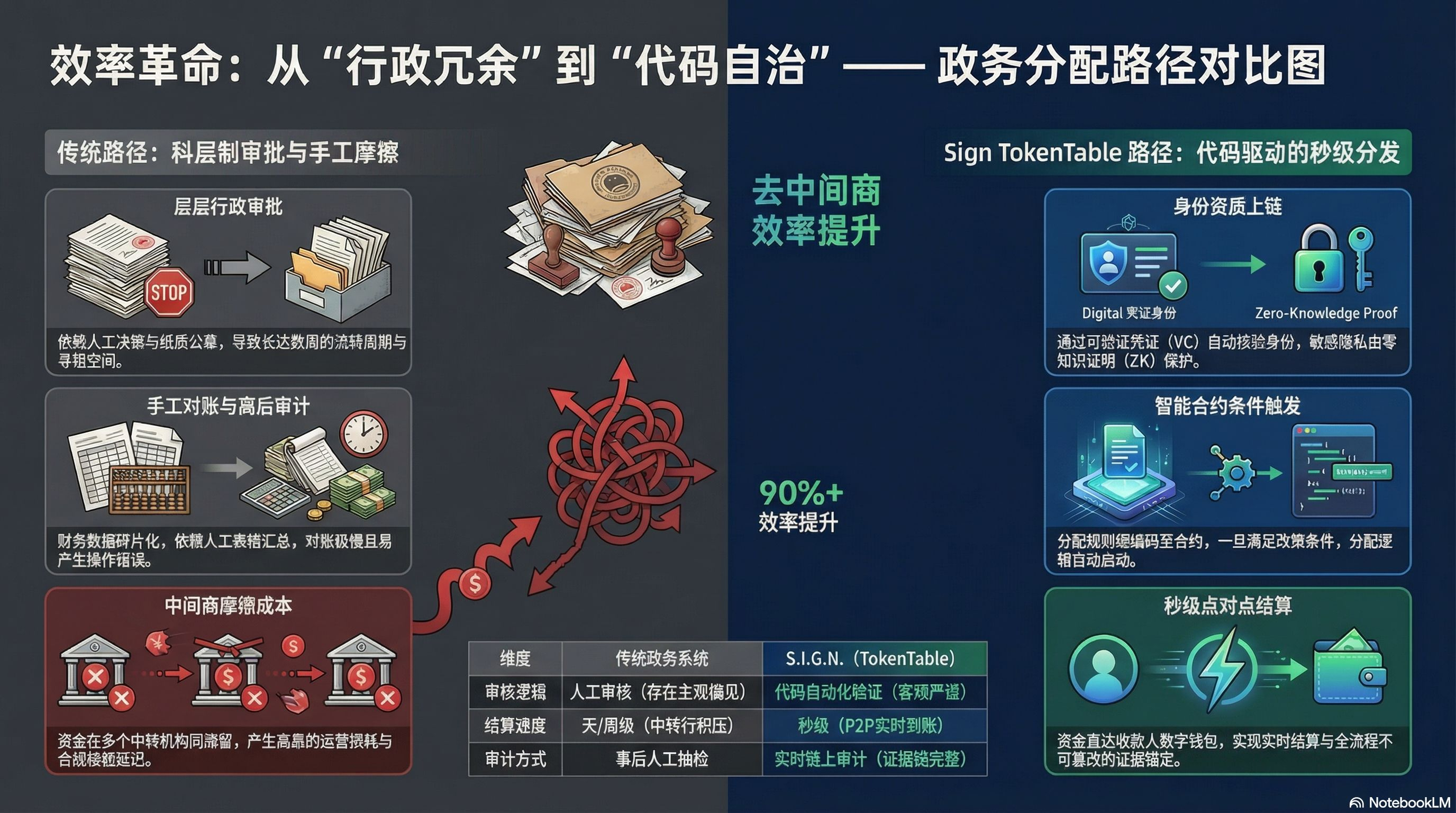
As long as your identity proof is verified, the system will trigger the settlement instantly, with funds directly following the CBDC or stablecoin route, credited to your account in seconds. This logic of 'identity binding + intelligent distribution' has compressed the previously manual reconciliation process involving hundreds of people in government departments into an emotionless distribution engine. Intermediaries have disappeared, and ghost accounts have been algorithmically eliminated.
But as an old hand who has been hammered in real business battles, I have to point out a flaw in this perfect code.
This architecture has an unavoidable 'Oracle Problem' deadlock. The execution of TokenTable is indeed absolutely fair, but it only recognizes the input data on the chain. What if, at the offline source, the local officials responsible for auditing corporate qualifications were bribed and deliberately issued a legitimate on-chain identity proof to a shell company?
In this scenario, the 'efficiency' of smart contracts has become a disaster. It will perfectly, quickly, and irreversibly distribute national subsidies to fraudsters. Garbage in, garbage out. No matter how seamless the code is, it still cannot prevent the physical corruption that occurs at the moment of data entry in the real world.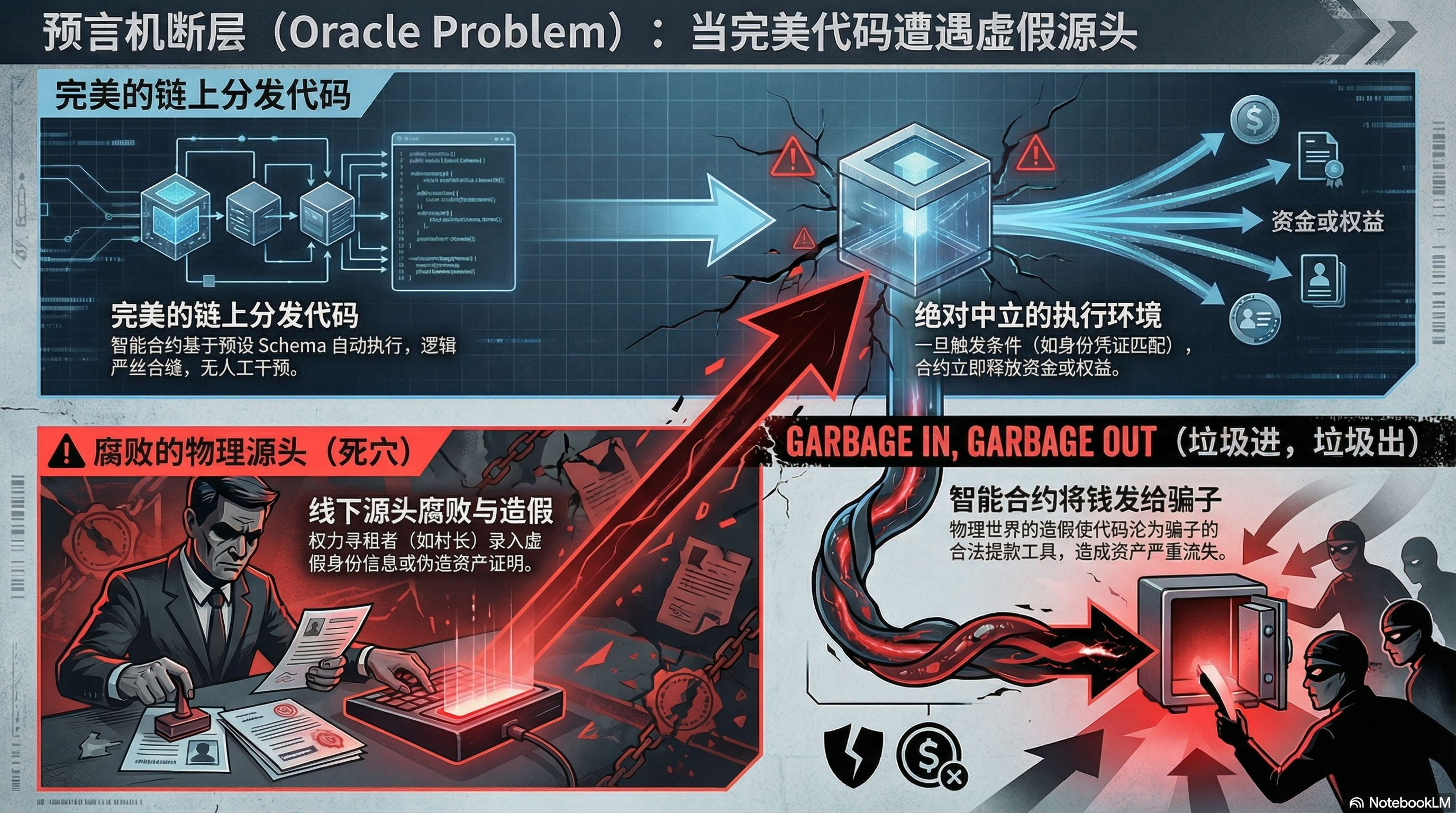 Back to our business itself. If this new capital system can really be fully implemented in the governance of Gulf countries, it is simply a lifesaving enhancement for those of us engaged in real industries.
This means that in the future, when applying for sovereign subsidies or conducting cross-border supply chain funding settlements, we no longer have to worry about the expressions of local intermediaries, nor do we have to run around to prove our innocence. As long as the conditions on the chain are met, the money will be credited instantly. In this era filled with trust crises, being able to eliminate rogue administrative bottlenecks with code and turn the saved losses into profits is the real moat.
