

Introduction: The lifeblood of the world under the microscope of documentation
The waterways and international straits (Bab el-Mandeb, Suez Canal, Strait of Hormuz, and Panama Canal) are the true engines of the global economy. However, this massive sector faces a deadly "security gap" represented by reliance on paper records and manipulable, counterfeitable centralized data systems. Here, the Sign Protocol stands out not just as an encryption tool but as a shield of "digital sovereignty" that grants data absolute legitimacy and impenetrable authentication via $SIGN.
---
📍 First: The Digital Vessel Passport
Surpassing $SIGN the idea of "data storage" to create (On-chain Attestation) for every ship sailing the oceans:
Documentation of Origin (Legacy & New): The protocol allows documentation of the true "manufacturing history" from the very first moment in the dry dock of new ships. As for the current global fleet, its old paper records can be converted into sovereign digital documents through reliable (Verification Nodes), permanently closing the door on forgery of the "ship's age" to enter ports that impose restrictions on dilapidated vessels.
Ownership Transparency (Provenance): One of the biggest dilemmas of navigation is "ghost ships" that hide their identity through fictitious companies. SIGN provides an immutable ownership record that reveals the "real owner" (Beneficial Owner) and the history of ownership transfer, preventing obfuscation to evade international sanctions.
---
📍 Second: Smart Field Inspection.. Coast Guard in the Age of Web3
Thanks to SIGN, inspections no longer require towing the ship to ports to verify its documents:
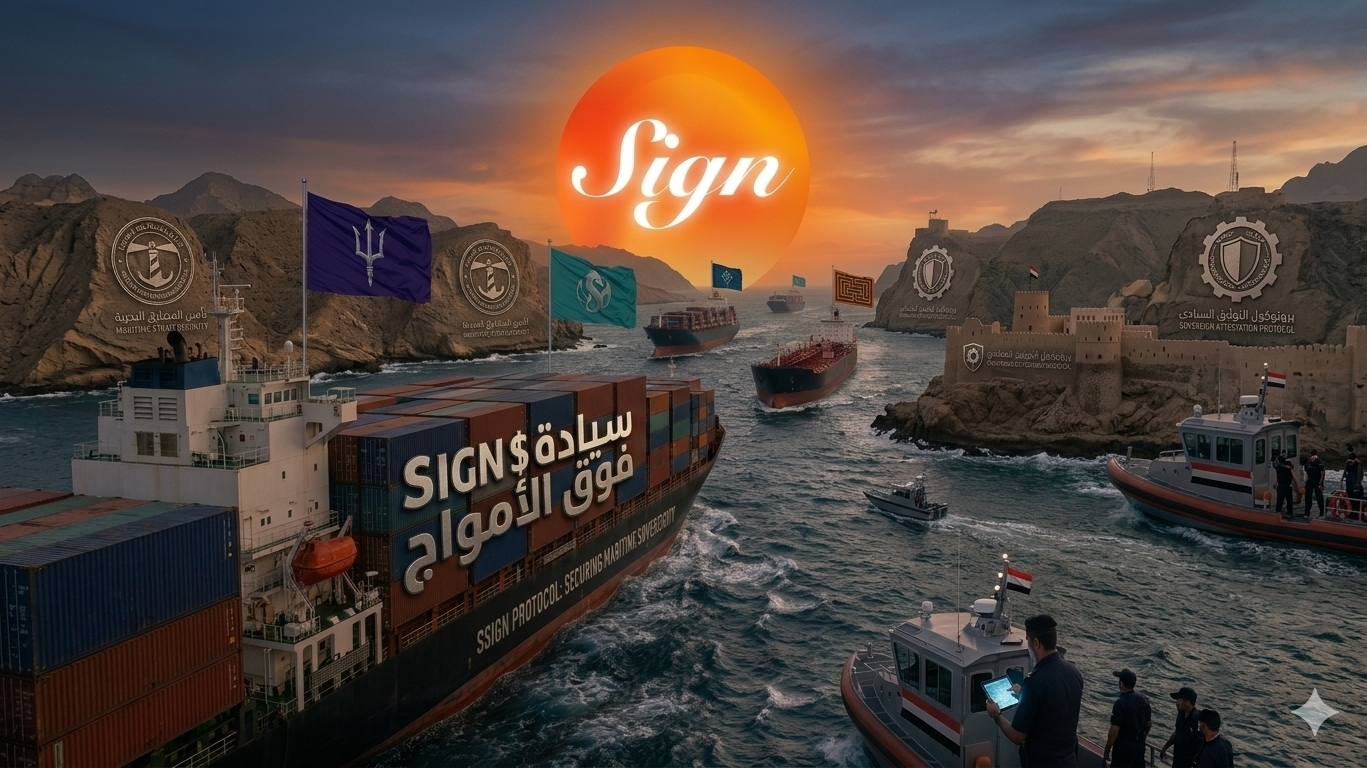
Real-time Auditing (Mobile Verification): Coast Guard patrols can use "tablets" or (iPads) to access ship documentation while at sea. With one touch, the "digital history" of the ship appears, speeding up security inspections and protecting waterways from any unidentified threats.
The Blacklist of Violations: Any collision, grounding, or environmental violation is documented as (Negative Attestation). This record cannot be erased, giving inspectors a complete picture of the ship's navigational "behavior" over the years.
---
📍 Third: Insurance Companies.. Decisions Based on Documented Facts
Represents $SIGN "The Great Revolution" in the marine insurance sector and real asset valuation (RWA):
Risk Assessment: Insurance companies can obtain accurate and documented information about the ship's condition, maintenance record, and accident history before approving insurance.
Absolute Transparency: Digital documentation prevents insurance fraud and ensures that only compliant vessels receive the best coverage, thereby raising public safety standards at sea.
---
📍 Fourth: Management of Straits and Channels.. National Security and Smart Trade
In areas of geopolitical tension and conflict, documentation becomes a matter of national security:
Preventing "Flags of Convenience": $SIGN links the digital identity with the actual nationality of the ship, preventing manipulation of national identities to mislead maritime powers.
Automating Transit Permits: Creating a documented "Smart Waiting System" that cannot be manipulated in international channels (Suez and Panama), eliminating bureaucracy and bribes.
---
🚀 Conclusion: A Personal Opinion.. Towards the International Enforcement of the Sign Protocol
The scale of manipulation and risks in maritime navigation today makes it essential to "enforce" the Sign protocol as a mandatory standard for all vessels crossing international waters. The future will not belong to those who own the largest ships, but to those who possess the "most credible documentation".
With SIGN, we are not writing code.. we are writing a new maritime history characterized by safety and transparency. 🛡️⚙️🌊
#SignDigitalSovereignInfra #Web3 #MaritimeSafety #RAW @SignOfficial