
Daily, I see many people sharing technical analysis, or results of this or that currency, but there's almost never a post where someone dedicates time to show how they choose the currency or currencies they will trade for the day.
Next, and in a very humble, transparent way, I'm going to share how I do it. Keep in mind that the information I am going to give you is NOT financial advice. I teach you how I do it, but the best thing is for you to find your own way of analyzing and trading.
That said, let's get to the point:
1) I filter the biggest winners / losers
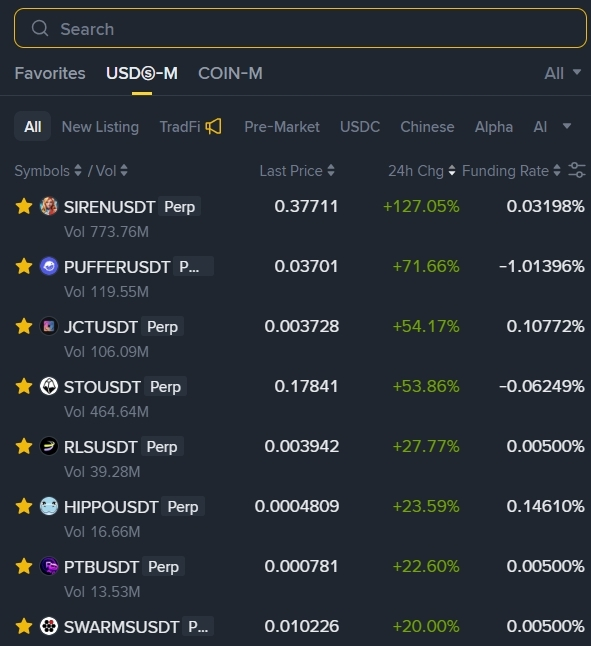
From the USDS-M futures contracts tab, I mark as favorites the cryptocurrencies that have grown more than 20% in the last 24 hours for possible longs (Sometimes, if there is no attractive currency for a good long, I tend to favor the biggest losers for possible shorts). You can also see them from the main screen of your Binance application as the biggest "winners" / "losers".
Here I show you today's winners:
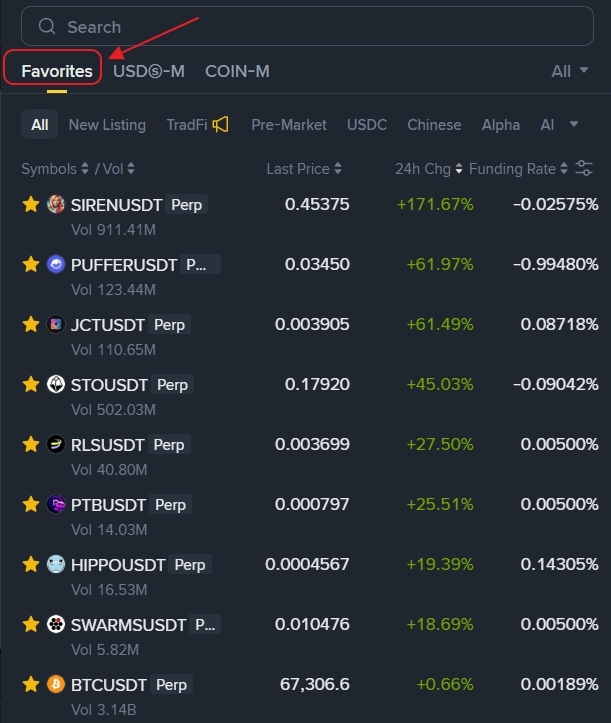
2) Go to Favorites
Scroll to the Favorites tab to see the selected cryptocurrencies, already filtered from the general noise:
3) +5 months of life
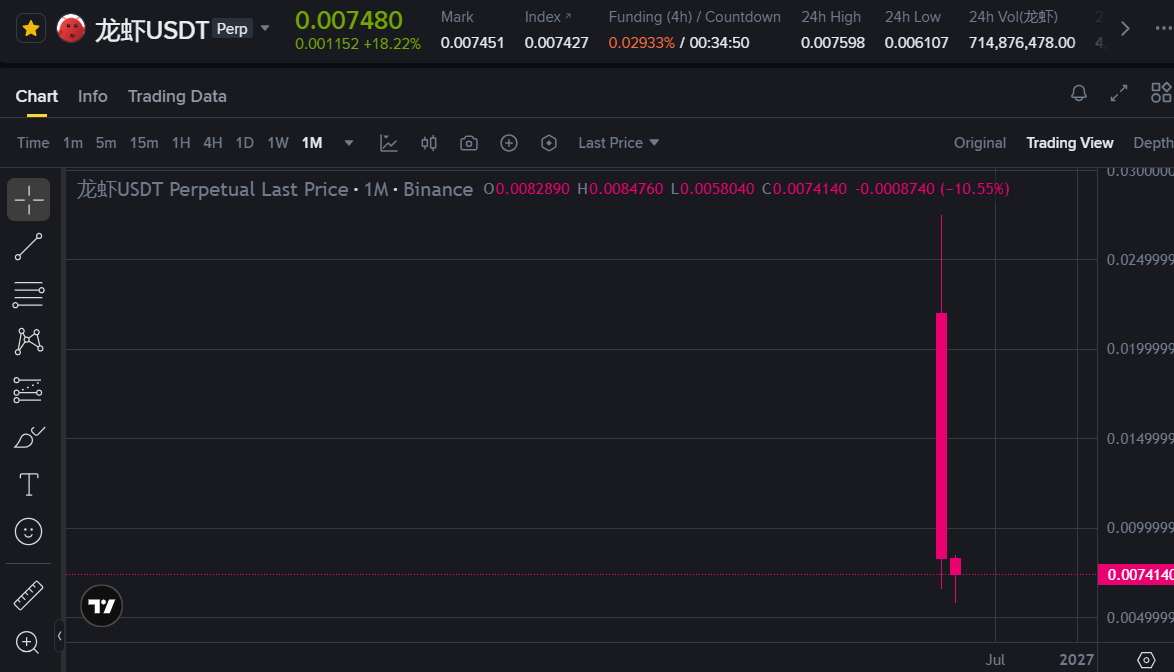
The cryptocurrencies I will analyze must have more than 5 months of operations. Otherwise, we will discard them.
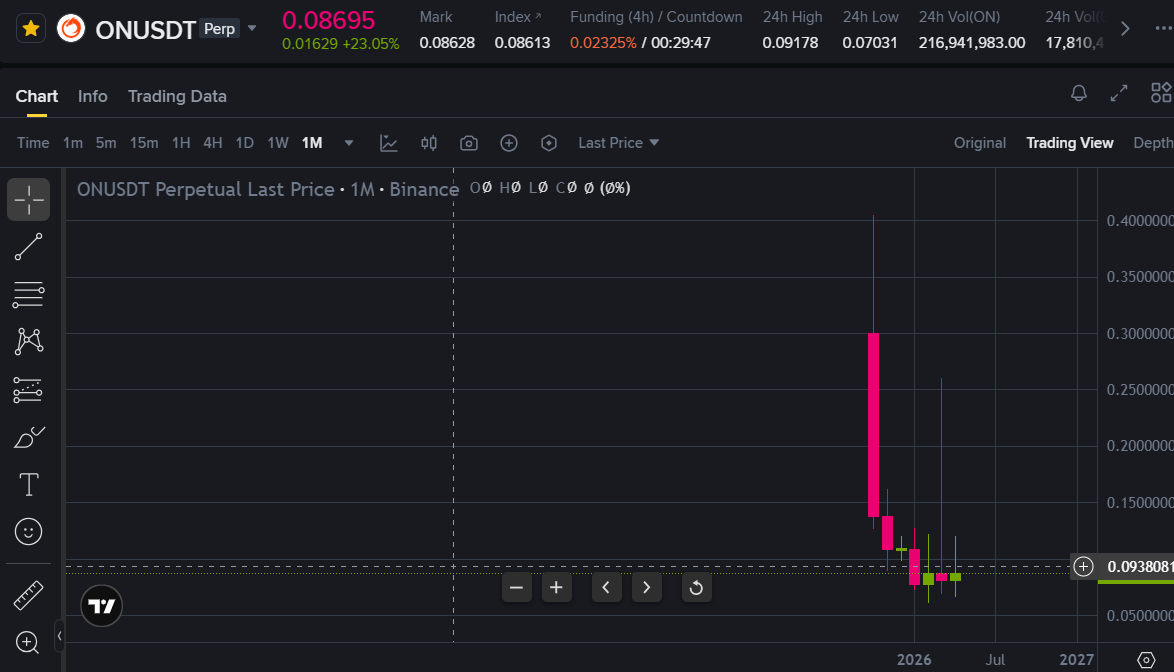
To see if they pass the filter, we will go to the M timeframe (Monthly) and see how many months of life the cryptocurrency has. For example, this asset does not pass the filter because it is only in its second month of operations:
On the other hand, this one does pass because it is in its seventh month of age:
4) 3 color rule
From here on, each cryptocurrency I will trade MUST be the same color in HTF (higher timeframes). That is: Monthly, Weekly, and Daily:
For longs: HTF completely green.
For shorts: HTF completely red.
If the asset does not comply with this rule, we discard it. You will be able to see it from Binance itself. Personally, I like to see it from the TradingView application.
For example:
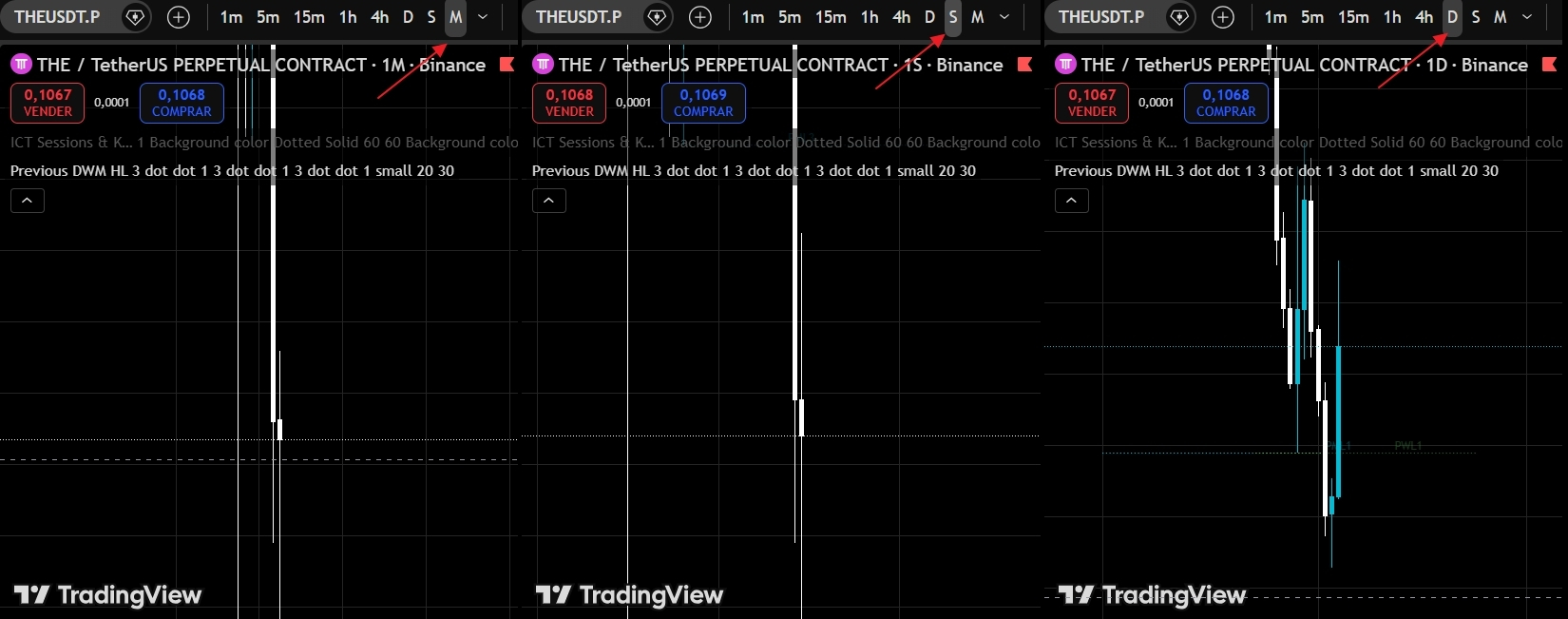
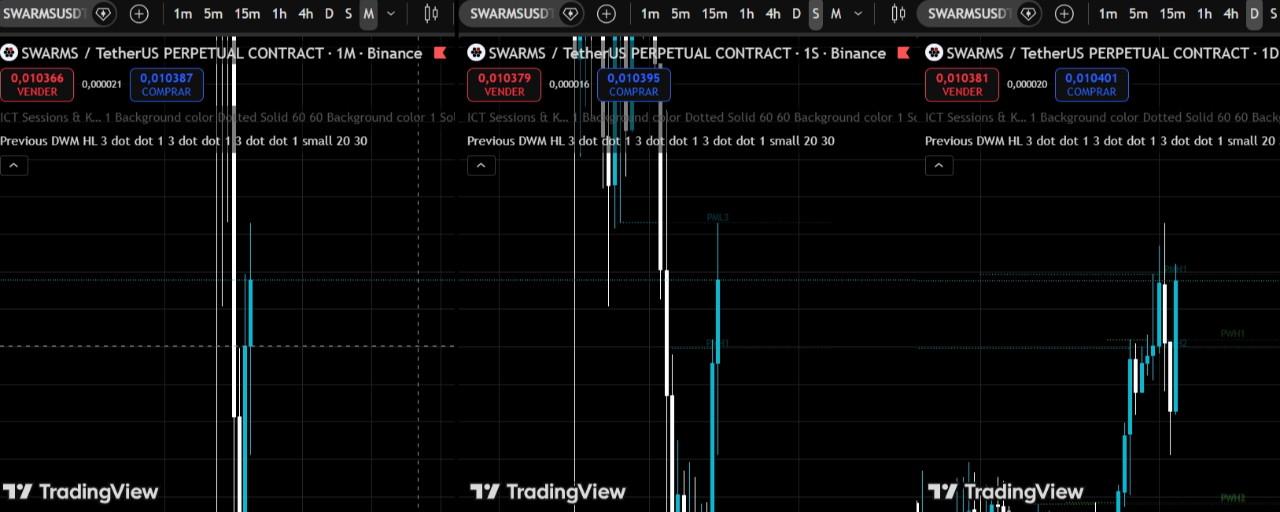
As you can see in the image, the cryptocurrency #THE does not pass the filter today, because the 3 higher timeframes are NOT the same color. So we discard it.
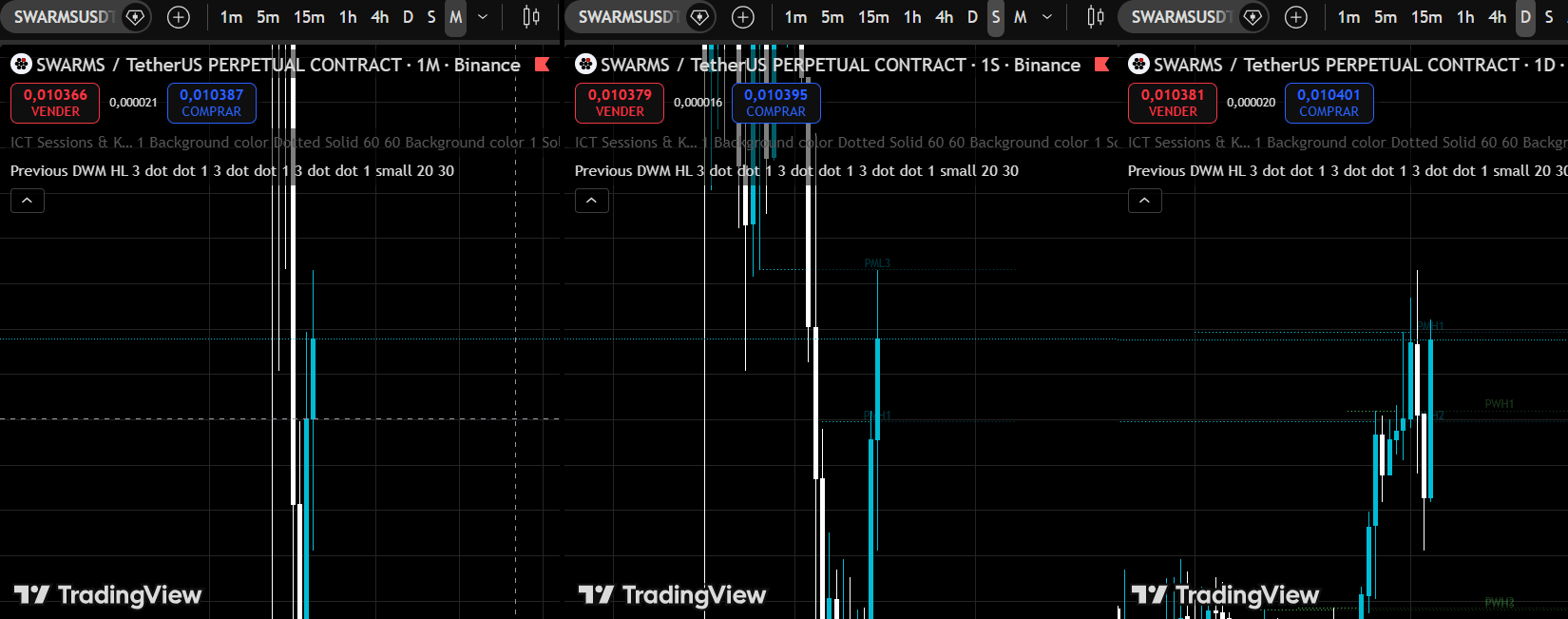
On the contrary, the cryptocurrency $SWARMS does pass, because it is green in Monthly, Weekly, and Daily, as you can see here:
Continuing, if this crypto is going to be the chosen one, we will always look for trades that go in that same trend. That is, longs.
That's what the 3 color rule is about. In fact, this is how our choice for today turned out, apart from $BTC , which we always have to look at what it is doing:
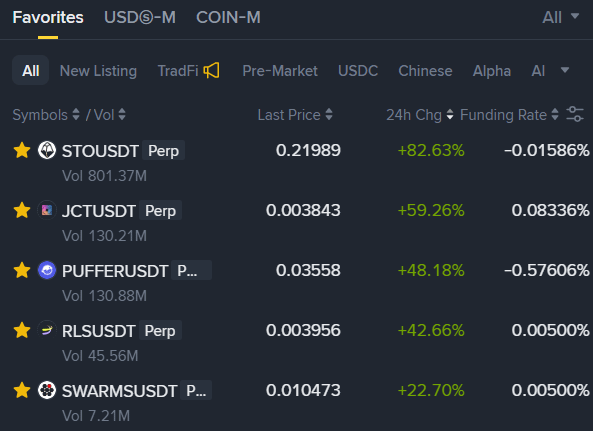
One of these currencies will probably be the one I will trade today. Stay tuned for more news.
5) Levels of interest
Next, I mark the areas or zones where I expect there to be a price reaction in the direction we seek (in this case long). Thus, I use the so-called imbalances or liquidity gaps (also known as Fair Value Gap or FVG, a concept coined by Michael Huddlestone - ICT, creator of the SMC or Smart Money Concept methodology).
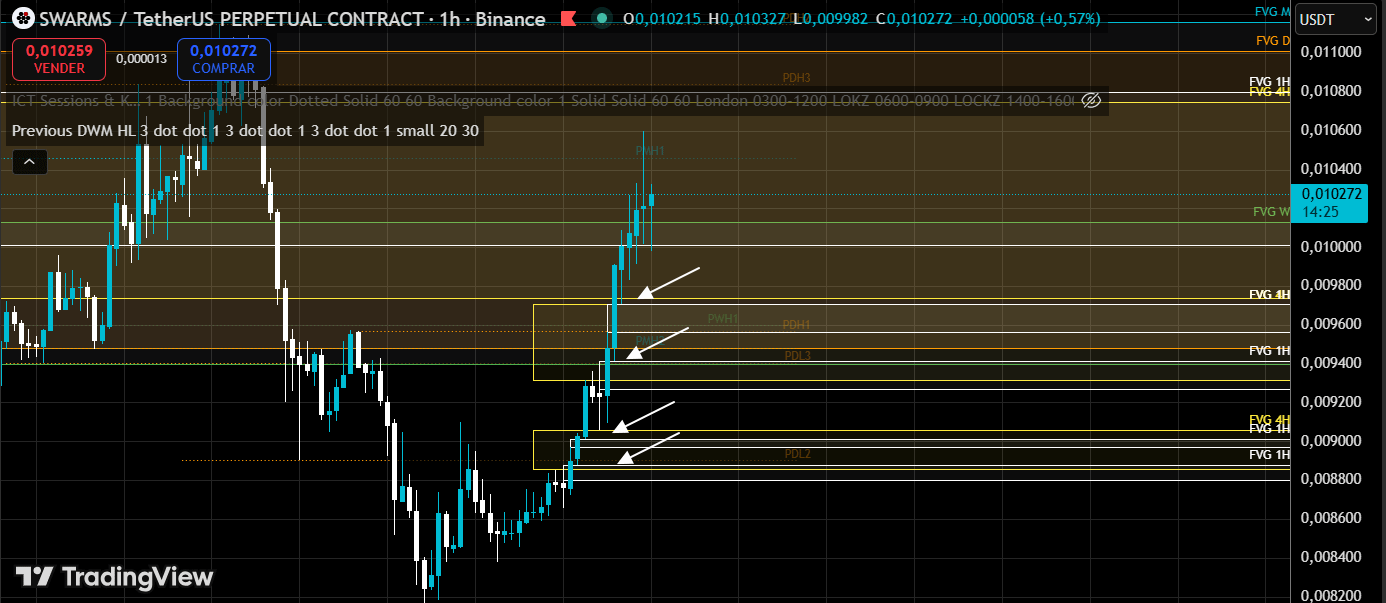
After marking them, I start monitoring the asset's price every hour until it touches a gap in HTF, or even in 1H.
6) Market Entry
When the price arrives, I go down to Low Time Frame (LTF), in this case, of 1 minute. The idea is to mark some inverted imbalance (iFVG), or alternatively, an FVG in 1 minute. If the price disrespects it upwards, I open a limit order operation at the top of the iFVG, with its respective SL and TP marked.
If the price takes the operation, I set stop orders at the SL and TP, and wait for the result of the operation.
Today, I finally chose the pair $STO . It dropped to touch the 1H FVG, created an iFVG of 1 minute and I placed my limit order.
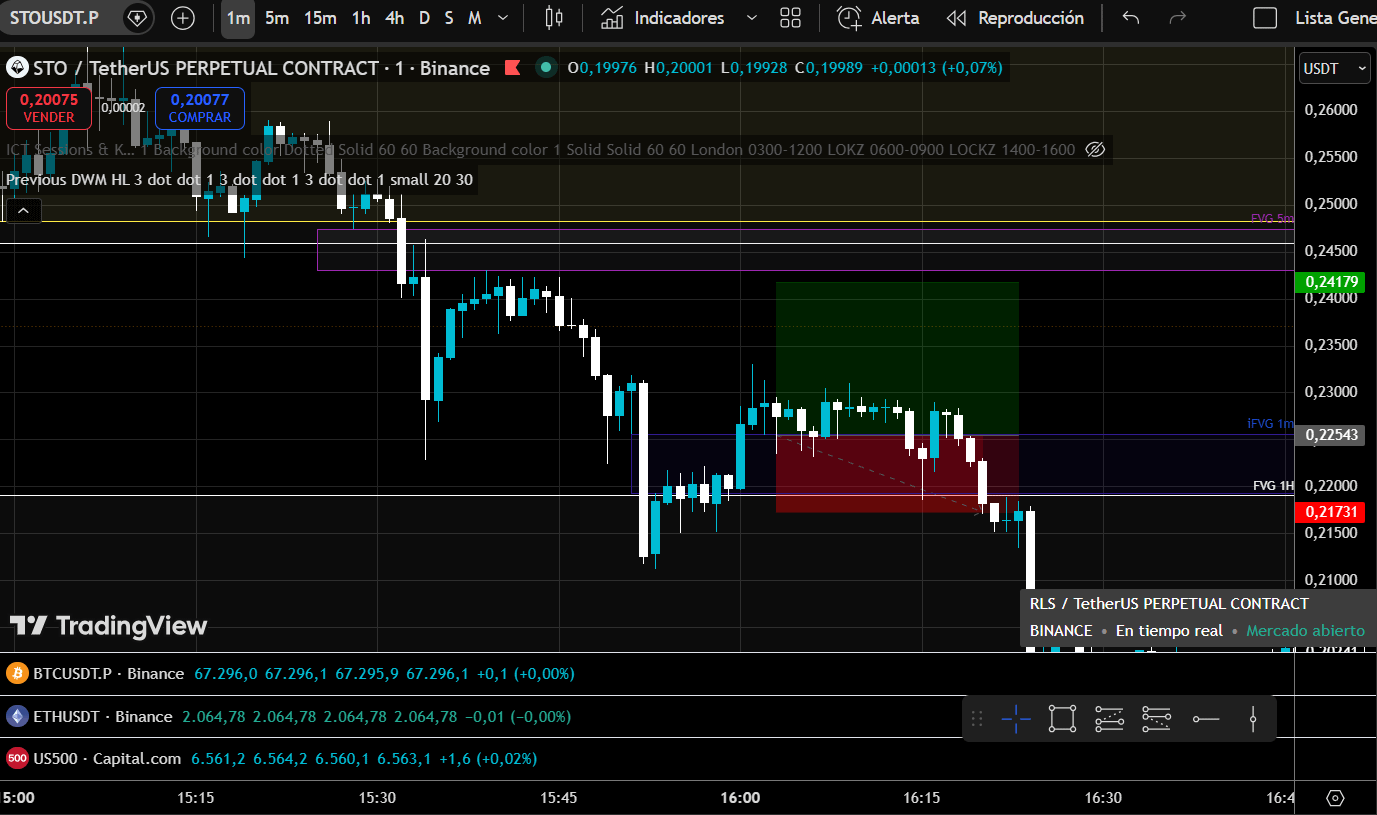
Nothing to do. Trade lost. Closed the wheel for today.
Keep in mind that this is about winning and losing. Not all operations will be winning, so it's better to control risk and maximize gains.
In this way, I have gradually managed to convert 5 USDT into 16 USDT, and I aim to reach 50, and then go for 100.
I will keep you posted. And if you have any questions, ask.