


"Hey Bro, What is Slippage?"
No, problem bro, as you know, crypto prices change every single second, but blockchain transactions take time to process. Let's break down how Slippage affects your money so you can easily understand this.
Imagine you are buying a used car. The sign says $5,000. You say "I'll take it" and reach into your pocket for the cash. In those 5 seconds, 10 other people run up screaming they want the car. The dealer looks at you and says the price is now $5,500.
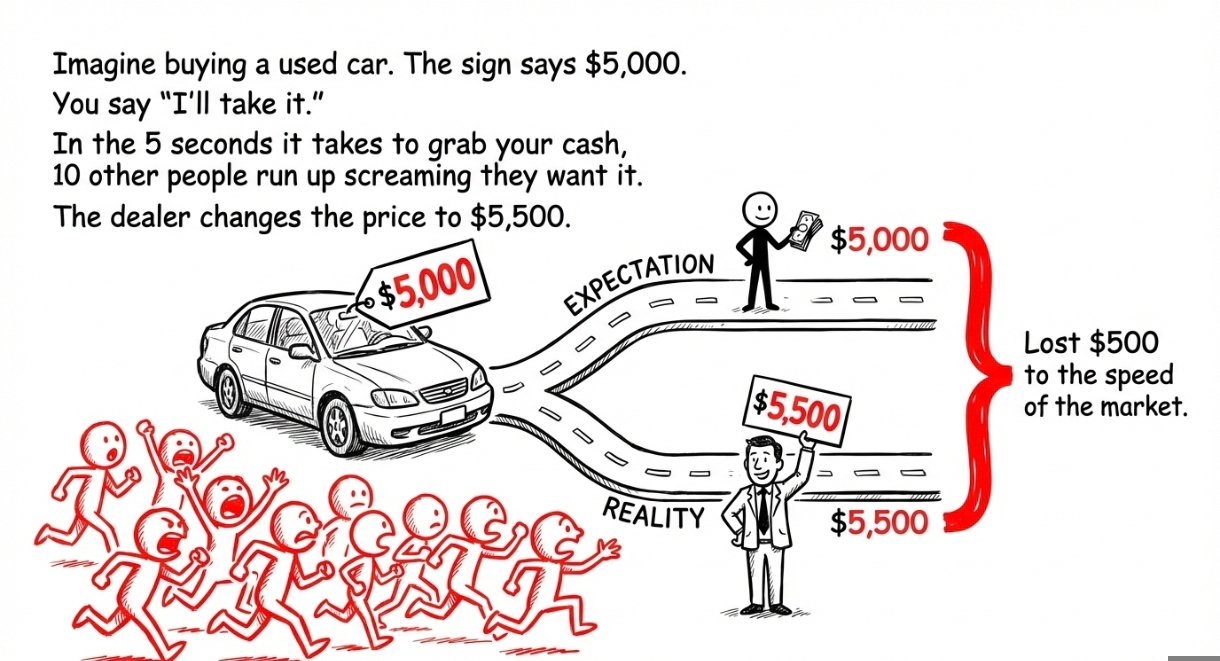
You just lost $500 to the speed of the market. In crypto, this happens because transactions take time to confirm, and the market is constantly moving. That is where Slippage comes into the frame.
❍ What It Actually Does
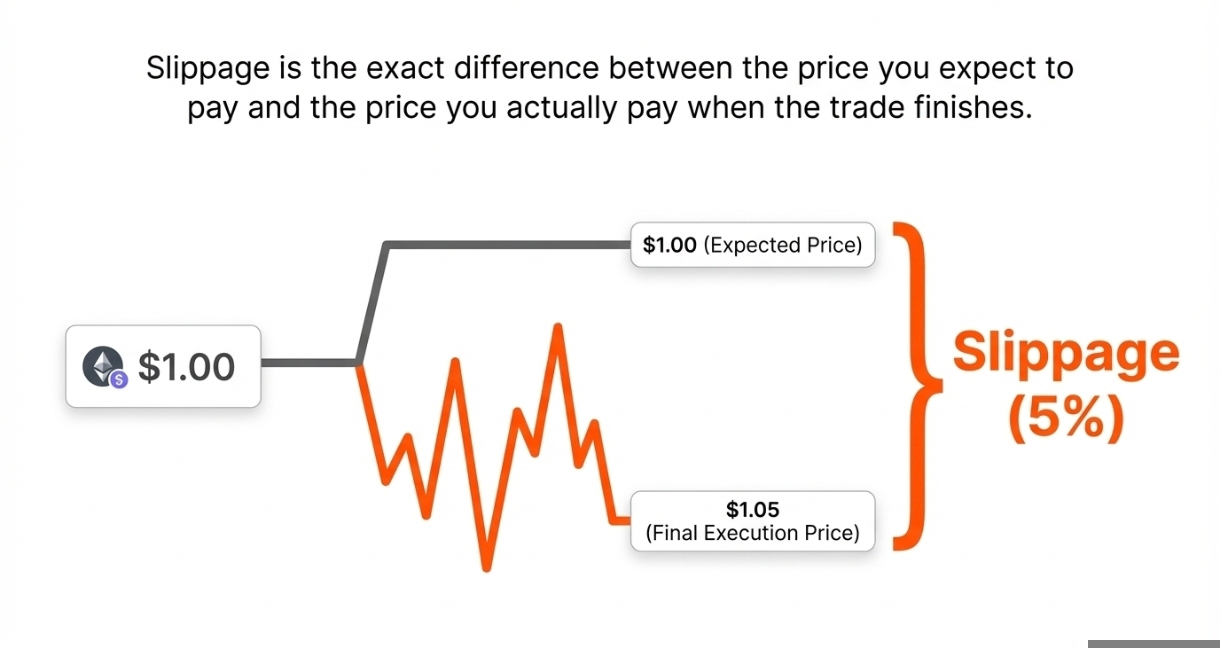
Slippage is the exact difference between the price you expect to pay and the price you actually pay when the trade finishes.
Here is exactly how it works:
The Click: You see a token priced at $1.00 on a decentralized exchange and click buy.
The Delay: Your transaction goes into the waiting room for a few seconds. During this time, other people are constantly buying and selling the exact same token.
The Execution: By the time the network processes your trade, the token price went up to $1.05. You get fewer tokens than the screen promised you. You just got hit with 5% slippage.
It sounds like a small annoyance, but it is actually a massive trap:
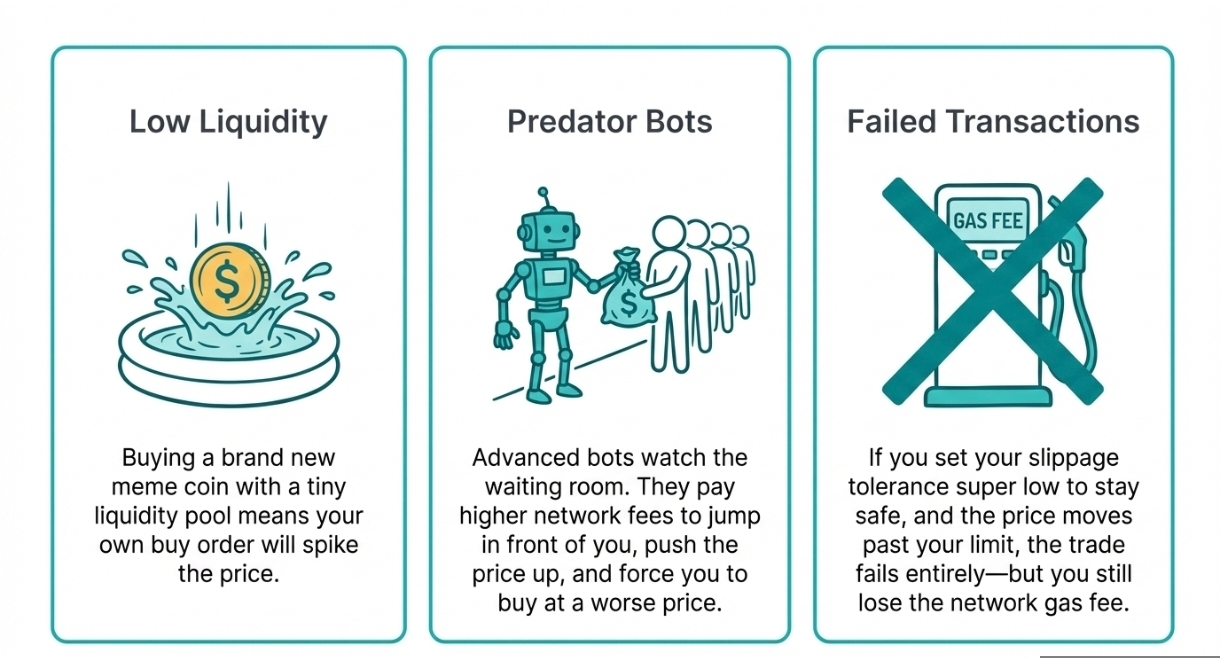
Low Liquidity: If you buy a brand new meme coin with very little money in the pool, your own buy order is gonna spike the price. You might end up with 50% fewer coins than you expected.
Predator Bots: Advanced bots are always watching the network. If they see your buy order waiting, they will pay a higher fee to jump in front of you, push the price up, and force you to buy at a worse price.
Failed Transactions: If you set your slippage tolerance super low to stay safe, and the price moves past your limit, your trade fails completely. You get zero tokens but you still lose the network gas fee.