
In the landscape of mainstream assets in the crypto market, Binance @binancezh and #BNB have always occupied a central position, which I believe everyone is familiar with, but very few have truly delved into:
Why can it traverse market cycles and gain long-term attention? And why can it become a quality asset worth long-term layout?
Today, let's discuss the underlying reasons why Binance and BNB are worth focusing on, starting from the core logic and combining the latest data and ecological dynamics!
I think an asset is worth holding for the long term if it meets three conditions simultaneously:
Supply side: total quantity is decreasing, or the growth rate is extremely slow (scarcity).
Demand side: there is a real and continuous usage demand (not just relying on sentiment).
Earnings side: holding itself can generate cash flow and reduce holding costs.
Just right, BNB is currently the only asset in the top 10 of the crypto market that simultaneously meets all three conditions in depth.
I’ve simply organized some information; let’s take a look:
One, let’s first look at today’s real-time market data.
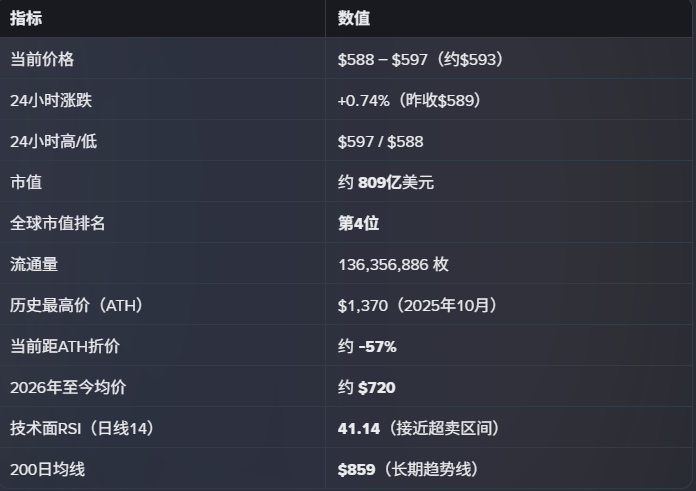
It feels like the price of BNB has now dropped to a critical position, and there isn't much room left for further decline.
Historically, such critical lows have appeared multiple times; each time the price drops to the current range, it is generally close to a temporary bottom. For friends who pursue long-term holding and are indifferent to short-term fluctuations, it's best to gradually pay attention to opportunities based on their own psychological expectations.
Two, supply side: the strongest deflationary engine in the entire market.
🔥 Dual-track burning, continuous operation.
Track 1: Quarterly automatic burn (fixed by code, no human manipulation).
How much is burned is not determined by people but is completely based on BNB price and BSC chain activity.
When the price is high: automatic fewer burns to maintain ecological stability.
When the price is low: automatic more burns to support the price.
The more lively the on-chain, the more blocks there are, the larger the burn volume.
The entire set of rules is written in code, runs automatically, and cannot be modified by humans.
You can take a look at the details of the last five quarterly burns (latest as of January 2026):
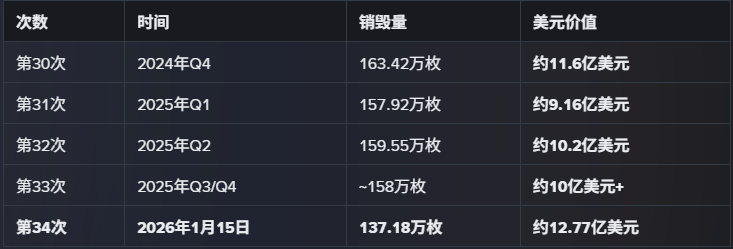
The average value of BNB burned each quarter exceeds $1 billion, and it has been continuous for 34 quarters without interruption.
Simply put: Binance buys back and burns BNB worth $4-5 billion every year from the market, which provides real buying support.
Track 2: BEP-95 real-time burning.
As long as you make any transaction on the BSC chain, a portion of the BNB in the transaction fee will be immediately burned. It is not collected by the platform but directly disappears from the market.
As of now, an additional 281,000+ BNB have been burned, happening every moment, with a faster burn rate as on-chain activity increases.
Currently, BSC has about 15 million transactions per day, and each transaction is reducing the total amount of BNB.
BNB supply reduction path (as of early April 2026).
Initial total supply in 2017: 200,000,000 units.
A total of approximately 63,640,000+ units have been burned (including all quarterly Auto-Burn + BEP-95 real-time burns).
Current circulating supply: 136,361,374 units (data after the 34th quarterly burn).
Final goal: 100,000,000 units.
Need to burn: about 36,361,374 units.
Time estimate:
Referring to the recent quarterly burn (the 34th actual burn of about 1.37 million units), calculating an average of 1.3 to 1.6 million units burned each quarter, the remaining supply will take about 22 to 28 quarters (approximately 5.5 to 7 years) to approach the 100 million target.
Note: The actual progress will be dynamically adjusted according to BNB price and BSC activity—when the price is low + activity is high, the progress will accelerate significantly.
In addition, the BEP-95 real-time burning will continue to contribute additional deflation, even if the quarterly Auto-Burn eventually stops, the real-time burn will still operate long-term.
In summary: decreasing supply + increasing demand = strong deflationary asset.
Three, demand side: how real is the demand for BNB?
The core point: the demand for BNB is not speculative; it is genuinely used every day.
Binance has 300 million users; even if only 1% are active daily, there are still 3 million people using BNB every day.
📍 Demand 1: Transaction fee discounts (used by millions of people daily). Holding BNB to pay Binance fees can save up to 25%.
This demand is fully automated, continuously stable, and unrelated to human speculation.
📍 Demand 2: BSC on-chain transaction consumption (15 million daily) BSC averages about 15 million transactions daily, and each transaction must use BNB to pay fees.
This is a real demand; people are not just speculating on price increases but are genuinely using it for payments.
📍 Demand 3: Binance Pay Payment Ecosystem (20 million + merchants) As of January 2026, more than 20 million merchants support Binance Pay.
Total transaction volume reaching $280 billion in 2025, a year-on-year increase of 38%. BNB is the core settlement currency of this payment system, used for offline consumption and cross-border payments.
📍 Demand 4: Web3 wallet naturally attracts users (the most underestimated demand) The path for newcomers to enter the crypto circle is basically the same:
① Register a Binance account.
② Use BNB to save on fees, starting to engage.
③ Open a Binance Web3 wallet.
④ Engaging in DeFi, NFT, and blockchain gaming all requires BNB.
⑤ Participate in airdrops, mining, and actively hold BNB.
As long as new users enter the market, they will likely step by step use BNB, and demand will naturally form.
Historical peak value (October 2025): 4 million + Data: BSC daily active wallet addresses (February 2026): 2.53 million +
📍 Demand 5: Basic needs across many regions worldwide.
BNB Chain has become the default Web3 entry point for locals in Southeast Asia, Africa, Latin America, Turkey, and Eastern Europe, not optional, but the first choice.
In these regions, ordinary income groups first encounter blockchain and use Web3 starting from BNB Chain, not transitioning from other platforms but using it natively, reflecting a genuine underlying demand.
The reason is simple: low fees, convenient mobile use, and seamless integration with the Binance wallet.
Four, earnings side: holding BNB itself is a 'business'.
💰 Six layers of passive income can be stacked by holding 1 BNB (current price around $600-620). Through the Binance Earn ecosystem, multiple layers of income stacking can be achieved, with most of the earnings being non-exclusive, allowing simultaneous enjoyment.
1) Simple Earn Flexible: basic annualized yield (Real-Time APR, usually 0.16%~0.35% + Bonus), with daily real-time output and high liquidity.
2) HODLer Airdrop: automatically participate by subscribing to Simple Earn, obtaining new project token airdrops through snapshots (several rounds in 2026, such as NIGHT, ROBO, etc.). This is an important source of additional income for many holders, fully automated and requiring no extra operations.
3) Launchpool: stake BNB to mine new project tokens (historical single project returns are considerable, depending on project popularity). After subscribing to Simple Earn, you can automatically participate in certain pools and manually receive rewards every hour.
4) Launchpad (IEO qualification): holding BNB can enhance the IEO lottery qualification or allocation amount, allowing early participation in quality projects.
5) MegaDrop: dual-track mode of holdings + tasks, locking BNB to earn points, while completing Web3 tasks can significantly increase the airdrop shares of new projects.
6) BNB Vault (now integrated into Simple Earn): One-click aggregator, automatically participating in Launchpool, etc., enjoying compound earnings (basic APR is relatively low, with most value derived from additional token rewards).
Core advantage: these earnings are highly compatible, especially when you deposit BNB into Simple Earn Flexible or Locked products, where basic earnings + Launchpool + HODLer Airdrop + Megadrop bonuses can naturally stack.
No need to frequently switch products; a single subscription can capture multiple opportunities.
The actual effect: for long-term holders, BNB is no longer just an 'asset', but a continuously operating 'passive income machine'—the burning mechanism reduces supply, while ecological use and Earn products bring real earnings, forming a positive feedback loop.
Five, why is now a structural turning point for BNB?
On April 1, 2026, the core regulatory pressure on Binance was completely lifted, marking the most important turning point for BNB.
Over the past three years, the biggest concern for the market regarding BNB has been the extreme regulatory risks that Binance might face, which has been the core factor dragging down its performance. However, with all major regulatory obligations now fulfilled, this long-term negative factor has essentially cleared.
Clear timeline:
November 2023: Binance accepted penalties from U.S. regulators, paying approximately $4.316 billion in fines; CZ stepped down as CEO, after which BNB was long under regulatory pressure.
May 2025: SEC formally and thoroughly withdrew the civil suit against Binance and CZ.
April 1, 2026 (yesterday): Binance paid off the last fine, officially concluding the three-year compliance supervision period, with all core regulatory requirements completed.
Binance's global compliance image is more solid, allowing for more stable expansion into compliant users and markets. The changes brought about by this are crucial: the compliance concerns of institutional investors have been largely eliminated, allowing them to confidently allocate BNB; the risk of regulatory black swans has significantly reduced, and BNB is expected to return to pricing based on its fundamentals—dual-track burning, real usage demand, and diversified earnings support.
Currently, BNB is at the starting point of this repair cycle. From the perspective of traditional financial rules, large enterprises usually experience valuation recovery within 6 to 18 months after completely resolving major regulatory and legal issues.
Six, ecosystem strength: latest data panorama.
📊 BNB Chain (end of 2025 / early 2026)
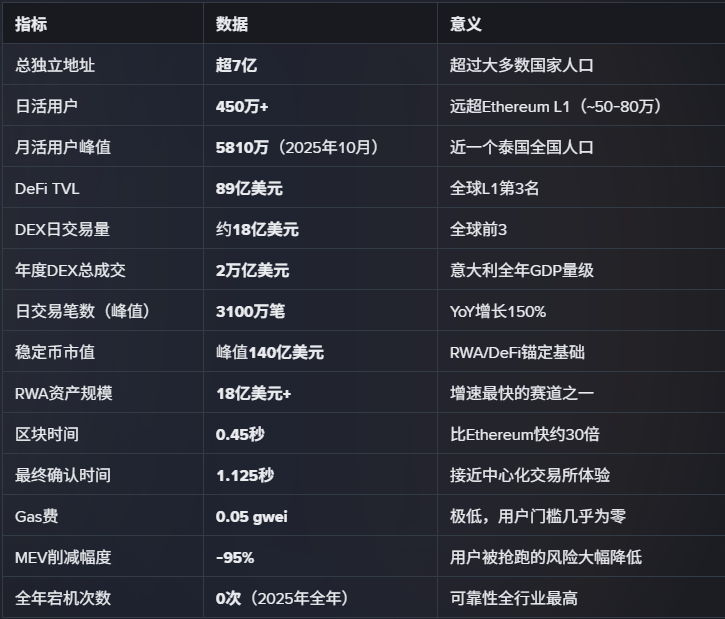
📊 Comparing the three major L1 ecosystems (latest for 2026).
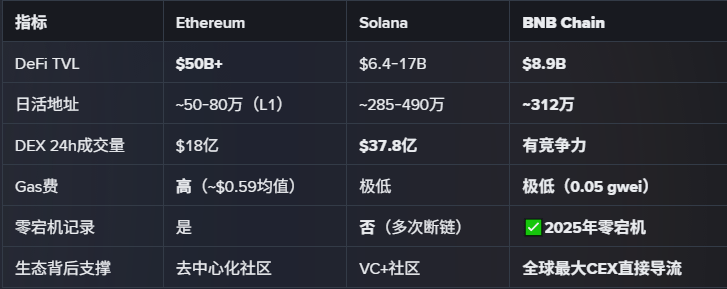
As a benchmark in the industry, Ethereum has long maintained a leading position in TVL, with a solid ecological foundation; Solana, on the other hand, has won favor from many users due to its outstanding transfer speed.
The BNB Chain has taken a unique advantageous route, balancing low gas fees, high-speed transmission, and stable operation. Coupled with the natural traffic boost from Binance's 300 million users, this combination of advantages is difficult for other public chains to replicate!
Seven, how deep is Binance's business moat?
1) To truly understand the core value of BNB, one must deeply appreciate how powerful the entire ecological system built by Binance is.
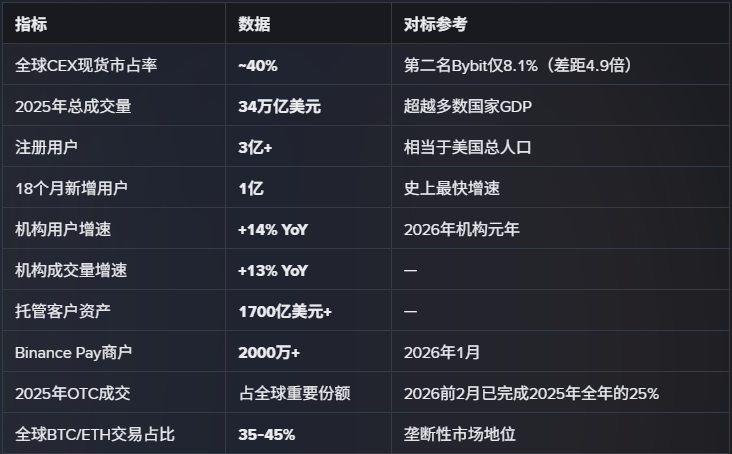
The advantages of Binance are not just due to its larger size, but also its long-term accumulation of a mature ecosystem, a large user base, and a stable underlying system. Many key indicators lead the industry, forming a position that is difficult to replace.
The more active the ecosystem and the more users there are, the larger the burn volume. The quarterly burn scale has remained high in recent years. The value of BNB is deeply bound to Binance and can be understood as the core equity certificate of the entire ecosystem. It has two stable burn mechanisms: quarterly automatic burn + real-time on-chain fee burn.
The total amount of BNB has been continuously decreasing, currently about 136 million units, and will eventually stabilize at 100 million units, becoming increasingly scarce.
Compared to many projects that rely solely on stories, BNB has a more solid foundation, with reliable long-term value support. The entire logic is supported by real ecological use and compliant operations, not by conceptual speculation.
2) I also just saw the CoinGlass Q1 report, and I want to share a few thoughts.
The CoinGlass Q1 report has been released, with several data points intuitively confirming Binance's industry moat: in the first quarter of this year, Binance users' assets reached $152.9 billion, accounting for 73.5% of the entire industry; the spot share rose from 34% to 35.4%, and derivatives from 33.2% to 35.7%; BTC reserves are 659K, and the depth of the four core sub-markets remains first.
The data behind reflects users' genuine trust. #SAFU is no longer just a slogan; even if users participate in other platforms, their assets are still prioritized on Binance.
This is also due to the ongoing trust from the market and users; Binance always faces issues head-on and optimizes its services.
Even while maintaining its position as the industry leader, Binance has never stopped evolving. The goal has always been to Exchange the World—compared to centuries of traditional finance, the crypto industry is still in its early stages, and achieving global financial freedom remains a constant challenge.
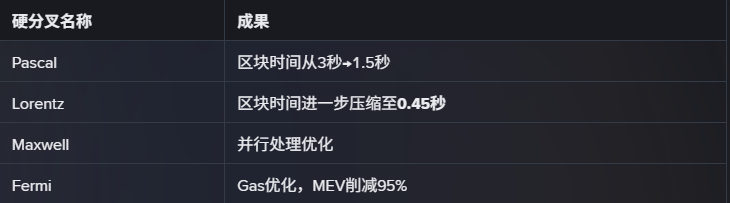
Eight, 2026 technology iteration: BNB Chain has grown from practical usability to a mainstream public chain with strong core competitiveness in the EVM system.
Completed hard forks (2025).
2026 roadmap (published).
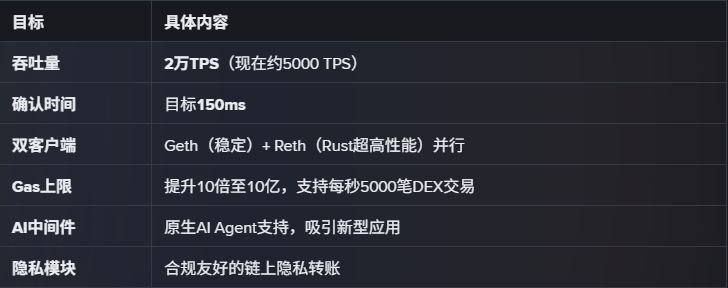
Long-term vision (2026-2028).
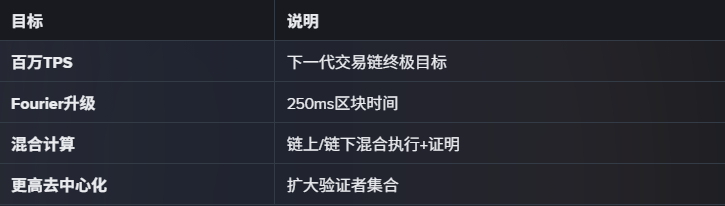
This means that BNB Chain is no longer limited to a cost-effective differentiated public chain choice, but is gradually evolving into a foundational value settlement layer focused on high-performance trading for global scenarios.
Nine, macro environment: the overall landscape of the crypto market in 2026 provides relatively friendly external development conditions for BNB.
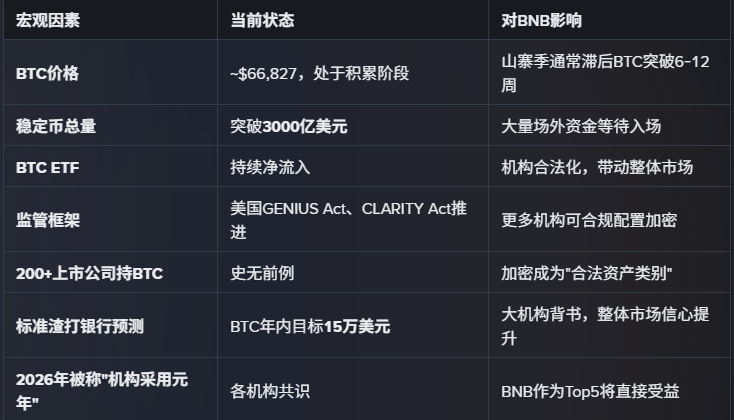
From historical trends, after BTC completes an effective breakthrough, BNB often shows relatively positive performance among mainstream assets. Currently, BTC is still in the consolidation phase, with a price below the 20-day moving average.
The internal transmission is also quite clear: as market trading volume increases, it will drive the growth of fee income, thereby strengthening BNB's burning intensity, with circulation subsequently contracting, forming a positive interaction.
Ten, long-term value reference framework: how to rationally view the reasonable valuation of BNB?
We can analyze BNB's long-term value through three independent dimensions, providing multi-dimensional references. This article will first focus on the first two core logics (deflationary mechanism pricing, ecological earnings dilution costs), with the third dimension supplemented later.
Framework 1: Deflationary mechanism pricing (Supply Shock thinking).
The current circulation exceeds the target total, and future supply will continue to contract steadily. BNB has clear, long-term automatic burn rules, and a final total quantity target has been set.
If the BNB Chain ecosystem continues to develop steadily (more users, increased on-chain activity, expanded ecosystem scale), the supply-demand structure will be further optimized, and the value space will be more imaginative. Under conservative assumptions, even if market demand remains at the current level, just the reduction in supply alone would be enough to provide solid foundational support for the price.
Framework 2: Ecological airdrop earnings, continuously diluting holding costs (Yield on Cost thinking).
This part of the income will offset holding costs year by year. Even if the price does not rise in the short term, your actual holding cost will continue to decrease. Long-term holding of BNB can provide stable ecological airdrop-type income.
The longer you hold, the more apparent the cost dilution effect, significantly increasing the safety margin of the holding, and the tolerance for long-term holding will also be higher.
Framework 3: Market capitalization space comparison.
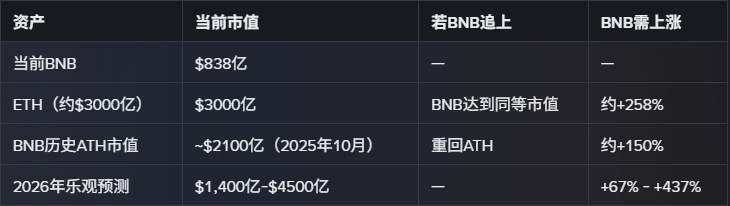
Core conclusion.
For long-term holders, the mechanism itself continuously reduces risk and enhances holding cost-effectiveness. The value of BNB does not rely solely on direct price increases; the dual mechanism of deflationary contraction and ecological earnings together forms its value base.
Eleven, project risk analysis (honestly disclosed, not avoiding key issues).
1) Regulatory risk.
Regulatory risk was at a very high level but has been officially cleared after continuous compliance adjustments. Current operations fully align with regulatory requirements, and future efforts will continue to consolidate compliance results.
2) Overall market bear market risk.
The severity of this risk is moderate. Currently, BTC is in the accumulation phase, with a positive macro trend. We adopt a phased entry strategy to reduce the impact of market fluctuations while ensuring safety and returns.
3) Platform dependency risk (binding to Binance).
This risk is moderate. Binance has a strong moat and stable operations, and the independence of BNB Chain continues to enhance, gradually diluting risk. We will objectively recognize the risk and dynamically adjust the cooperation strategy.
4) Validator concentration risk.
Currently, there are 45 validators, with a lower level of decentralization than ETH, posing low to moderate risk. This move is primarily to achieve higher performance. We will continue to explore decentralized optimization paths while ensuring performance.
5) Risk of competition chain diversion.
This risk is low to moderate. Solana faces competition in some scenarios, but our differentiation is clear and the barriers are evident. We will continue to track the competitive landscape and strengthen our advantages.
6) Risks related to the core management system.
This risk is low. The project governance structure has smoothly transitioned, and the management system led by Richard Teng is stable, focusing on compliance, effectively ensuring stable project operations, and will continue to track and optimize.
Twelve, what useful products does Binance have worth using, and which contributions deserve our praise?
1) Practical insights from Binance's Chinese Discord: the interface is clean and activities are genuine, making it a treasure community adaptable for both new and old players.
Recently, I visited the official Discord (DC) of the Binance @binancezh Chinese community and felt like I opened the door to a new world! How did I not discover this treasure community was so useful before? Let's take a look; I don't believe you won't like it!
2) Binance Square: a pure social platform dedicated to the crypto community, where you can view news, learn trading, engage in interactions, and earn benefits all in one place.
3) Binance Ai Pro🔶: official native focus on crypto trading, one-stop shop that fits Binance users better.
4) CZ and Binance Charity: using the transparency of blockchain to benefit nearly 4 million people through small acts of kindness, spreading warmth.
Zhao Changpeng (CZ) @cz_binance and Binance @binancezh's charitable efforts: setting a new benchmark for public welfare with blockchain.
In these seven years, whether it is CZ personally or the Binance Charity Foundation, it has continuously used blockchain to make public welfare transparent and traceable, directly reaching beneficiaries. As of the first quarter of 2025, Binance Charity has donated over $40 million since 2018, benefiting approximately 3.8 million people.
5) Binance Academy: quite practical, with many free resources, available in over 10 languages, including Chinese. It covers content from beginner to professional levels, is easy to learn, and you can earn some cryptocurrency after completing the courses, and receive a certificate! According to available information, as of 2025, Binance Academy has surpassed 45 million global users, collaborating with over 200 blockchain institutions across 45 countries to promote the popularization of Web3 education!
Link: https://academy.binance.com/zh-CN/
6) Binance Newcomer Academy: Over the past year, #Binance Newcomer Academy has had 30+ teachers and contributors, launched 123 episodes, and over 200 hours of content, invited 150+ industry experts to share, gaining 400,000+ views, providing immense help to many crypto newcomers!
Link: https://t.co/Z3pCIZPJHF
7) Binance Wallet @BinanceWallet: zero threshold entry into Web3, safety and freedom all in one.
Link: https://t.co/M1gIQI2rXu
Binance Wallet is the official self-custody Web3 wallet launched by Binance, natively embedded in the Binance App. It perfectly connects exchange accounts and the on-chain world, combining the security of CEX with the freedom of DEX, allowing hundreds of millions of ordinary users to easily engage in DeFi, swaps, new projects, and airdrops without learning complex operations.
Core real data (2025 official report): total registered users on Binance platform: over 300 million.
Alpha platform participating users: 17 million +
Alpha 2.0 cumulative trading volume: surpassing $1 trillion.
A total of 254 official airdrops have been issued, with total rewards of $782 million.
Risk control has intercepted approximately 270,000 malicious addresses, ensuring maximum asset protection.
Binance Wallet handles over 60% of mainstream on-chain transactions.
Five core practical functions:
MPC no mnemonic security: private keys are divided into three parts (user device + cloud encryption + Binance server), 2-of-3 signature verification, biometric login. There is no need to memorize mnemonics or worry about losing assets. It supports building up to 5 wallets and allows for one-click export of private keys to convert to fully self-custodied.
One-click cross-chain exchange: supports 130+ public chains, automatically aggregates the optimal path, and connects to mainstream DEXs like Uniswap and PancakeSwap. You can use USDT/USDC to pay for gas fees, without needing to hold native coins on every chain, making it convenient and hassle-free.
Alpha official new project launch: exclusive on-chain new tokens and airdrop channels, where you can accumulate points through holding and trading to participate early. Quality projects can also directly land on Binance’s spot market.
Forecast market (in gray test): based on BNB Chain, can directly participate within the wallet without exiting the app.
One-stop DeFi management: built-in Web3 browser, staking, NFTs, liquidity mining, on-chain lending, all can be handled in one place.
No need to remember easily lost mnemonics, cross-chain operations do not require manual bridge operations, gas fees can be used universally with USDT, and there are official exclusive channels for new projects and airdrops, with zero learning costs, making it easy for both newcomers and veterans to get started.
Backed by Binance's 300 million user platform and trillion-level on-chain strength, Binance Wallet is currently the lowest threshold for ordinary people to enter Web3, with the most complete ecosystem and the safest and most reliable choice.
Whether you are a newcomer or have been playing on the chain for a while, it's worth trying out the Binance App—just one click to open, and the Web3 world is that simple!
There are still many Binance products worth using and paying attention to; I'll share them with everyone once I finish my research!
Thirteen, summary: the core logic of BNB and the value thinking of the current time window.
Why does BNB have unique value among mainstream assets?
Each major public chain and core asset has clear positioning and advantages.
BTC: focusing on value storage, with stable attributes.
ETH: the highest ecological maturity, stable staking yields.
SOL: outstanding growth momentum, advantageous in high-frequency scenarios.
BNB has taken a differentiated path: deflationary mechanism + ecological earnings + real on-chain demand + synergistic collaboration with top exchanges, with multiple supporting factors working together to form its unique value system.
Why is this current time point worth focusing on?
Five key conditions occurred simultaneously, forming a rare phased environment:
① The price is relatively in a reasonable range compared to historical highs, and the technical indicators are at a neutral level.
② The core regulatory pressure that has persisted for three years has officially been lifted (April 1, 2026).
③ Ecological airdrops and Launchpool remain normalized, providing continuous passive income for holders.
④ The first quarter of 2026's quarterly burn has been completed, and the deflationary mechanism has been stably implemented.
⑤ BTC is still in the accumulation phase, and the market overall has potential upward space.
I hope that Binance and BNB can steadily move forward, becoming stronger and not disappointing every bit of long-term companionship. Let's keep building $BNB together!
@heyibinance
@binancezh
PS: All data in this article comes from CoinMarketCap, BNB Chain's official blog, Binance announcements, DefiLlama, YCharts, and various publicly available information. There may be slight statistical deviations, and everyone is welcome to provide friendly corrections and supplements in the comments. Thank you for your patience in reading!