


Chainlink has become one of the most talked-about altcoins in the market, drawing huge attention across social platforms. Even with that momentum, some on-chain indicators are showing a less convincing picture, leaving investors uncertain about what may come next for LINK.
At the time of writing, the broader crypto market was moving higher, with total market capitalization rising by over 3%. LINK also joined the rally, climbing 5.24% over the past 24 hours to trade around $8.97. Alongside the price increase, social data showed a major jump in interest surrounding the token.
According to LunarCrush, Chainlink generated roughly 480 million social engagements over the past year. Positive sentiment around altcoins also rose sharply, with LINK standing out as one of the projects receiving strong attention from the market. This spike in engagement suggests that traders and investors are increasingly focused on Chainlink’s role in the evolving crypto ecosystem.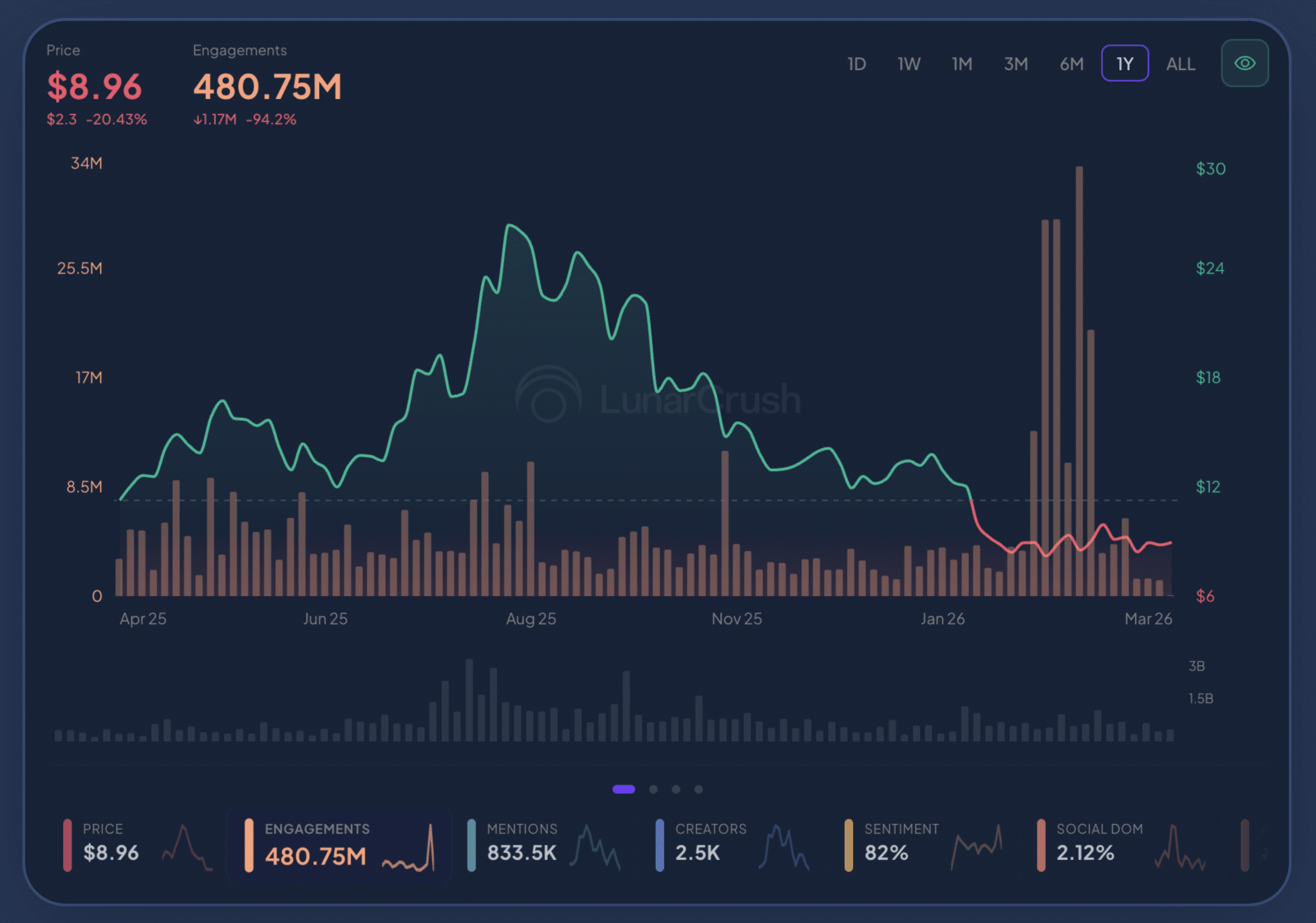
There are several major developments driving this renewed excitement. One of the biggest catalysts is the launch of Grayscale’s first U.S. Chainlink ETF, listed under the ticker GLINK on NYSE Arca. The product reportedly attracted $41 million in a single day, and by April 4, cumulative net inflows had reached $82.79 million. That level of institutional interest has helped strengthen bullish sentiment around LINK.
Another important factor is Bitwise’s Chainlink ETF, listed as CLINK, which also posted cumulative net inflows of $11.82 million on the same date. The arrival of multiple investment products tied to Chainlink has added credibility to the asset and increased its exposure among traditional investors.
Chainlink’s growing relevance is not limited to ETFs. Mastercard has also selected Chainlink as part of its effort to connect its massive card network to the on-chain world of decentralized finance. Through this integration, Mastercard users can gain direct access to crypto-related functionality on-chain through Swapper Finance, which uses Uniswap’s infrastructure. This move highlights Chainlink’s importance as a connector between traditional payment systems and blockchain-based applications.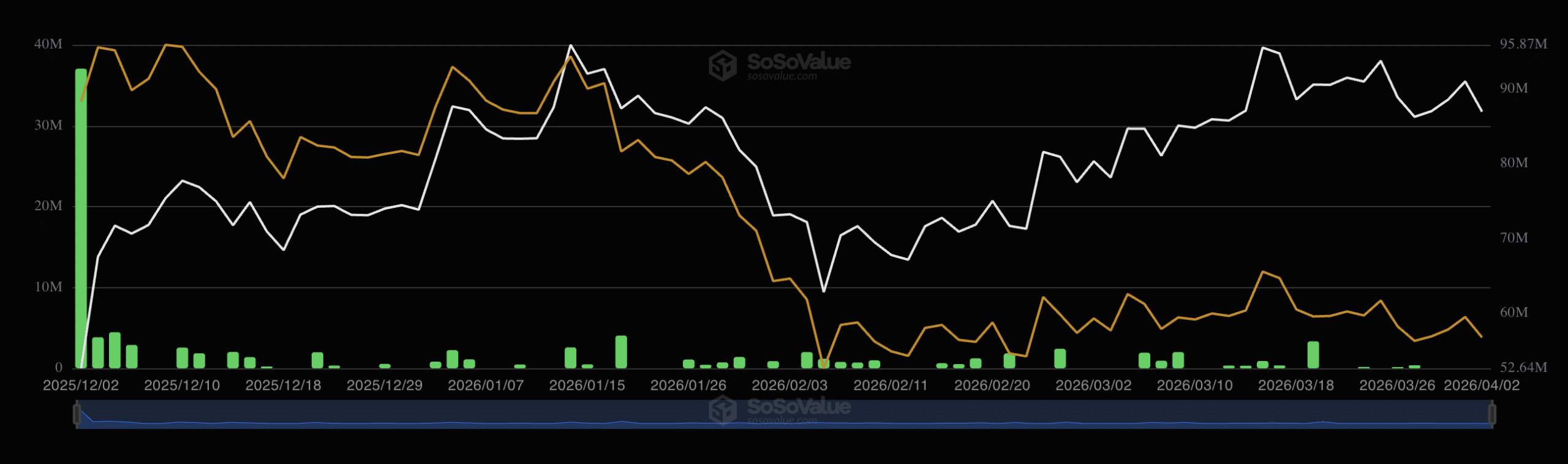
The bullish narrative is further supported by Coinbase’s use of Chainlink to bring trading-related data on-chain. This includes order book information and perpetual futures data being published directly to blockchain networks through Chainlink’s technology. As a result, Chainlink is increasingly being viewed as a critical infrastructure layer that helps move valuable real-world and market data into decentralized environments.
Taken together, these developments have created a strong narrative around LINK. Institutional products, mainstream payment integration, and exchange-grade blockchain data are all arriving at the same time, which explains why social interest has accelerated so quickly.
Still, the on-chain picture is less encouraging. Data from Santiment showed declines in both Active Addresses and Open Interest. These metrics suggest that actual blockchain activity and short-term speculative participation may be cooling, even while public attention remains elevated.
This contrast creates uncertainty for investors. On one side, Chainlink is enjoying major visibility and strong headline-driven momentum. On the other, weakening on-chain activity may indicate that the excitement is not yet translating into deeper network strength.
Another point worth noting is that LINK recently saw its largest inflows of the year, with around 14.9 million LINK moved between wallets. While this kind of transfer activity can sometimes signal accumulation or strategic positioning, it can also add to market uncertainty depending on who is moving the tokens and why.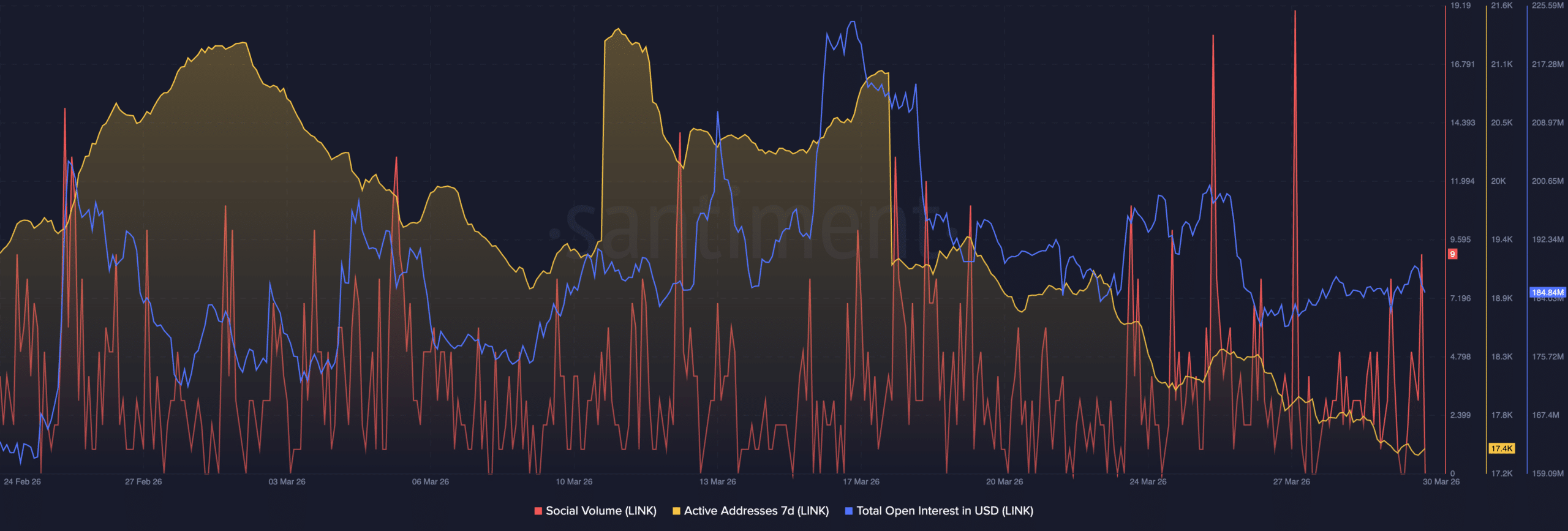
In the end, Chainlink’s current setup presents a mixed outlook. Social momentum is clearly strong, supported by ETF growth, major partnerships, and rising relevance in both traditional finance and crypto infrastructure. However, softer on-chain metrics suggest investors should remain cautious. LINK may continue benefiting from hype in the near term, but stronger blockchain activity will likely be needed to support a more sustainable move higher.