



XRP is entering a sensitive phase as market liquidity continues to weaken and short positions keep building. With thinner order books and lower participation, even a relatively small move in either direction could trigger a much larger reaction in price.
One of the clearest signs of this shift is the drop in Binance’s 30-day Liquidity Index, which has fallen close to zero. At the same time, trading turnover has shrunk sharply from more than $200 billion in January 2025 to levels that now suggest very limited activity. This points to a market with less depth, making XRP more vulnerable to sudden directional swings.
While spot participation has cooled, derivatives data shows traders are becoming more active on the bearish side. Open Interest continues to rise, while funding rates remain negative. This combination usually signals that more traders are opening short positions and expecting additional weakness in price.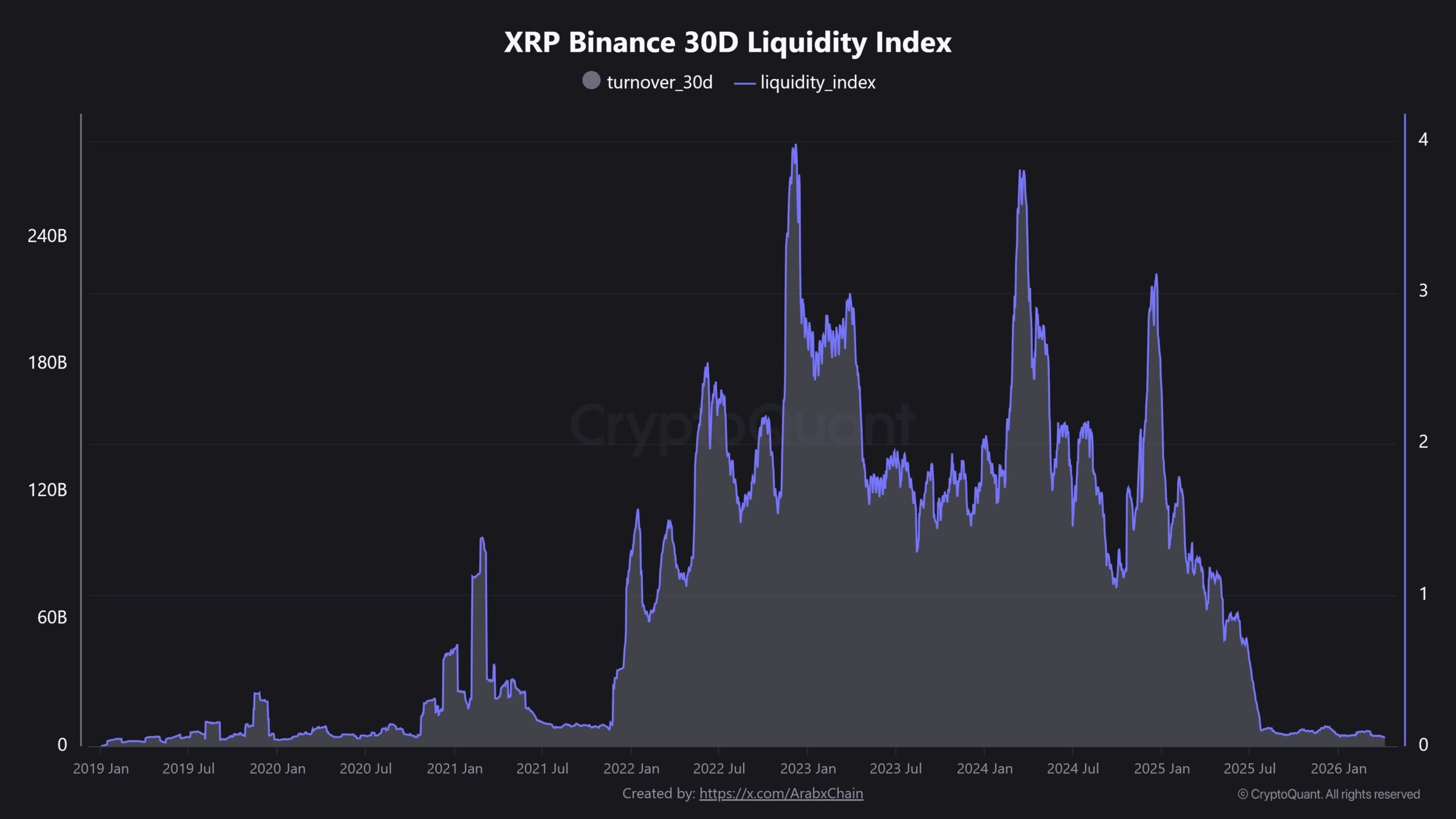
That creates an unstable environment. When leverage increases in a market with weak liquidity, price can react aggressively. A modest wave of buying could force short sellers to close positions quickly, pushing XRP higher in a short squeeze. On the other hand, if buying interest does not return, price could continue drifting lower with little support underneath.
This fragile setup becomes even more important around XRP’s nearby price zones. If buyers step in, the growing number of short positions could unwind rapidly and send the token toward the $1.349 area. But if spot demand remains soft, support around $1.326 may not be strong enough to prevent further downside.
There are also signs that supply on exchanges is slowly tightening. Exchange reserves fell by 0.19% to 2.74 billion XRP, which may suggest quiet accumulation or reduced willingness to sell at current prices. That has helped keep price relatively steady for now, but it also increases the chances of a faster move once momentum returns.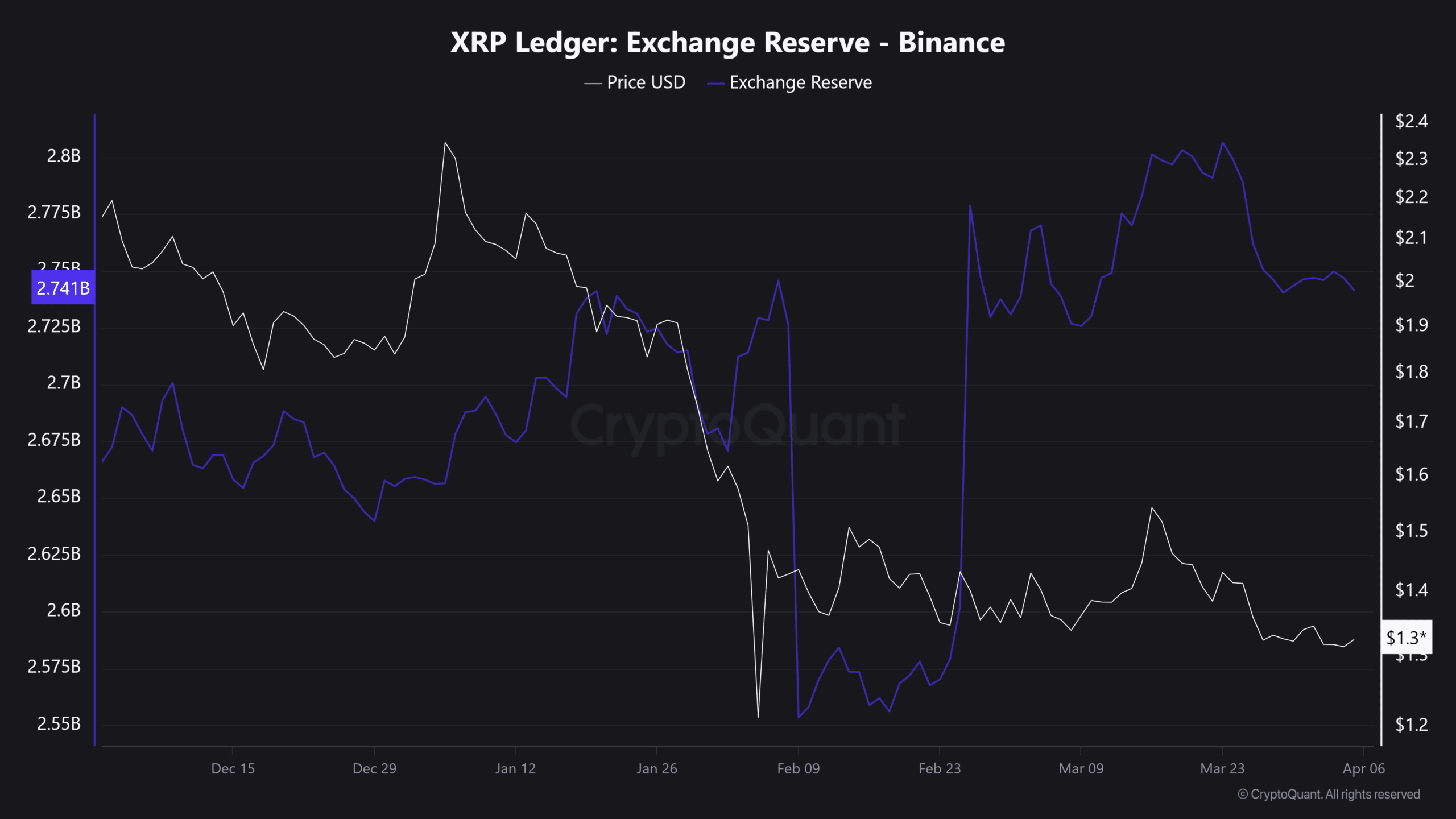
Liquidation data adds another layer to the picture. Open Interest climbed 3.59% to $960 million, while funding stayed negative, showing that bearish positioning is still crowded. Recent market action already put some of those positions under pressure, with $1.82 million in short liquidations recorded during the latest upward move.
The most important zone now sits above $1.35 to $1.36. A break through that range could trigger a chain reaction of forced short covering, especially in a market where sell-side liquidity is thin. If that happens, XRP could climb quickly as trapped shorts rush to exit.
Still, the downside risk remains just as real. The $1.32 to $1.33 support area is a key level to watch. If XRP loses that zone, weak bid depth could allow the decline to accelerate and give short sellers more control over the market.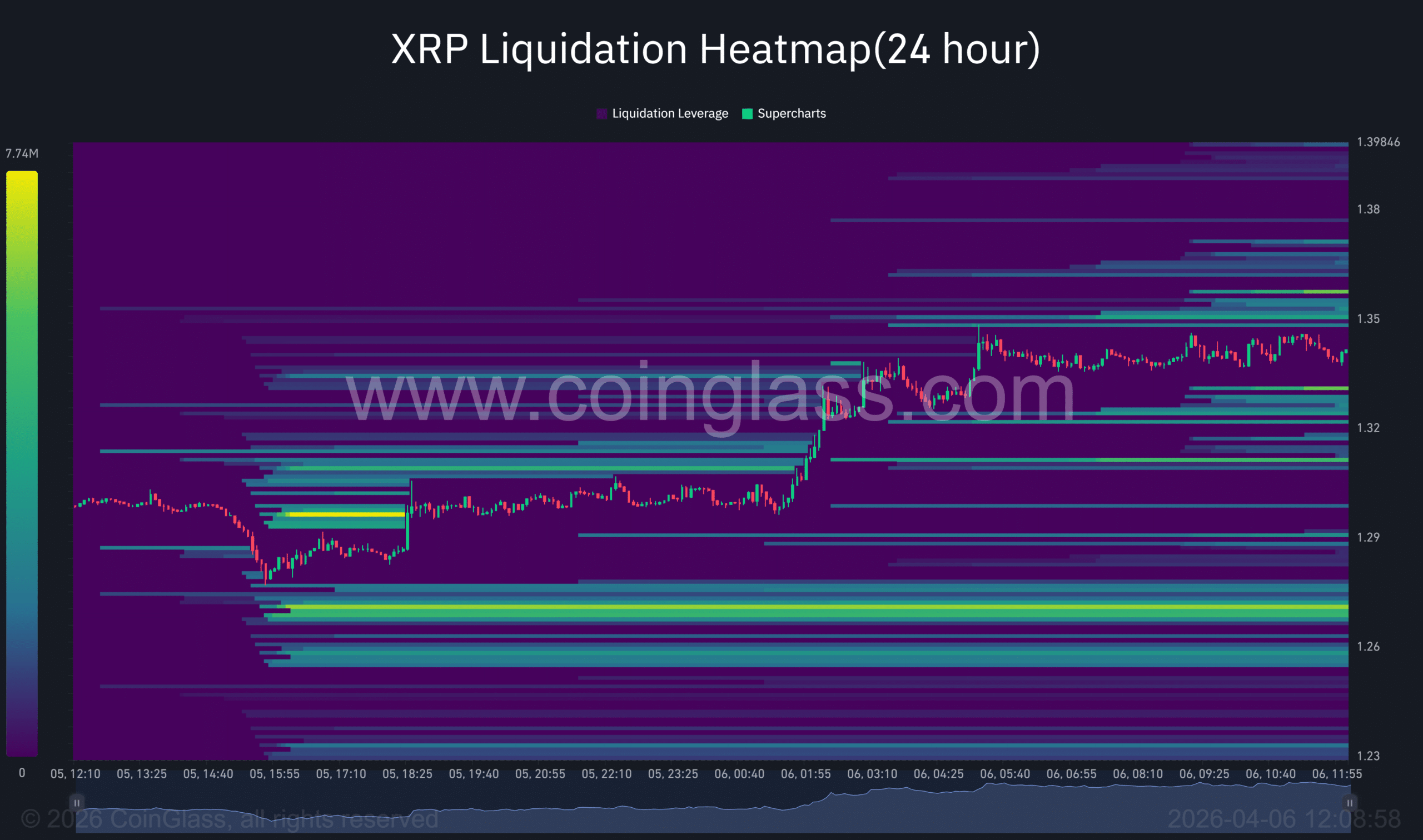
Overall, XRP is stuck in a highly unstable structure. Weak liquidity, rising leverage, and growing short interest are combining to create the conditions for a sharp move. Whether that move becomes a squeeze toward $1.36 and beyond, or a breakdown below support, will depend on whether real buying demand returns in time.