In the ecosystem of digital assets, decentralization grants freedom, but it also shifts all responsibility for security to the user. Scammers do not hack the blockchain; they hack people. Below, we break down how to identify the most common traps and how to safeguard your capital.
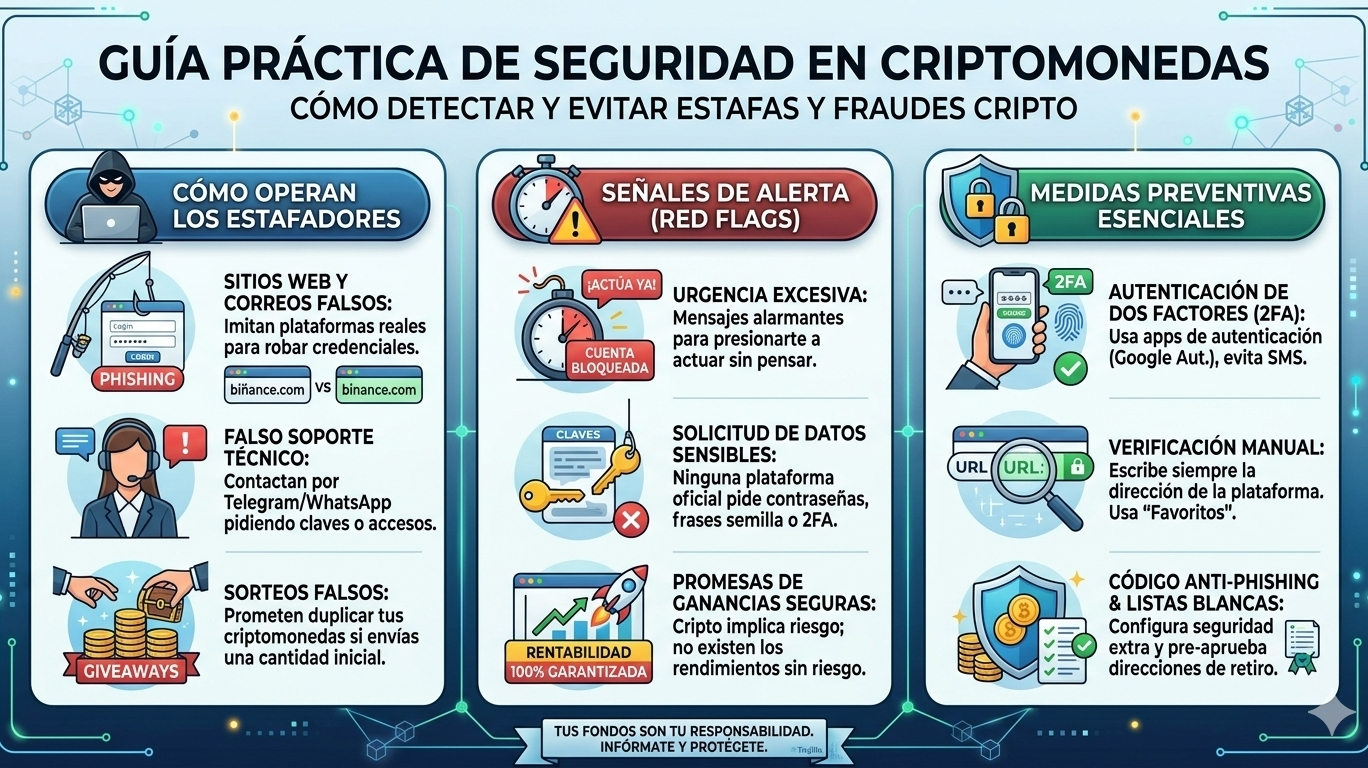
I. The Most Common Deception Modalities
Criminals often disguise their intentions under a mask of legitimacy. These are the three most recurring tactics:
Identity Theft (Phishing): The attacker sends emails or messages that perfectly mimic the aesthetics of recognized platforms. The goal is for you to click on a fake site and enter your credentials.
Fake Technical Support: They proactively contact you through social networks or messaging apps to "help you" with a problem you don't have, eventually requesting remote access to your device or your security codes.
“Miraculous” Investments: Groups that promise exorbitant daily returns or schemes where, by sending a certain amount of cryptocurrency, you supposedly receive double.
II. Warning Signs: The Risk Traffic Light
To avoid falling into these traps, learn to identify these "Red Flags":
Sense of Urgency: If the message says that your account will be deleted in 24 hours or that you are missing a unique opportunity, stop. Urgency is the favorite tool to undermine logical thinking.
Request for Sensitive Information: No serious platform will ever ask you for your password, your 12/24-word seed phrase, or your two-factor authentication (2FA) codes.
Risk-Free Profit Promises: In the financial market, higher returns come with higher risks. Any offer that promises "safe" profits is, by definition, suspicious.
III. Personal Protection Protocol
The best defense is a good operational discipline. Apply these rules in your day-to-day:
Enable Robust 2FA: Avoid using text messages (SMS) to receive codes. It is preferable to use authentication apps or physical security keys, which are much harder to intercept.
Manual Verification: Never access your account from a link you received by email or message. Type the platform's address yourself in the browser and save it in your "Favorites."
Anti-Phishing Code: Many platforms allow you to set up a unique word code that will appear in all the real emails they send you. If the email doesn't have your code, it's fake.
Filter your Social Networks: Disable the option to be added to groups automatically in applications like Telegram. Groups of "signals" or "help" are often nests for fake accounts.
Final Reflection
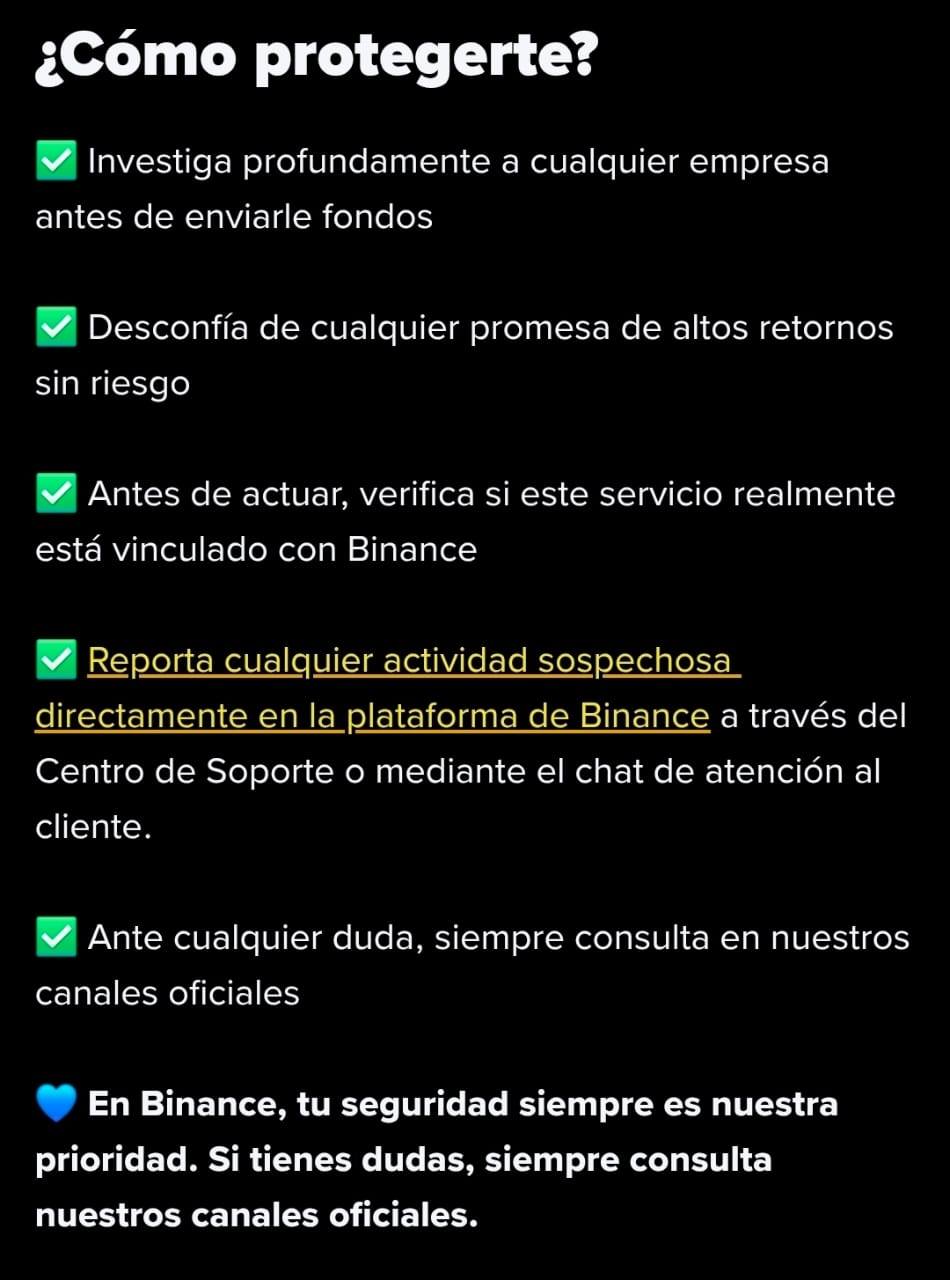
The market tends to be unforgiving of carelessness, but it rewards discipline. Staying calm in the face of alarming messages and verifying each step before moving funds are the most powerful tools you have to protect your digital assets. Continuous education is the only investment with guaranteed returns. BINANCE sends us an email about this important topic of scams and the different ways they have been increasing on networks, which we must be very attentive to... #WriteToEarnUpgrade $BTC $BNB