
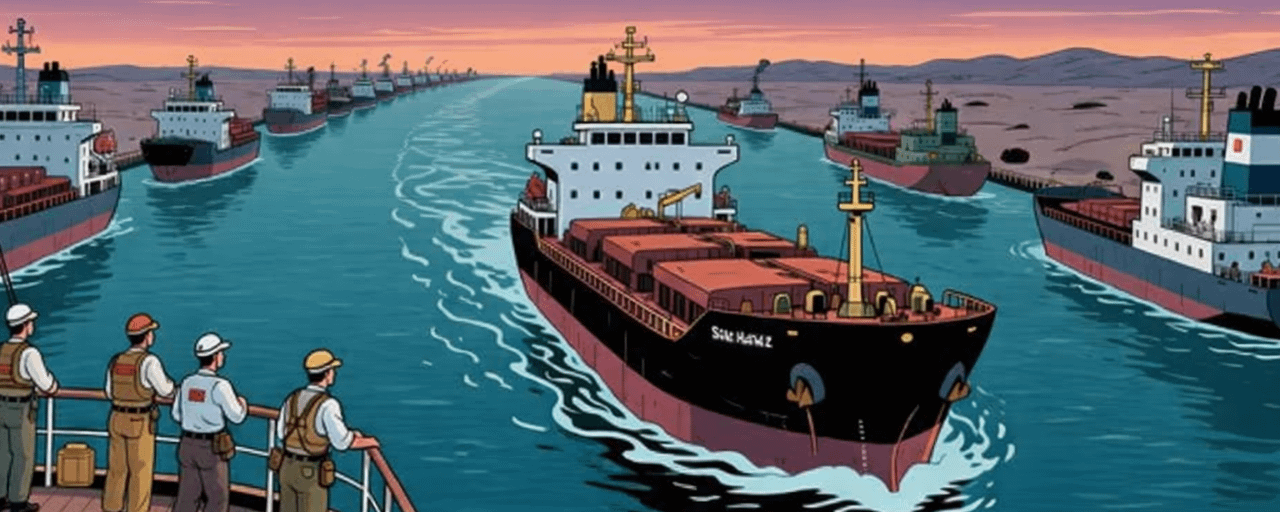
The Qatari gas crisis, with a scale of 12 million tons per year, has caused global turbulence in the LNG market. As a result of production loss and the temporary closure of the Strait of Hormuz, about 28 million tons of supplies disappeared from the market, forcing the United States to double its exports to Asia in March. Although LNG prices in Asia fell by over 25% following reports of a potential ceasefire, structural deficits remain and will shape the market until 2028.
Price drop and short-term relief
The Japan/Korea Marker (JKM) index fell to about 18 USD/MBtu, representing a decline of over 25% from the peak above 24 USD/MBtu earlier in the month. This sharp move is a response to eased supply concerns through the Strait of Hormuz, a key transit point for 20% of global LNG flows. Hopes for a ceasefire provided temporary relief, but the market remains tight — the current price is in the range of 9.455–22.350 USD, far from the lows of the past 12 months.
Anatomy of the supply deficit
Damage to infrastructure in Qatar and the blockade of Hormuz has removed from the market a volume corresponding to the total projected increase in supply for 2026. The biggest blow is the loss of 12 million tons of Qatari production #LNGCrisis , the recovery of which may take 3–5 years. As a result, there has been a massive redistribution of supplies — the USA has become the main supplier for Asia, and exports in March more than doubled to 1.99 million tons. However, this leads to physical bottlenecks: 28-day shipping deadlines and limited terminal capacity hinder market stabilization.
Demand pressure and regional weaknesses
The increase in LNG prices by 143% since the beginning of the conflict has hit emerging markets. India and Pakistan are curbing gas consumption, redirecting demand to oil and coal. The JKM benchmark has exceeded the threshold of 10 USD/mmBtu, above which demand in developing countries starts to plummet sharply. This phenomenon deepens the imbalance — wealthier economies in Asia secure supplies, while weaker markets fall out of the game.
Outlook until 2028
Analysts predict that the global balance of LNG supply and demand will remain disrupted for the next few years. The USA will operate at the edge of production capacity, and new gas projects will only enter the operational phase after 2028. The durability of the ceasefire and the pace of rebuilding Qatari infrastructure will be crucial for market stabilization.
Conclusions
The drop in prices #? in Asia is a temporary reaction to the easing of geopolitical risks, not a permanent structural change. Supply deficits, physical transport constraints, and long-term tensions in the region are causing the LNG market to enter a period of prolonged instability. For investors, this means high volatility and the need for careful management of exposure to the energy sector.#lng