
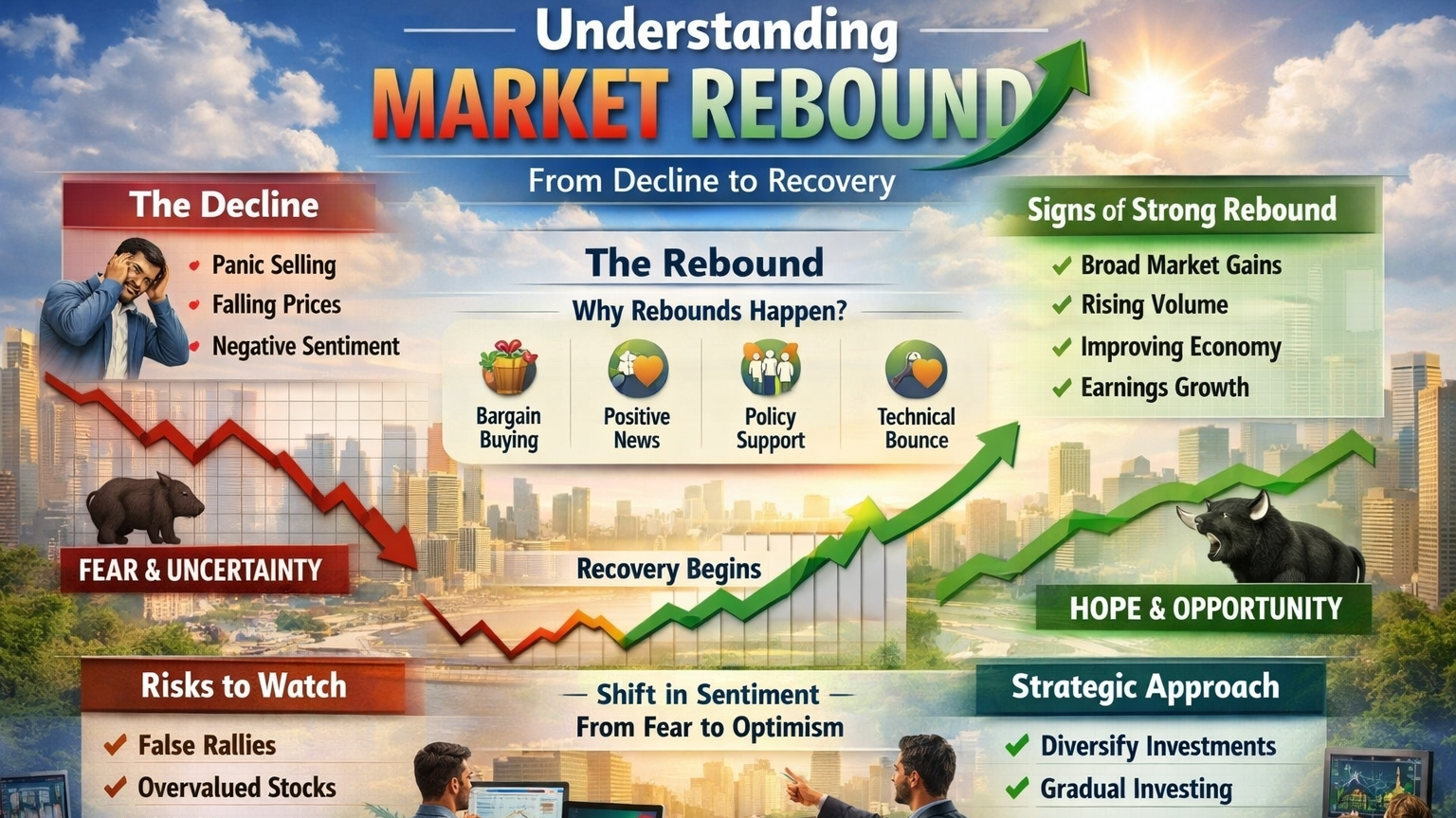


In every financial cycle, there comes a moment when the mood shifts. The panic that once drove prices downward begins to weaken, selling pressure slows, and markets start climbing again. This phase is known as a market rebound—a recovery that emerges after a period of decline. But beyond the charts and numbers, a rebound tells a deeper story about human behavior, expectations, and the resilience of economic systems.
A market rebound is not just about prices going up. It reflects a turning point in sentiment. Investors who were once cautious begin to regain confidence. Capital starts flowing back into assets that were previously abandoned. The narrative changes from “things are getting worse” to “maybe the worst is already over.” This shift, subtle at first, is what fuels the early stages of recovery.
The Nature of a Market Rebound
Markets are never static. They move in waves—rising with optimism and falling with fear. When a decline becomes steep, prices often drop below what many consider fair value. At this point, conditions become ripe for a rebound. Buyers begin to see opportunity where others saw risk.
What makes a rebound unique is its timing. It often begins before the broader economy shows clear signs of improvement. Markets are forward-looking. They react not to what is happening today, but to what investors believe will happen tomorrow. This is why rebounds can feel surprising. They tend to start when the news is still negative, not when everything is already better.
In many cases, the early phase of a rebound is driven by a combination of relief and expectation. Relief that conditions are not worsening as quickly as feared, and expectation that improvement lies ahead. Together, these forces create momentum that pushes prices upward.
Why Rebounds Happen
There is no single cause behind a market rebound. Instead, it is usually the result of several factors coming together.
One of the most important drivers is valuation. After a significant decline, assets often become undervalued. Long-term investors recognize this and begin to buy. Their activity creates a foundation for prices to stabilize and rise.
Another key factor is policy response. Governments and central banks often step in during periods of economic stress. Whether through lower interest rates, financial support programs, or stimulus measures, these actions help restore confidence. Even the expectation of such support can be enough to trigger a rebound.
Psychology also plays a major role. Markets are influenced by emotion as much as by logic. During a downturn, fear can push prices lower than justified. During a rebound, that fear is gradually replaced by cautious optimism. As more participants believe the worst is over, buying increases, reinforcing the upward trend.
Technical forces can contribute as well. When markets fall sharply, they may reach levels where selling becomes exhausted. At that point, even a small amount of buying can cause a noticeable rise. Traders who had bet on falling prices may also rush to close their positions, adding further upward pressure.
Rebound vs. True Recovery
It is important to distinguish between a rebound and a full recovery. A rebound is the initial upward movement after a decline. It can be quick, sharp, and emotionally driven. A recovery, on the other hand, is more stable and sustained. It reflects genuine improvement in economic conditions and business performance.
Not every rebound leads to a lasting recovery. Sometimes markets rise briefly and then fall again if underlying problems remain unresolved. This is why experienced investors remain cautious during early rebounds. They look for confirmation—signs that the improvement is real and not temporary.
A true recovery is usually supported by stronger fundamentals. Companies begin to report better earnings. Economic indicators show improvement. Consumer confidence increases. When these elements align, the rebound gains strength and becomes more durable.
The Psychology Behind the Shift
Perhaps the most fascinating aspect of a market rebound is the change in human behavior. During a downturn, fear dominates. Investors focus on losses and risks. Many prefer to stay on the sidelines rather than take chances.
As the market begins to rebound, a different emotion emerges: the fear of missing out. People who sold earlier may feel pressure to re-enter. Others who stayed out may worry about missing the opportunity. This shift in mindset can accelerate the rebound, as more participants rush back into the market.
However, this emotional dynamic can also create volatility. If confidence is not supported by real improvement, the rebound can lose momentum. This is why disciplined decision-making is crucial. Acting purely on emotion can lead to poor timing and unnecessary risk.
Signals of a Strong Rebound
Not all rebounds are equal. Some are fragile, while others are more robust. Certain signs can help distinguish between the two.
A strong rebound is often broad-based. Instead of being driven by a few stocks or sectors, it involves a wide range of industries. This suggests that confidence is returning across the market, not just in isolated areas.
Consistency is another important factor. A rebound that holds its gains and continues to build gradually is more reliable than one that rises sharply and then fluctuates wildly. Stability indicates that buyers are committed, not just reacting to short-term news.
Economic alignment also matters. When improving market performance is supported by better economic data—such as rising employment, stable inflation, or growing business activity—the rebound has a stronger foundation.
Risks Within a Rebound
Despite its positive appearance, a market rebound carries risks. One of the biggest is false confidence. Investors may assume that the worst is over too quickly, only to face another downturn.
Another risk is overreaction. In the excitement of a rebound, prices can rise too fast, moving ahead of actual improvement. This creates the possibility of a correction later.
Timing is also a challenge. Entering too early can lead to further losses if the market dips again. Entering too late can reduce potential gains. This uncertainty makes it important to approach rebounds with a balanced strategy rather than impulsive decisions.
A Balanced Approach
Navigating a market rebound requires both patience and awareness. Instead of trying to predict the exact bottom or top, many investors focus on gradual participation. They invest in stages, allowing themselves to benefit from rising prices while managing risk.
Diversification is another key principle. By spreading investments across different sectors or asset types, investors reduce the impact of any single downturn. This approach helps maintain stability even in uncertain conditions.
Most importantly, a long-term perspective can make a significant difference. Market rebounds are part of a larger cycle. While short-term movements can be unpredictable, long-term trends often reflect growth and adaptation.
Conclusion
A market rebound is more than just a recovery in prices. It is a shift in perception, a change in direction, and a signal that conditions may be improving. It reflects the resilience of markets and the ability of investors to move beyond fear.
However, not all rebounds are equal. Some mark the beginning of lasting growth, while others are temporary pauses in a larger decline. Understanding the difference requires careful observation, critical thinking, and emotional discipline.
In the end, a market rebound is a reminder of how dynamic financial systems are. Even after periods of uncertainty and loss, recovery is always possible. The key lies in recognizing the signals, managing the risks, and staying grounded in a well-thought-out strategy.