On March 11 in Chicago, the highest temperature market briefly presented a rare window: low directional risk, about 1 hour of value regression, close to 8% of price recovery space, with about 50,000 USD of transaction depth, corresponding to a profit window of 4,000 USD.
But what is truly valuable is not 'Look, here is a deal that made money.'
What is truly valuable is: this is not luck, not weather forecasting, not screenshots taken after the fact to boast, but a market that should have approached a bell curve distribution, suddenly distorted in its internal structure. My robot first detected a deviation from the normal distribution of over 200%, seizing this opportunity before the market completely corrected.
A single transaction is certainly interesting.
But what truly begins to form a structural advantage is the continuous discovery of such misaligned systems.
---
To sum it up: This isn't just "theoretically possible to make money," it's actually possible to make money.
On the evening of March 10, I found a window in the Chicago market where I would keep careful records.
It's not the kind that looks great in pictures but doesn't actually have a chance of being absorbed once it's injected.
It's not the kind of betting where you have to guess the weather right first before you're eligible to make money.
It's something cleaner.
Low directional risk
Nearly 8% price recovery potential
Value recovery completed in approximately 1 hour
If you work fast enough, the profit window is $7,000 per hour.
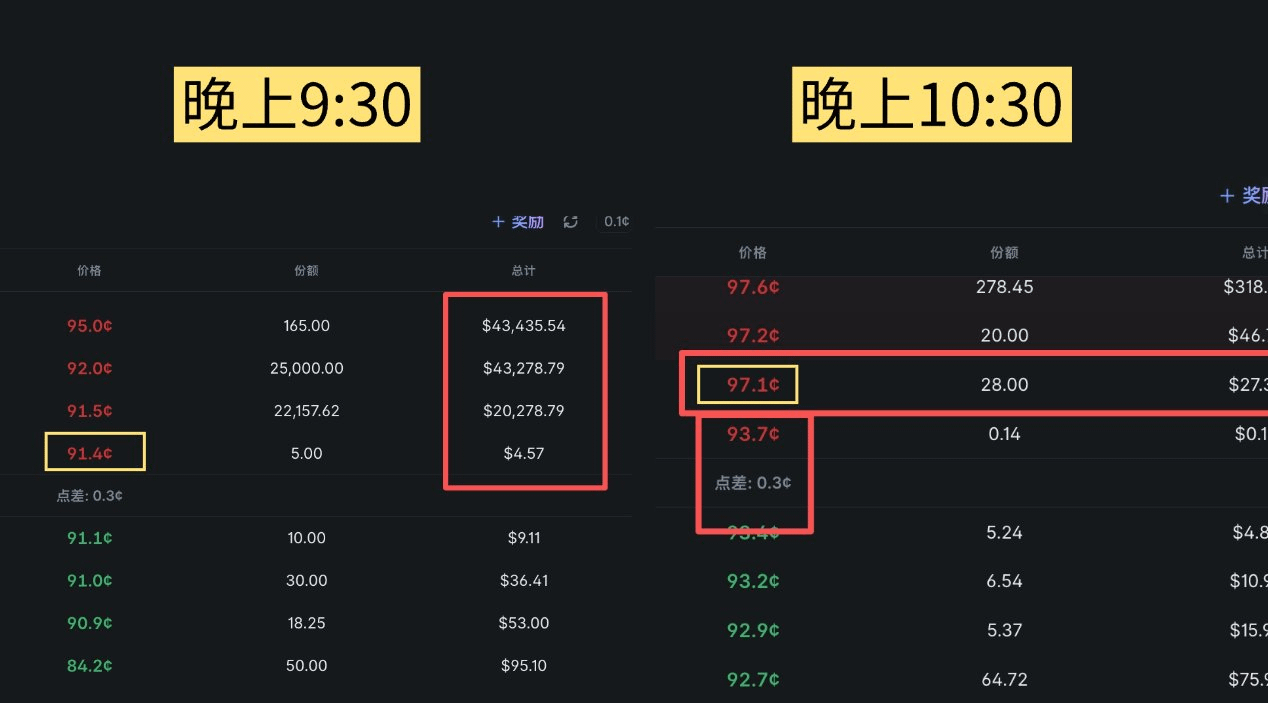
Around 9:00 PM Beijing time, signs of something amiss began to appear in the market. By around 10:00 PM, it was no longer just a matter of "feeling strange," but a clear indication that this was not random noise, but a structural misalignment.
At that time, the corresponding price range could be bought at an average price of around 92.
About an hour later, the price returned to 98-99.
The most fascinating aspect of these kinds of opportunities is not the profit figures themselves.
Instead, you are very clear that this money was not mainly earned by "I am better at predicting the future than others," but by "the market correcting its own mistakes."
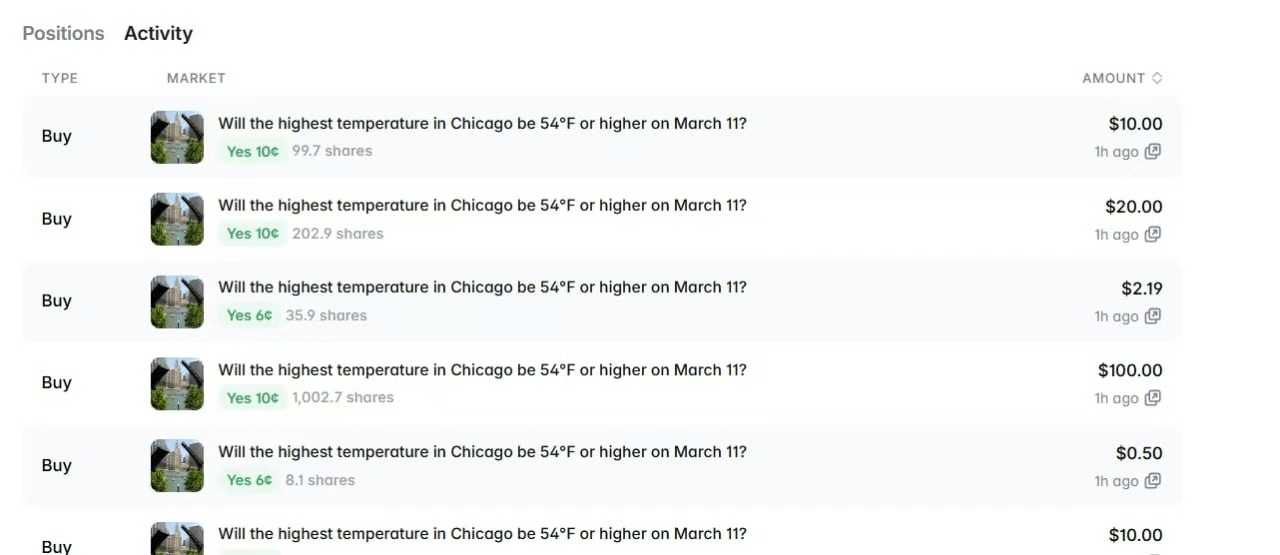
The real key issue isn't the weather forecast, but rather, "This shouldn't have been priced like this in the first place."
When many people see "highest temperature market," their first reaction is: Isn't this just gambling on the weather?
But not this time.
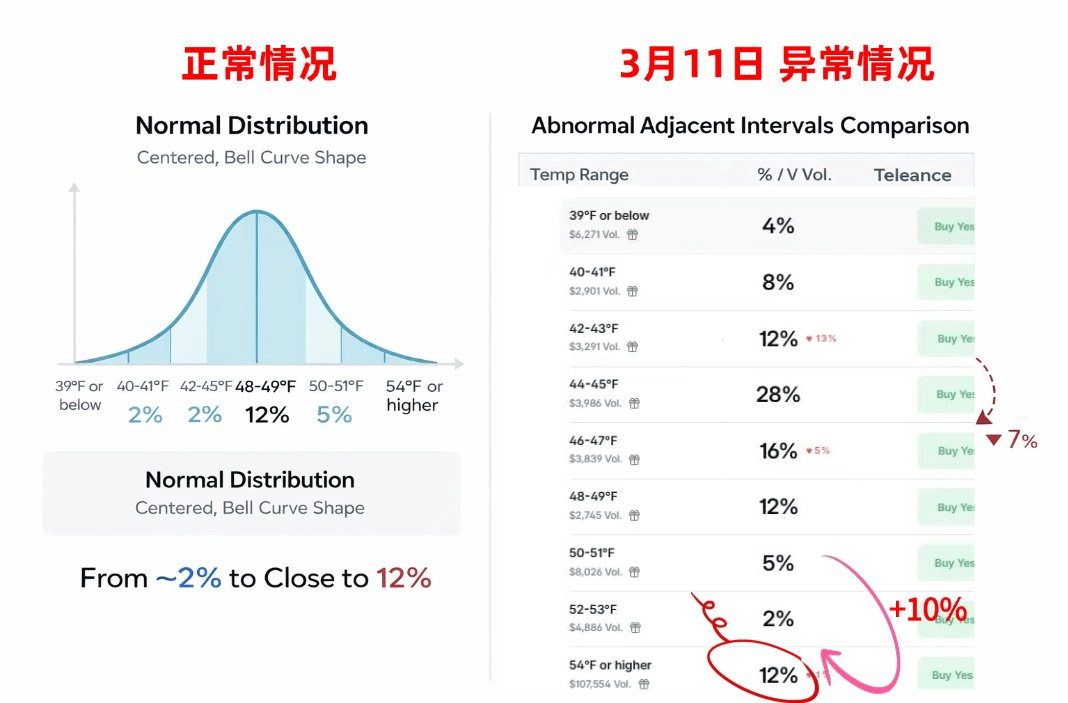
This time, it's closer to the situation where a certain segment of the market structure has undergone an unreasonable distortion. Under normal circumstances, the probability distribution of this type of highest temperature market should be close to a bell shape, that is, close to a normal distribution.
If you look at several adjacent temperature ranges side by side, the price transition should be smooth. There will certainly be differences between adjacent ranges, but usually only on the order of about 2%.
But that night, we didn't see a smooth transition. What we saw was that the price difference between adjacent price ranges was artificially widened to nearly 12%.
This isn't because "everyone suddenly understands the weather better."
This means "this local structure is already distorted".
The most valuable moments in a transaction are often these kinds of moments.
It's not that the world has undergone some earth-shattering change.
Rather, it's a small segment of the market that has temporarily forgotten what it's supposed to look like.
Why this isn't luck: It's not about guessing the weather, but about correcting a mistake in pricing.
The most deceptive thing in trading is the hindsight story.
Therefore, it must be made clear here:
This is not a case of "looking back, it seems quite reasonable".
Rather, the anomaly itself is already clear enough before the regression occurs.
The anomaly started appearing around 21:00.
By around 10 PM, we could clearly categorize them and were no longer just observing.
The corresponding Shares can be purchased at an average price of around 92.
About an hour later, the price returned to 98-99.
This matter is important in two aspects:
First, this opportunity was identified before the repair was completed, not after the screenshots were taken for review.
Second, its repair logic is very clean: you are not waiting for some grand narrative to ferment for three days, but waiting for an internal pricing error to return to a more reasonable position.
That's why I define it as a low-directional-risk structural arbitrage window, rather than a subjective trade that "bets right".
Luck can help you get in better.
But luck usually doesn't give you all of these things at the same time:
A clearly measurable distribution of fractures
A statistically unreasonable price difference between adjacent prices
An entry point that can still be reached at around 92
A price fix completed in approximately 1 hour.
Capacity determines whether it's "smart observation" or "real money-making."
Many people like to talk about market opportunities, but they don't like to talk about market size.
Because small opportunities are paired with small capacity, they are most easily romanticized.
But those who actually carry it out will quickly have a question pop into their minds:
How big can it be made?
This answer is meaningful.
At that time, there was approximately $70,000 worth of available trading space in the window.
This number is certainly not unlimited, nor is it a window for the general public that "everyone can eat slowly".
But it is enough to show that this is not a mispricing that can only be used to take screenshots and show off one's intelligence, but a structural opportunity that can be taken seriously.
That's why I'm becoming more and more concerned about capacity.
An opportunity is only worth paying attention to if it simultaneously meets the following conditions:
You can identify it as early as possible
Can you explain why it exists?
You really know how to get the volume in.
When you score, you don't immediately squander the opportunity.
Many articles on the market that claim to have "discovered a great opportunity" ultimately fail at the third point.
Not this time.
It's not some exaggerated free lunch.
But it is deep, fast, and clean enough that it deserves to be taken seriously.
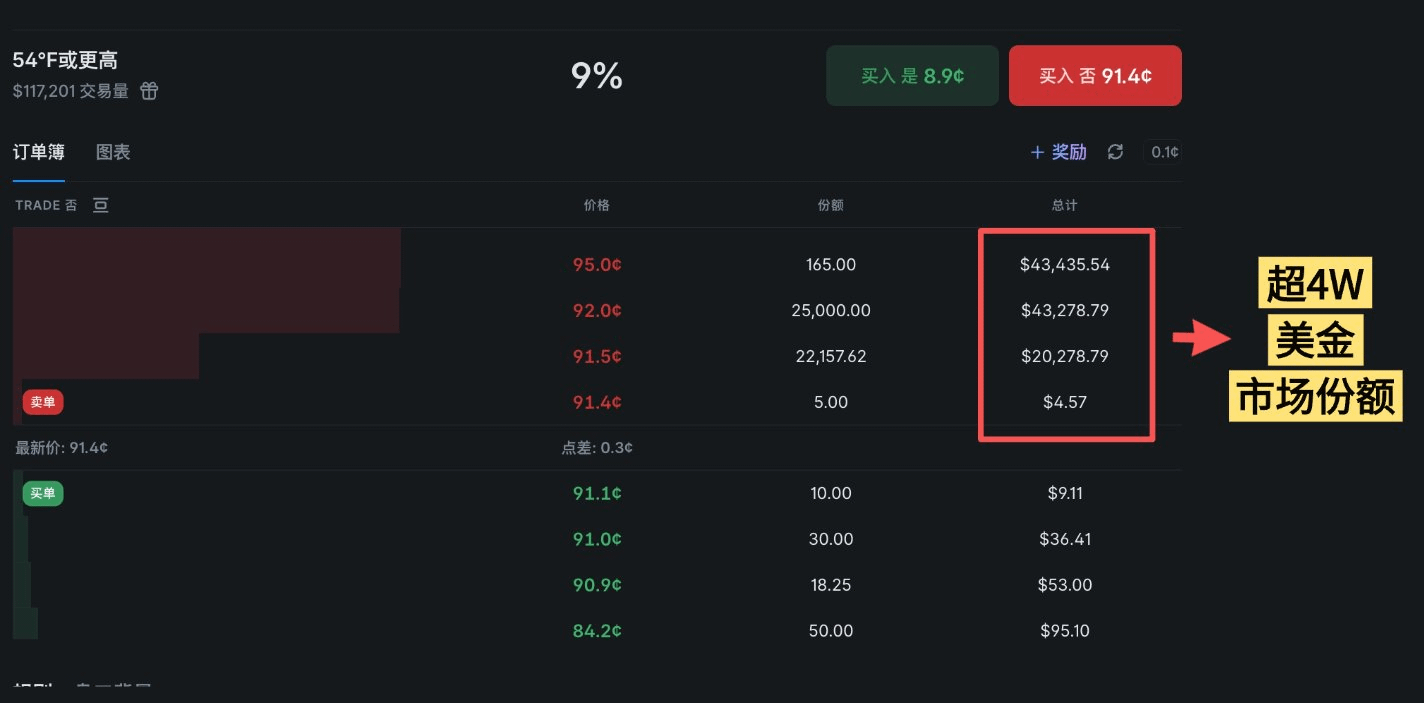
What's even more valuable than this order is that my robot saw it before most people.
This part is actually more important than the transaction itself.
Because what truly matters is not "this deal looks good".
Instead, this order wasn't found by human intervention or by chance; it was retrieved by a robot first.
Our monitoring logic isn't mysterious; its core can be summarized in one sentence:
An alarm is triggered when the market distribution deviates too much from the normal structure.
One of the triggering conditions this time is:
It deviates from the normal distribution by more than 200%.
The key point of this statement is not just the number 200%.
Rather, it means that the system is not asking "Will the weather change?", but rather:
Is this market still like itself?
Is the relationship between adjacent intervals still normal?
Is this deviation caused by changes in information, or by a structural pricing misalignment?
Around 21:00 Beijing time, anomalies began to appear. A few minutes later, the signal was clear enough that we could switch from "observation" to "execution".
This is very important.
It's not considered a skill to discover a pricing error manually.
Only when similar mispricings are detected stably and systematically can the problem be considered valid.
Humans are very good at telling stories after the fact.
Machines are better at monitoring dozens or hundreds of markets in advance and using standardized criteria to identify anomalies.
Therefore, in my opinion, this deal is certainly tempting.
But it was the detection layer that truly started to generate business and moat.
A good deal is the result.
A machine that can continuously detect these kinds of misalignments is the engine.
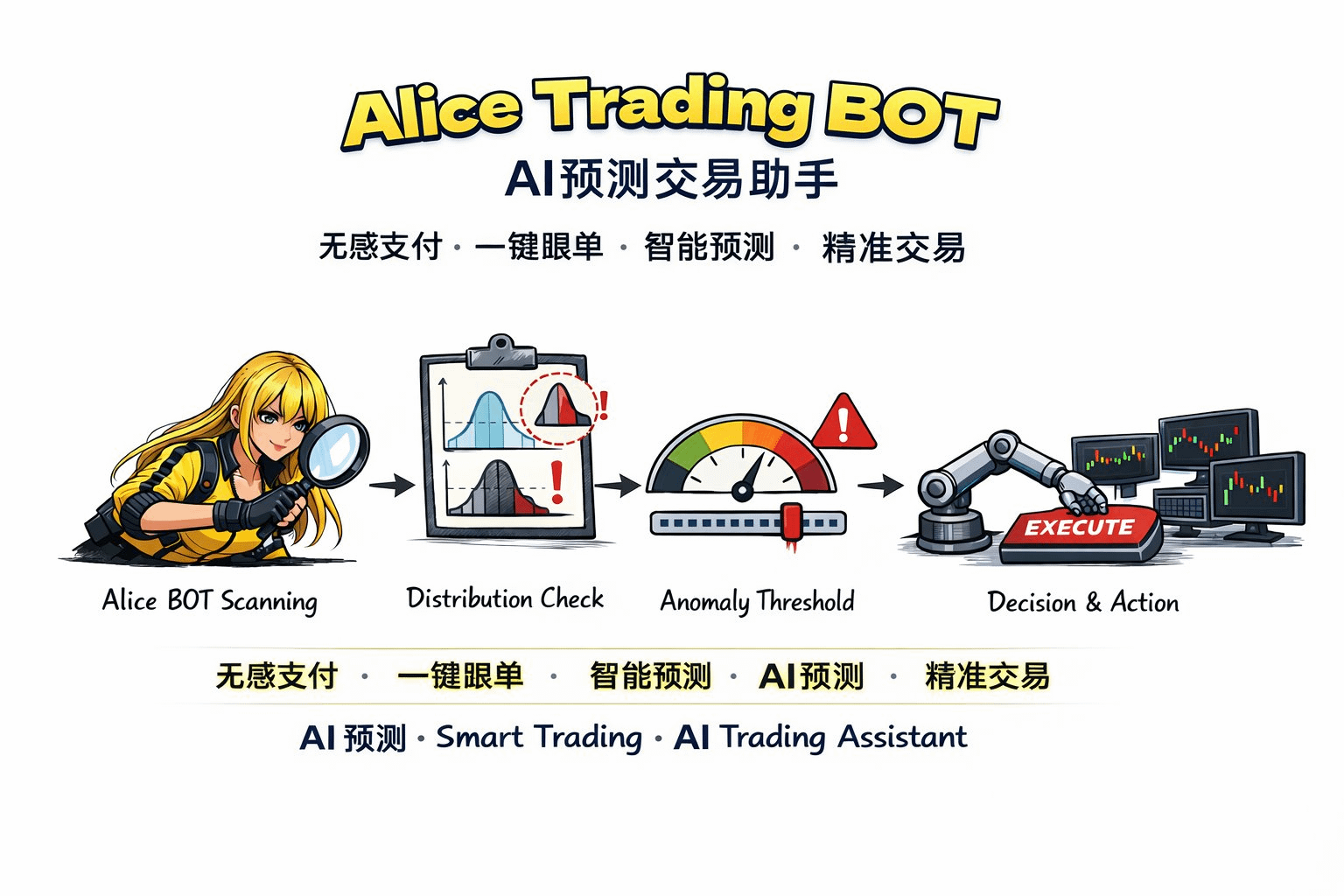
What truly holds long-term value is not a single deal, but the ability to consistently identify such opportunities.
If this article only stops at "we caught an anomaly", then its value is actually very limited.
Because anyone can occasionally come across a good deal.
What's truly valuable is whether there's a discovery system behind this that can work repeatedly.
That's why I've never wanted to write it as a purely research post, nor as a purely product review post.
Talking only about research may make you seem smart, but it doesn't necessarily have transactional value.
Showing off results may attract attention, but it's difficult to build genuine trust.
A better intermediate state is:
Let me show you a realistic, lucrative result first.
Let me tell you why it's true.
Let me tell you why it's not luck.
Finally, let's highlight the truly valuable aspect: not this one deal, but the ability to consistently identify these kinds of opportunities.
This is the direction I'd rather express.
Today is the highest temperature recorded in Chicago on March 11.
Tomorrow could be in a different city, on a different date, or in a different discrete probability market.
The surface objects may change, but the underlying logic remains the same:
Normal structure exists
Abnormal deviations will occur
When the deviation is large enough, a verifiable, executable, and regressible window will be formed.
If you are also interested in this market structure, anomaly detection, bot monitoring, and execution framework, I will continue to break down more real-world examples on Twitter.
If you want to be the first to know about the robot's monitoring information, please follow me @Yuanzhuo_labs and visit my homepage.
There will be in-depth discussions on market structure, robot alerts, execution debriefings, and methodological exchanges.
This trade is a hook.
The testing system is the product.
Wishing everyone unparalleled success in predicting the market!