
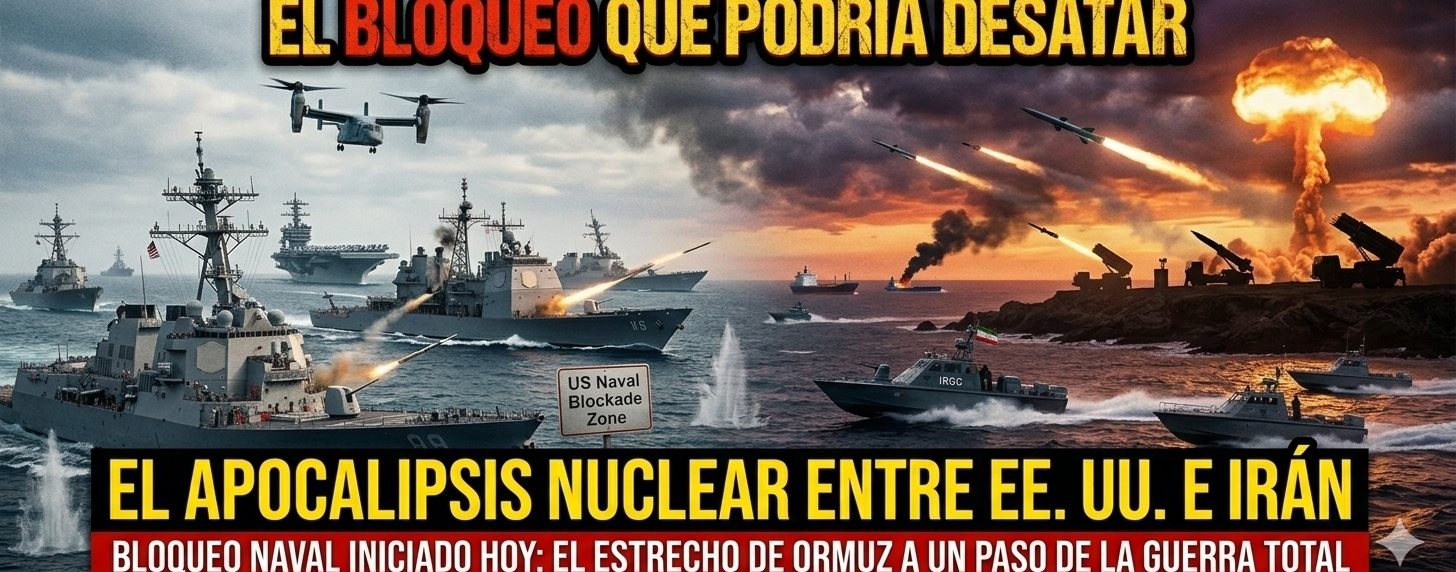
Today, **April 13, 2026**, the situation between the United States and Iran has reached a critical point following the failure of peace negotiations in Islamabad last weekend.
1. Start of the Maritime Blockade
At 10:00 a.m. (Eastern Time), the total naval blockade announced by the government of Donald Trump came into effect. The United States Central Command (CENTCOM) has deployed warships to prevent all maritime traffic entering or leaving Iranian ports, especially in the Strait of Hormuz.
2. Iran's Response
Tehran has labeled the measure as an "illegal act of war" and "international extortion." Iranian authorities have issued a severe warning: "No port in the gulfs will be safe" if the United States directly threatens Iranian territory. They have also threatened to respond decisively to any military vessel that approaches their territorial waters.
3. Context of the Conflict (2026)
This confrontation is part of an escalation that began on *February 28, 2026* with joint attacks by the United States and Israel.
*The breaking point: Negotiations in Pakistan failed because the U.S. demands the complete dismantling of the Iranian nuclear program, something that Iran rejects as an "excessive and unreasonable" demand.
Economic Impact: The blockade and the mines placed by Iran in the strait have caused a massive increase in international oil and natural gas prices.
4. Latest statements from Trump
Despite the start of the blockade, President Trump stated today that Iran contacted to try to renegotiate, although he insisted that "Iran will not have nuclear weapons" and that the Armed Forces are ready to act if the regime does not yield.
Tensions are at an all-time high, and there is global fear that this naval blockade could lead to a direct large-scale confrontation throughout the Middle East.