
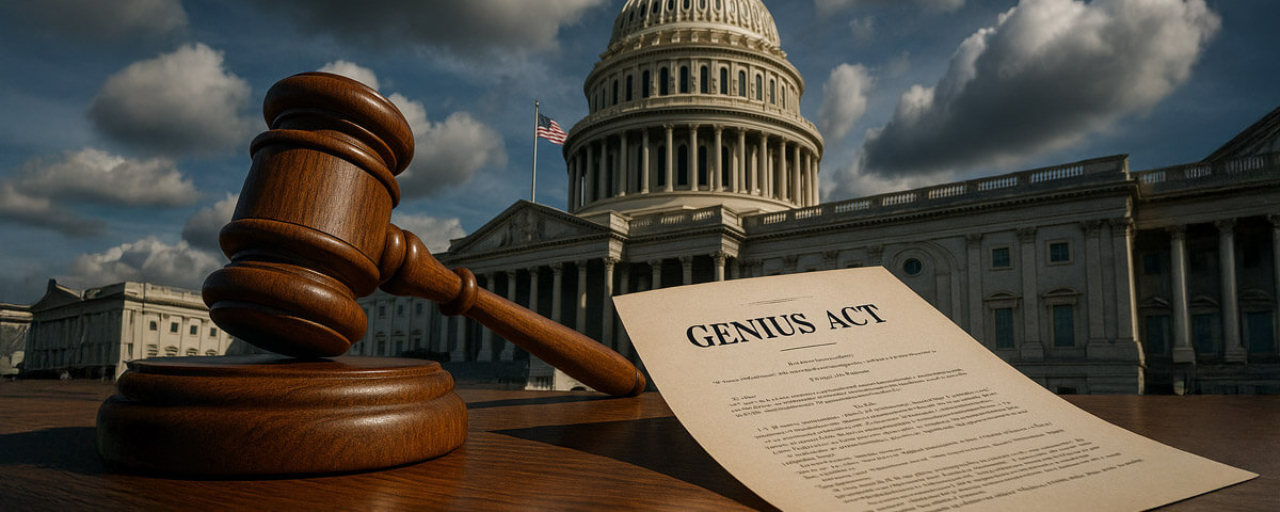
April 13, 2026, passed almost unnoticed by most of the market. There were no sharp movements, loud statements, or new laws. But it was on this day that the phase was completed, which actually launches the new architecture of the cryptocurrency market in the USA.
The language is about the implementation of the GENIUS Act — a law that changes the status of stablecoins from an experimental tool to a part of the financial system.
A quiet date that changes the system
April 13, 2026, passed almost unnoticed by most of the crypto market. There were no sudden impulses, news explosions, or statements that could provoke volatility. Yet, such dates are often the most important because they don't just change price—they change structure. This was the day one of the key stages of implementing the GENIUS Act concluded, which gradually transforms the crypto industry into part of the traditional financial system.
Why the market 'didn't see' this
To understand the significance of this date, it's important to step away from the classic trader's mindset, where every event is evaluated through the lens of 'will it go up or down'. April 13 isn't about the market's movement here and now. It's about a change in the rules of the game that will start influencing the market later, but much more profoundly. Price reacts to liquidity, fear, and news. But not to regulatory processes that unfold over time. That's why the lack of reaction creates the illusion that nothing happened.
What exactly happened on April 13
On this day, the commentary period for the rules developed by the National Credit Union Administration ended. This means all key players—from banks to crypto companies—have already expressed their positions on how stablecoin regulation should look. Essentially, the market handed the regulator a full picture of expectations, risks, and proposals. From this moment, the process moves into a phase where decisions are made without direct industry influence.
Transitioning from discussion to action
After this phase concludes, a stricter phase begins—the finalization of the rules. If there was still an opportunity for adjustment through public discussions, now regulators start shaping the final market model. This is the key turning point. The market no longer sets the rules—it prepares to live by them.
What the GENIUS Act changes
The GENIUS Act itself is a pivotal document as it defines the role of stablecoins in the U.S. financial system for the first time. It's not just about control; it's about integration. Stablecoins are no longer viewed as a separate ecosystem. They become part of the financial infrastructure, subject to the same principles as traditional money.
New players and a new balance of power
This transformation automatically opens doors for traditional financial institutions. Banks and credit organizations are starting to play a significantly larger role in the crypto sector. Under the supervision of entities like the Federal Reserve and FDIC, the market is gradually transitioning into a more controlled and predictable form. This means not only oversight but also a new level of trust, which can bring significant institutional capital into the market.
Control as a new reality
Along with institutional interest, the level of requirements is also increasing. Regulation entails strict rules regarding reserves, transparency, and risk management. For some projects, this will be a critical moment. Not everyone will meet the new standards, creating a natural selection effect. As a result, the market will become less diverse but more stable.
Point of no return
That's why April 13 can be seen as a turning point. Up until this moment, there was still a chance to influence the rules. After this, adaptation begins. This isn't a sharp break, but rather a gradual yet irreversible process. Such processes ultimately define the market's development direction over the long term.
What's next
The next stage is analyzing the received comments and preparing the final rules. It's expected that by July 2026, regulators will complete this process and present the final regulatory model. Only then will it be clear what the new market structure will look like and which players will gain the most advantage.
Conclusion
April 13 is not just a date that impacts the chart. It's a date that changes the system.
The crypto market is gradually shifting from a chaotic model to a regulated infrastructure. The key question now isn't whether this transformation will happen, but rather who will be able to adapt and stay in the game.
#GENIUSActPas #news #FutureTarding